
Equipping creative businesses to unleash their best work.
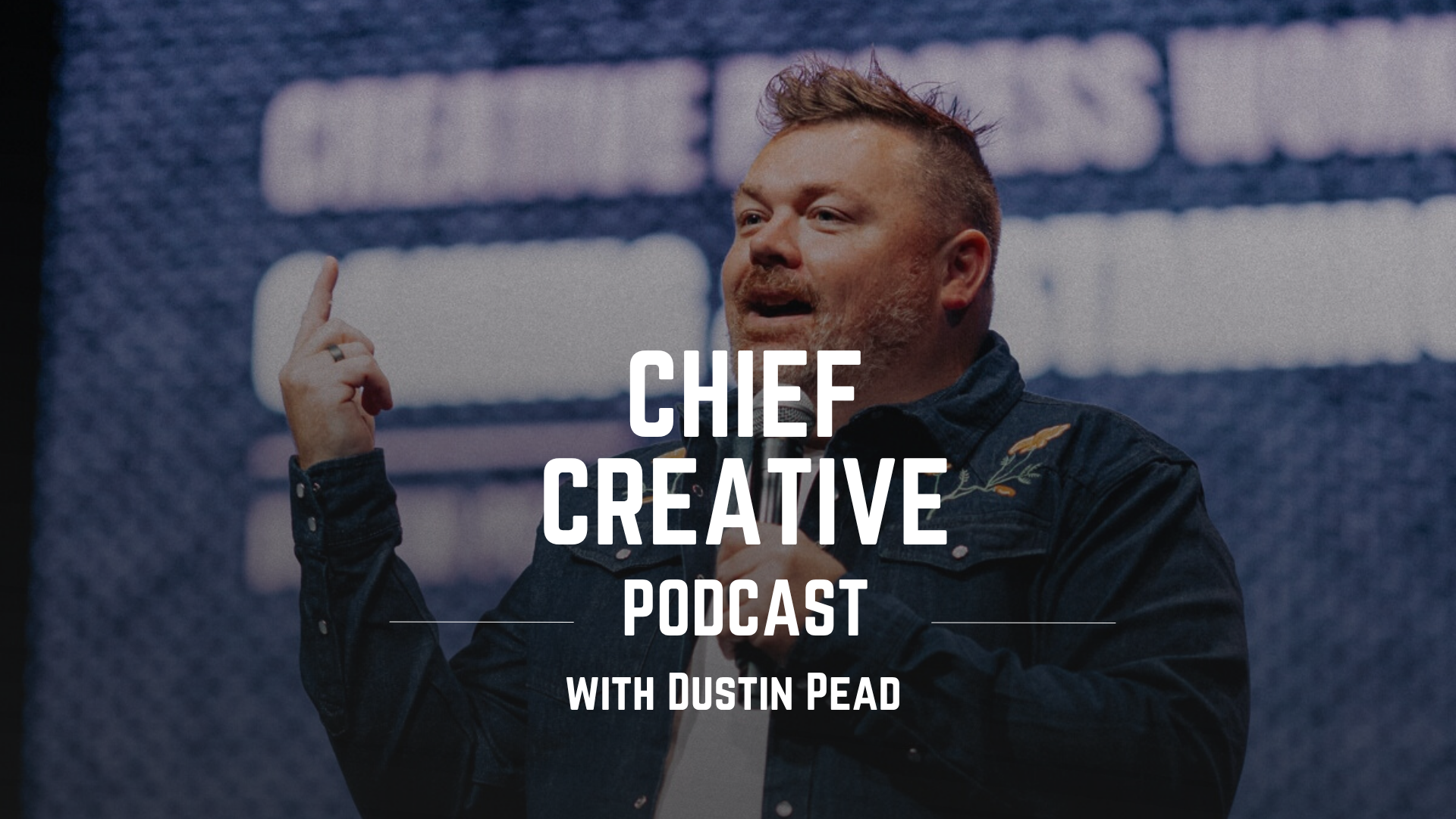
Systems. Frameworks. Real client stories. Practical strategies.
Your Capacity Is Never What You Think It Is
Creative agencies desperately need this. And almost none of us are doing it.
Here's the problem: We're making capacity decisions based on emotional toil rather than actual data.
That complex brand strategy feels like 20 hours, so we scope it that way. That "simple" social campaign feels easy, so we squeeze it in. We're guessing. And our guesses are almost always wrong.
The result? We overcommit, eliminate margin, and rob ourselves of the space needed for truly excellent creative work.

I've been having this nagging feeling about my consulting practice for months now. Something was missing. I help creative agencies build systems for everything—project management, client communication, team workflows—but there was this blind spot I couldn't quite name.
Then I watched some of our manufacturing clients at The Culture Base implement capacity planning.
And it hit me:
Creative agencies desperately need this, and almost none of us are doing it.
Creative agencies aren't like other businesses. You've got a myriad of tasks happening simultaneously—some requiring deep thought, others that are pure execution. Brand strategy sessions. Client revisions. Project management. Team meetings. Creative concepting. Production work. It's like conducting an orchestra where every instrument has a different timeline, but they all need to end in unison at the same DUE date.
And here's where it gets messy: we're making capacity decisions based on emotional toil rather than actual data. That complex brand strategy feels like it should take 20 hours, so we scope it that way. That "simple" social campaign feels easy, so we squeeze it into the margins. We're guessing. And our guesses are almost always wrong.
When you overcommit your department, your agency, or yourself, you rob yourself of the margin needed to be truly creative and experiment for the right solution. The DUE date arrives, and instead of crafting the perfect solution, you're rushing to produce something. The work becomes subpar—not because your team lacks talent, but because the system sets them up to fail. This is where our "Excellence" value crashes into reality. Good enough is not good enough, but how can we deliver excellence when we've already allocated 110% of our actual capacity?
For the past few months, I've been time tracking every task in my workday. Meetings. Writing. Project management. Coaching sessions. Content creation. Everything. I'm using Harvest, and I'm treating this as pure research—no judgment, no optimization yet, just data collection. Here's what surprised me: most tasks take significantly less time than I thought they would. I've been operating with way more margin than I realized. But I couldn't see it until I started tracking the facts instead of trusting my feelings.
When capacity planning feels right, it's factual. When it feels overwhelming, it's wrong.
We think we know how long things take. We've done this work for years. We're experts in our craft. But we're basing our capacity decisions on gut feelings and emotions that are consistently inaccurate.
The creative who says, "This brand refresh will take me six weeks" is guessing based on how emotionally draining brand work feels. The account manager who says "I can handle five more clients" is guessing based on their current stress level, not their actual available hours.
We're making business decisions—hiring, pricing, scoping, promising—based on guesses. And then we wonder why creative teams burn out, why projects go over budget, and why quality suffers.
Now what?
Start tracking your time. Not forever. Not with the goal of "optimization" or "productivity." Just for research.
Pick a time tracking tool—I'm using Harvest—and track every task for 30 days. Meetings, creative work, admin tasks, everything. Don't change your behavior, just observe it.
Then let's compare notes. What surprised you? What patterns emerged? What did you learn about your actual capacity versus your assumed capacity?
Because I'm convinced that once we start building capacity planning on facts instead of feelings, we'll unlock the margin that makes truly excellent creative work possible.
What are you discovering about your actual capacity? Reply or reach out—I'd genuinely love to hear what you're learning.
Ep 133: Why Story Matters in Your Creative Process
Our Most-Watched Episode Returns
Episode 90 Replay | Originally Released March 2024 | November 6, 2025
Some conversations are too valuable to only hear once.
When I sat down with my friend, business partner, and client Darren Cooper from 1898 Creative to talk about story, I had no idea it would become one of our most-watched episodes. But the response has been overwhelming—creative professionals keep coming back to this conversation because it solves a problem almost everyone faces but few can articulate:
Why does some creative work captivate while other work falls flat?
The answer is story structure. And not just for movies or novels—for your business narrative, your creative process, and every project you touch.
If you missed this episode the first time around, you're about to discover why thousands of creatives have already implemented these principles. If you heard it before, I guarantee you'll catch something new. I did on my third listen.
Whether you're running a creative agency, building a business, or developing your next big idea, understanding how to structure and tell your story will change how you work and connect with your audience.
⚡️ 3 Key Takeaways
⚡️ Story Creates Connection - At its foundational level, story is how we share ideas and connect with each other. It's not just entertainment—it's the framework that allows people to understand who you are, what you do, and why it matters. This is why this episode resonated: it reframes story as a practical business tool, not just an artistic concept.
⚡️ Conflict Is Non-Negotiable - Every good story needs stakes. Without risk, without the possibility of failure or success, there's no engagement. This applies equally to your business origin story and your creative process—what was at risk if you didn't succeed? Listeners told us this was the missing piece in their storytelling.
⚡️ Resolution Leads to Scalability - How you end your story matters. The best stories don't just resolve—they show what's now possible. When Marty McFly learns he can change his future, suddenly there are sequels. When your idea proves successful, it becomes scalable. This connection between story and business growth is why creatives keep sharing this episode.
Why This Episode Became Our Most-Watched
Since this conversation first aired, I've received countless messages from listeners who said this episode changed how they:
-
Pitch to clients
-
Structure their creative projects
-
Talk about their business origin
-
Stay motivated through difficult phases of work
-
Communicate value to stakeholders
The 5-part story arc framework Darren shares (Hook → Backstory → Conflict → Resolution → Call to Action) has become a go-to tool for creatives across industries. It's simple enough to remember, flexible enough to apply everywhere, and powerful enough to transform how your work lands with audiences.
From Showing to Telling: Why Story Beats a Simple "Why"
We all know Simon Sinek taught us to start with why. But story takes it further—it shows your why instead of just telling it. When you structure your business narrative, your creative process, or even your individual projects as stories, you invite people into an experience rather than lecturing them on your mission statement.
This distinction alone has helped dozens of listeners finally articulate what makes their work different.
The Essential Elements Every Story Needs
The Hook: Capturing Attention Immediately
Think about James Bond or Mission Impossible movies. They always open with an action sequence—that's your hook. Before the credits roll, before you meet the characters, you're already invested. The same principle applies to your creative work and your business story.
In your creative process, the hook is the initial spark—the idea that makes you think, "I need to pursue this." Without that hook, you'll struggle to maintain motivation through the challenging middle phases of bringing an idea to life.
Real listener feedback: "I realized my client pitches were starting with background information instead of a hook. Restructuring based on this episode increased my close rate by 30%." - Sarah, Brand Strategist
The Backstory: Creating Depth and Context
Once you've hooked your audience, they need to understand the context. Who are these characters? What's the history here? Why should I care?
For businesses, this is your origin story. For creative projects, it's understanding the problem you're solving and why this solution matters. As Todd Henry says, creativity is just problem-solving, so knowing the root of your idea helps people care enough to see it through.
The Conflict: Where Stakes Get Real
This is the element that's easiest to overlook, especially in business storytelling. There has to be tension. The hero has to risk losing the girl, the ring has to make it to Mount Doom, or the business faces closure.
Darren points out that in B2B work, finding this conflict requires digging deeper. A thousand HVAC companies exist—what made yours uniquely different? What challenge did you have to overcome? That's what makes your story engaging.
Why this matters for your work: Listeners consistently tell us that identifying and articulating their conflict was the breakthrough moment. Once you name what was at stake, your entire narrative gains power.
The Resolution: Proving What's Possible
The best resolutions don't just wrap things up neatly—they show scalability. They demonstrate that if this worked once, it can work again. In business terms, this might mean: "We implemented X, Y, and Z, dug ourselves out of debt, and grew tenfold over the next few years."
But resolution also includes a call to action. Great stories spur you to action. Jesus taught in parables and then said, "Let it be so with you as well." When you walk out of a movie theater as a kid, you immediately start acting like the hero. That's the power of story—it moves people to do something.
💬 3 Notable Quotes
💬 "Story is this way to bring people in to who you are. Maybe it shares an idea with you or it proves a point that you're trying to get across. Story, when done well, just sucks us in." - Darren Cooper
💬 "I like to think of story as explaining the why to me without just telling me the why is. You're showing me the why, not just telling me the why." - Dustin Pead
💬 "Every great story should spur you on to action. Good story spurs you on to action for sure." - Darren Cooper
Applying Story to Your Creative Process
Here's where this gets practical—and why this episode keeps getting shared: your creative process is itself a story. It has a beginning (the hook of an idea), a middle (the challenging conflict of execution), and an end (the resolution and scalability of success).
When you structure your work this way, you're more likely to:
-
Stay motivated through difficult implementation phases
-
Communicate value clearly to clients and stakeholders
-
Build systems that are repeatable and scalable
-
Create work that moves people to action
Why We're Replaying This Now
As Chief Creative Consultants continues to grow and I work with more creative professionals, I keep seeing the same pattern: the ones who master story structure scale faster, communicate more effectively, and stay more motivated through challenging phases.
This conversation with Darren captures those principles in 19 minutes. If you're struggling with motivation, if your pitches aren't landing, or if your work feels flat despite your talent—story structure is probably the missing piece.
Featured Resources
-
Learn more about Dustin's frameworks at dustinpead.com/free
-
Check out Darren Cooper's work at 1898 Creative
-
Read "Building a StoryBrand" by Donald Miller
-
Explore Pixar's storytelling principles
-
Study Simon Sinek's "Start With Why" framework
Ready to Transform Your Creative Chaos?
Story isn't just something you consume on Netflix or read in books—it's a practical framework for how you work, communicate, and scale. By understanding and implementing story structure in your creative process, you'll find yourself more motivated, your clients more engaged, and your work more impactful.
This is why this episode became one of our most-watched. The principles are timeless, the application is immediate, and the results speak for themselves.
Connect with Dustin at dustinpead.com or follow @dustinpead for more insights on creativity made easy.
Ep 132: Gaining & Sustaining Margin
Are you constantly racing against deadlines, working late nights to bring your creative vision to life, only to end up delivering something "safe" instead of spectacular? You're not alone. In this episode of Creativity Made Easy, I'm sharing insights from my keynote at the Salk Conference 2025, where I revealed why 74% of church creatives—and countless professionals across all creative industries—experience burnout, and more importantly, what you can do about it.
Here's the uncomfortable truth: most creatives get to about the 80% completion mark on their projects and bail. Not because they lack talent or dedication, but because they didn't give themselves enough margin to execute their vision the way they originally conceived it.
You've been there. That brilliant opener you planned—the one with interpretive dance, live drawing, slam poetry, and the pastor lowering from the ceiling? It becomes an acoustic guitar and a tired worship song because somewhere between conception and execution, your margin disappeared.
How Creative Professionals Can Gain and Sustain Margin Without Burning Out
SUMMARY
Are you constantly racing against deadlines, working late nights to bring your creative vision to life, only to end up delivering something "safe" instead of spectacular? You're not alone. In this episode of Creativity Made Easy, I'm sharing insights from my keynote at the Salk Conference 2025, where I revealed why 74% of church creatives—and countless professionals across all creative industries—experience burnout, and more importantly, what you can do about it.
Here's the uncomfortable truth: most creatives get to about the 80% completion mark on their projects and bail. Not because they lack talent or dedication, but because they didn't give themselves enough margin to execute their vision the way they originally conceived it.
You've been there. That brilliant opener you planned—the one with interpretive dance, live drawing, slam poetry, and the pastor lowering from the ceiling? It becomes an acoustic guitar and a tired worship song because somewhere between conception and execution, your margin disappeared.
KEY TAKEAWAYS
-
⚡️ Gaining margin requires upfront work, but sustaining it requires communication and discipline. You can't wish your way to better time management. Just like financial debt, the margin deficit you've accumulated happened gradually over time, and it will take intentional effort to recover it.
-
⚡️ Stop living in the land of DUE and start planning with DO dates. The DO vs DUE Framework transforms deadline-driven chaos into proactive work planning by building in 25-40% buffer time between when you need to DO the work and when it's DUE.
-
⚡️ Your energy patterns matter more than your time blocks. A time and energy audit reveals that many creatives spend their highest-energy hours on low-value tasks, while saving creative work for when they're mentally drained.
NOTABLE QUOTES
💬 "In order to gain margin in your creative work, you're going to have to put in some extra work upfront. You didn't lose the margin to execute with excellence overnight—it happened gradually over time."
💬 "Margin isn't what's left after your work is done. It's what makes your best work possible in the first place."
💬 "If you have five tasks that take two hours to complete but eight hours of meetings and you're not prepared to work 10 hours that day, you've already messed yourself up."
EPISODE RESOURCES
-
dustinpead.com/free - More frameworks and resources for creative leaders
TRANSCRIPT
Hey creatives, you know how I'm always talking about creative systems that work? Well, that actually includes your money too. If you're still shoving receipts in a shoe box and hoping for the best come tax time, we need to talk about the Core Group. They're profit-first certified accountants who actually understand the creative hustle. No judgment, just clarity. They help you build financial systems that create margin in your business instead of stress. And this is coming from me—I'm a loyal Core Group subscriber. So check them out at coregroupus.com. That's C-O-R-E G-R-O-U-P-U-S dot com. Check out the Core Group today.
Did you know that 74% of creatives have experienced burnout? And the secret to breaking free isn't about working harder. It's about creating the right kind of space between your commitments. Let's get into it.
Taking creatives from chaos to clarity. Welcome back to Creativity Made Easy. This is the podcast where we help creative professionals transform chaos into clarity. I'm your host, Dustin Pead, creative consultant, and I'm on a mission to help creatives know themselves, their process, and their teams so that they can create with efficiency as they scale together.
Today's episode's a little bit different. I'm going to take you inside of a keynote that I delivered at the Salk Conference 2025 where I spoke to a room full of church creatives about gaining and sustaining margin. Now, while I was speaking specifically to folks in ministry, here's what I want you to hear: these principles apply to every creative professional, whether you're working in a church or an agency, a studio, or you're building your own creative business. Burnout does not discriminate and neither do the solutions.
So if you're not in the church world, don't check out. The DO vs DUE framework, the Time and Energy Audit, those 90-minute focus blocks—these are tools that work for everyone who creates for a living. Because at the end of the day, we all face the same challenge: too many ideas and not enough margin to execute them with excellence.
Thanks so much Ryan. Appreciate y'all sticking it out. Y'all are the troopers—last breakout session, post-lunch, Friday, Sunday's coming. I'm tired, let's just go home right now. No, I'm just kidding. I'm excited to talk to y'all about this.
I was telling them in the back before we were coming up here—I spoke yesterday. Was anyone in the breakout I did yesterday on effective one-on-ones? Cool. So when I gave that yesterday, I have been talking kind of one-on-one with a lot of people about that. But yesterday was the first time that I was able to talk to a larger audience about it. And today is a lot more opposite of that. The stuff that I'm going to be sharing with you today is stuff that I share every day of the week. This is what I do.
When you see Chief Creative Consultants up on there—I was in ministry for 20-plus years, for those who weren't in the breakout yesterday. So in ministry for 20-plus years, did worship, everything creative, production, communications. I was the one person that did all of those things. And then I was also the one person that oversaw the people that did all of those things. So I know the struggle that many of you may be in.
If you're in this room right now, it's probably for a couple of reasons. One, your flight doesn't leave till later and you're like, I might as well just hang out. Or you're like, I'm going to do the creative process track the entire week. I'm going to make Hudson Hall my home. There's a tent set up over there for me where I've been sleeping every night. And you're like, I'm here in the hall no matter what, no matter who gets up there to speak. Or you've been bouncing around quite a bit and you're looking at the topics and something about the topic of gaining and sustaining margin really hit close to you.
Now I do want to ask—last year's conference was in Dallas and it sounds like we're going back to Dallas next year. Did I hear that? Cool. And so I was there last year in Dallas. Was anyone in my breakout last year in Dallas? One person, okay. You're going to hear a lot of the same things. I love it. Thank you for being here and shout out to the Commander fan in the back right here. He's got his back to me right now. He's probably not listening. He's checking email or something, but Commander fan, I'm so glad that you're here. Go commanders.
Anyway, I saw him walk in and I had to shout him out. So anyway, this stuff is stuff that I talk about all the time. Creatives by our nature are idea machines. We're always having new ideas, whether it's we had bad pizza and went to bed, or we saw a video on YouTube or TikTok and we have these really great ideas. Someone says something, it sparks an idea. If you're a songwriter, you're like, that's a hook. Those are bars, I'm taking it. Do you want credit on it? Do you want to collab on it? Whatever it is, we have ideas like crazy.
What creatives are not very good at, historically—don't hiss at me—not very good at executing those ideas all the way across the finish line. Well, I know. We get right up to about the 80% mark. It's actually been statistically proven that most creatives get to about the 80% complete mark. And for a myriad of reasons, they bail on it.
And personally, what I think one of the main reasons is, is they didn't give themselves enough margin to be able to do it in the way that they had originally concepted that idea in their head. And they get to the 80% mark and they're like, you know what, this is not shaping up the way I thought it was going to be. I'm out. I'm going to bail. Or we're going to do something safe.
You ever been in a creative meeting for a Sunday? It's for a series that's, if you're lucky, eight to twelve weeks away. If you're normal, it's eight to ten minutes away, right? And you're like, we have this idea for this opener. It's going to be dope. We're going to have this person come out and do interpretive dance. And this person's going to be live drawing on things. And we're going to have a poet come out and he's going to do slam poetry. And then we're going to lower the pastor from the ceiling. And it's going to be incredible.
And then you get to Sunday and it's the worship leader with an acoustic guitar doing like, "Love You Lord," because hey, we haven't heard that one in a while, right? It's because we didn't plan our time and our energy well.
And the one point I want to tell you—and again, you may not like to hear this—in order to gain margin, and we're talking about margin here. If there's any finance majors in here, we're not talking about financial margin. We're talking about time here. In order for you to gain time margin in your creative work, church or not, you're going to have to put in some extra work upfront.
It's the same principle that our friend right here in the Brentwood Franklin area, Dave Ramsey tells us. He's like, you didn't go—you didn't get in the hole that you dug yourself into overnight. It happened gradually over time. You didn't put on the weight, right, overnight. It happened gradually over time and you lost the margin to be able to execute with the excellence that your soul craves. You lost that margin slowly over time.
And it's going to take some real hard work to get that margin back. I don't want you to hear anything I'm saying today is, this is easy, here's three steps to get your margin back. You better lace up and be ready to put in the work. It's going to take some extra effort to use a church phrase just for a season, right? Just for a season.
Now, once you get that margin, in order to sustain that margin, there's two key principles that I want you to hear today. Gaining margin is going to take work, but in order to sustain margin, it's going to take lots and lots of communication and it's going to take lots and lots of discipline.
And whether you're a one-person team or a 20-person team, you can only control yourself. So put in the work yourself. So many times I give this talk and they're like, yeah, I hear you. That's what I'm preaching to my team, but no one else seems to get it. And I'm like, but are you modeling it? Or are you just complaining about it? And how can we lead up and lead horizontally, what I talked about in our workshop yesterday? How can we do that to increase communication and increase the discipline that it's going to take to stick with the margin that we created?
Now again, to use that financial juxtaposition here—Dave Ramsey talks about having that emergency fund because it's not when it's going to rain, it's when it's going to rain, right? The washer and dryer are going to break down. To put that in our context, the pastor is going to have a crazy idea on a Saturday night. It is going to happen. And so if you don't plan for that and you act surprised when it does happen, you've completely blown the margin that you worked so hard to get.
So if you know that people on your team, people in your organization are last-minute people, and you're like, I've tried to change them, I've prayed for them, I've interceded, I've fasted and asked for them to change and they're not changing, then you know what you already know. So use that and go, well, I know this is going to happen. It's happened here, it's happened here, it's happened here, time after time. This is what happens. This is the rhythm of what happens. And it's out of your control completely, but what is in your control is how you prepare for that and how you build that time margin necessary.
So I want to ask, what if the secret to your best creative work isn't about working harder, but about creating the right kind of space between what you need? Now, I know I just said it's going to take a lot of hard work. It's going to take hard work to gain the margin. You've got to work extra hard to build that buffer in. But what if the secret is not necessarily after you get that, it's just about creating the right kind of space that you need?
Here's the current reality. 70% of media, marketing, and creative professionals reported experiencing burnout in the last 12 months. 52% of creators have experienced burnout this month. 30% have considered leaving their profession altogether. 74% of church creatives have experienced burnout. Only 10% of church creatives polled have said they've never experienced any sort of burnout whatsoever. They're at Elevation Church. I'm just kidding.
Calls for mental health support in the creative industry, church and not, have increased 35% year over year in the last decade. 35%. And it's because we long to change the things that are completely out of control. And we've got it wrong. We've got to flip that script and we've got to control what we can control and change the things that we can change.
So I want to talk about these three pieces. I want to talk about redefining margin as a combination of time, energy, and mental space. All right, so we're going to talk about a little time and energy here to start. So here's some things that I've just put in my toolbox over the 20-plus years of doing creative ministry that helped me manage my energy and gain and sustain the margin that we need. I'm going to walk through some of these with you. My friend here probably remembers this from last year.
Number one, we're going to talk about the DO versus DUE framework. Now, if you're listening to this in the future and you're not able to see the screen, you're like, the guy is broken. He said the same word twice. I'm saying D-O versus D-U-E. Like as many creatives, live in the land of DUE, just like they're in 11th grade all over again. That paper is DUE tomorrow, so I guess I should probably get it done in the morning.
But instead, what I propose with the DO versus DUE framework is that we build in the margin that we know it's going to take to get things done. We build in the crazy request margin. We build in, I forgot my kid had a gymnastics thing that I have to take them to and now I don't have those three hours to work on this project like I thought I had. We build in that margin to create DO dates instead of DUE dates.
And I'll give you the whole free system here when we're done, if you didn't already grab it last year. I want to talk about an energy mapping exercise. Has anybody ever read a book? It's not necessarily a Christian book. So if you just kind of want to half raise your hand—there's a book out there by a guy named Dan Martell called Buy Back Your Time. Has anybody ever read Buy Back Your Time? Nobody, that's sad to me. Okay, so go read Buy Back Your Time.
Dan Martell has lots of really great things in there, but in that he talks about doing a time and energy audit. And he provided a free PDF for how to do that. And I was like, it's not good. So I created my own. And so I'll give that to you when we're done here today. But basically what you do is for about two weeks, you're going to write down every 15 minutes from your nine-to-five workday exactly what you did or what you're doing. You're going to write down next to it the value of that task.
Now I know in church world we're like, well, I'm worth a whole lot more than what I'm getting paid for. That's not what I'm talking about here. I'm talking about, is this something that only you can do? And be ruthless about that. Don't be prideful about that. Is this literally something that only you can do? Is it on your job description?
And then thirdly, did it give you energy or did it drain you of your energy? And after two weeks, you're going to be able to step back and you're going to be able to look at this thing and you're going to go, wow, I'm spending a lot of my time doing low-value tasks that take away my energy. Knowledge is power. And so we can't really do anything with it. We can't really gain this margin until we know what's eating up our margin.
And a lot of times in the church world, we love to blame the senior pastor. I've already made jokes about it already. We love to blame our boss, our senior pastor, the executive pastor, this person, and that person. I have to do because they have—they're my boss. But at the end of the day, you know what you spend your time and energy on is completely up to you.
It's completely up to you. No matter what you may think in your mind, like you don't understand, I have 18 meetings to be at. Do you really have 18 meetings to be at or do you have 18 emails that you need to send? Think about that for a moment.
Creativity killers. Let's talk about some creativity killers. Speaking of meetings, unnecessary meetings. I spoke yesterday in the one-on-ones about having an agenda set ahead of time before you walk into that one-on-one meeting. And the reason is, yes, it's polite. Yes, it's kindness. Yes, it's kind because it's clear, right? Clarity is kindness. But the real reason is so that when you get to the end of the meeting, you know if you actually did what you said you wanted the meeting to do. Imagine that.
Imagine we actually went into a staff meeting or a department meeting, and we had a clear—these are three things we're going to knock out while we're in this meeting. And when we knock out those three, we know that we did what this meeting was supposed to do. But instead we get in the meeting and we talk for—it's a 30-minute meeting—and we talked for 10 to 12 minutes about what we saw on TikTok or Netflix over the weekend and how something didn't go your way on Sunday morning. And then you might have time to get to like half of one of the things that you actually need to talk about.
That is a creativity killer and it's a margin killer. Commitment overload. Commitment overload. Now again, you may say, it's not up to me what I have to do. You don't understand. And again, I will say you are the only person that can control your actions. If you're a person that says yes to everything, then be ready to be burnt out. Be ready to have no margin. Be ready to have zero room for any extra creative ideas.
And that leads me to my third creativity killer, which is unrealistic time projections. Unrealistic time projections. Now this goes both ways. I've been in creative meetings before and we have the executive pastor in there, the senior pastor in there, and we have that idea for that big opener. And someone inevitably goes, great, how long is it going to take us to pull that off?
That's a great question to ask. Someone in the room should be asking that question and someone better be ready to give an answer. But eventually, usually what happens is one person in the room will say, I think we can get that done by this weekend. Another person in the room will say, I need a solid six months of doing nothing else in order to get that done. And realistically, the truth is probably somewhere in the middle.
The person that said it's going to take six months to get it done is burnt out. The person that said it's going to take six minutes is naive to what it actually takes to get the things done. And that's okay. Not everybody has to understand what it takes to get it done. But you can in that moment be realistic about your time projections.
Let me speak lastly here about the buffer principle. The buffer principle is basically you're creating purposeful space between time commitments. If you're like me, I'm a slave to my calendar. I put it on my calendar and I forget about it. And I open up my calendar for the week or for the day and it says to be here at this time, I'm there at that time. But what kills my margin is when I have no buffer between every little single stack on the calendar.
Now, if you're a people person or an extrovert, you look at a full calendar and you go, yeah, my kind of day. If you're an introvert, you look at it and you go, I'm calling in sick. I don't want to do this today. Either way, if you have five tasks to do that day and those five tasks take you two hours to complete, but you have eight hours of meetings and you're not prepared to work 10 hours that day, then you've already messed yourself up.
And so understanding that you need some buffer time in between meetings, in between calendar items, so that you have the brain capacity to be fully present and so that you have the capacity to knock out some things in between meetings. I know people love—churches are really—they love to do this a lot. They love to say, look, we're going to have all of our meetings on Monday and then we'll have no more meetings the rest of the week.
I think it's a great idea. I think the problem is when they're back to back to back to back to back to back to back to back with no in between. Because whoever has that two o'clock meeting, like we're in right now, you're not getting the same mental energy from the people in that room that there were in the nine o'clock meeting. They just—they can't process it all. There's been too much to process.
So gaps between meetings, purposeful space between commitments. And then I love this—is a 90-minute task reset. A 90-minute task reset is basically there's a $6 timer that I bought on Amazon. It's like a little round dial. A lot of people use them in their kitchens. And I set that on my desk and I go, okay, I'm going to focus on this one task. And I set that thing to 90 and I hit go. And I don't stop to check my email. I try not to get up to go to the bathroom if I don't have to. I don't surf the web, I don't pick up my phone. I got focus mode turned on and those 90 minutes I'm locked in.
And the creatives that I know in the church and not in the church who can commit to doing at least just one 90-minute block a week will tell you that it was the most productive week they've had in a long, long time. And if you can't afford to take 90 minutes out of your week to have some real heads-down work, then you need to seriously look at what's on your plate and re-prioritize some things.
All right, so let's talk about prioritizing some things. Sustainable margins—these are some tools that I've used over the years. The weekly preview is introduced by yet another Franklin, Tennessee person, Michael Hyatt and the team at Full Focus. Any Full Focus users in here? Couple of them. So you know what I'm talking about when I say the weekly preview.
The weekly preview could be Friday afternoon, could be Sunday night, could be Monday morning, whatever. You're looking at your week and you're going, I understand the commitments that I have this week. And I'm flushing out every single thing that I have to do and I'm handwriting it because I want to make a real physical connection to what I have on my plate this week. Anybody can just add stuff to a digital thing and forget all about it. And then they open up the digital thing and they go, wow, I have more tasks than time today.
And you could still use those. I use Asana—if you were in my workshop last year, I use Asana every single day of the week. But I also look at it and I go, I'm going to handwrite these things out. And when it's going from Asana to me handwriting these things out, yes, it might create extra work, but what I'm doing in that weekly preview is I'm filtering out what's really important to get done that week and what maybe is not so important.
Some things are just busy work, things that you think that you need to do, but you really don't need to do. Some things are handed down to you that you think you need to do, and they do need to get done, but you can delegate those things. You can have a volunteer do it, right? So the weekly preview—you set up your—you look at the week, you're looking at your time commitments, you're looking at all the stuff that we've talked about thus far, and looking at those things, you're saying, hey, you know what? There's three things that have to get done this week.
The Full Focus weekly preview, they call it the big three or some churches call it the frog or the elephant or whatever animal you want to eat. There's three things that would have to get done this week. And if I get those three things done at the end of the week, then I can call it a successful week. All right, so that's the weekly preview.
Daily boundary rituals—what I mean here. I worked at a church in the Baltimore area for a couple years. Anyone from the Baltimore area in here? Awesome. I worked at church there for a couple of years. Loved my time there. And we, as a creative team, came up with this—you know how your phone has airplane mode and in the airplane mode, nothing can really come in or out. So we decided to basically create airplane mode for the creative team for one 90-minute block a week. And we called it our no-fly zone.
And because we're creative, we made a little graphic for it. We stuck it on our office doors and we let the whole staff know, just give us this 90 minutes this week and don't interrupt us. And we promise that we'll be more productive and more efficient because of it. And we were, and we were. And you have to get buy-in obviously all across the board, but having some type of daily boundary ritual, whether it be a no-fly zone or your actual availability.
If you're in control of your calendar and you're looking at that time and energy audit, when I look at that time and energy audit—and I do those about once a year—I was able to look at it and say, look, if I take a meeting before 11 AM, then I'm using my best brain power of the day. Carey Nieuwhof calls it "At Your Best." If you haven't read that one, add it to your reading list—Carey Nieuwhof, At Your Best. He talks about your energy levels throughout the day and knowing when you're at your best.
And for me, I'm at my best from like 7 AM to 11. You're like, so you're not at your best right now? I'm not at my best right now. I didn't get to pick when my time was. If I had got to pick when my time was, I would have put it like earlier, 11, whatever that session was. So they call that my green zone. So I try my hardest within the power that I have. I try my hardest not to schedule any meetings between seven and 11, because I know that's my most productive time when I'm going to be naturally the most productive, naturally the most locked in. So have some sort of daily boundary ritual.
Monthly audit of time spent—we've talked about this already. You can use the time and energy audit or if you're not into that, you can use a free like Harvest time tracker. Harvest is an online tool, you don't have to pay for it. You can just track your time. I still use the Harvest time tracker because as I'm developing what I'm doing, I want to know how long on average it takes me to do a certain task so that when someone asks me, can I write a talk or can I do this? And I can go, yeah, okay, I know from my research of knowing myself, it's going to take me about a half a day to really get a good feel on that. So I'm going to block out a half a day for that. But if you don't know that you can't do that. So you have to know it.
And then lastly, the quarterly ideal week. Ideal week is also a Full Focus thing. Some other people have brought it in as well, but basically it's super fun and also super sad because the ideal week—you get a blank page to look at your calendar from Monday through Friday and you get to map out like, man, it would be great if I could do this from this time to this time, and then I had this from this time to this time. And you do that for Monday through Friday.
Now, it's called ideal for a reason. It seldom happens because there's things that enter into your world and enter into your schedule that are naturally—that you didn't plan for, right? It's not, hey, this isn't ideal, but I have to be there for this person in my church. I have to be there for this part of my job. I have to be there for my family member. And so it enters in. So it's ideal for a reason. It's not the perfect week. It's the ideal week.
But I change those quarterly for me. I update them quarterly for me because seasons of life change. In the summertime, we have a lot more flexibility in our family. But right now, our calendar is a hot mess. There's just thing after thing after thing in the fall. In October to December, me and my wife just look at each other and we're like, don't move. No one add anything else to the calendar. Maybe if we're still, no one will know we're here, right? That's how it is. And so you have to understand that and how it ebbs and flows quarterly for you.
Weekly preview, daily boundary rituals, monthly audit, quarterly ideal week. I want to wrap up with this. Margin isn't what's left after your work is done. It's what makes your best work possible in the first place. If you are not protecting the margin for yourself and for your team if you have one, you are setting yourself up for consistent failure after failure.
And if you really want to execute those amazing dreams, those amazing creative ideas that you have in your head each and every week, if you really want to execute those, you're going to have to put in the work to gain that margin back, and you're going to have to lock in on discipline and communication in order to sustain that margin.
So a couple of free resources for you. Yesterday's QR code didn't work. This QR code does work. Thank you to my wife, graphic designer. So I have the DO versus DUE framework implementation. If you're like, hey, what's this whole DO, D-O-D-U-E thing? And then the creative energy audit template that I created from Dan Martell's book as well.
So today went a lot faster. I've got like 15-ish minutes open for Q&A. If anyone has any questions, we can do those now. You just shout them out and I'll repeat them back to us.
[Q&A Section follows with questions and answers about ideal week implementation, moderating time estimates between team members, dealing with scope creep, intake forms, handling last-minute leaders, and whether to skip intake forms for direct meetings]
I'll stick around afterwards. I know there's one final main session for y'all as well. Thank you so much for your time. Grab the free resources. If there's a resource that's not there that you need, you can contact me on the website. I'm here for you, I believe in the local church creative, and I want to support you as much as I can. So feel free to reach out. Y'all have a great day.
Ep 131: The Creative Leader's Guide to Transformative 1:1's
Most creative leaders sacrifice their people on the altar of excellence without even realizing it. But what if the key to better creative work wasn't pushing harder on your team, but actually investing 30 minutes a week in genuine conversation?
In this powerful episode, Dustin Pead shares insights from his talk at the SALT 2025 conference, revealing how intentional one-on-ones transformed his leadership approach after 15 years of prioritizing product over people. Whether you're a creative director, worship pastor, agency owner, or team leader, this episode provides a practical roadmap for conducting one-on-ones that actually work.
Most Leaders Miss This
SUMMARY
Most creative leaders sacrifice their people on the altar of excellence without even realizing it. But what if the key to better creative work wasn't pushing harder on your team, but actually investing 30 minutes a week in genuine conversation?
In this powerful episode, Dustin Pead shares insights from his talk at the SALT 2025 conference, revealing how intentional one-on-ones transformed his leadership approach after 15 years of prioritizing product over people. Whether you're a creative director, worship pastor, agency owner, or team leader, this episode provides a practical roadmap for conducting one-on-ones that actually work.
KEY TAKEAWAYS
-
⚡️ The 3:1 Question Ratio Changes Everything. Modern psychology shows that effective leaders ask three questions for every one statement they make. This simple ratio transforms one-on-ones from broadcasts into genuine conversations that build trust and unlock creative potential.
-
⚡️ Consistency Builds Trust in Pennies, Loses It in Dimes. The number one complaint from creatives about their organization is lack of consistency from leadership. Canceling or rescheduling one-on-ones speaks louder than words—it tells your team they don't deserve 30 minutes of your time.
-
⚡️ Personal Connection Precedes Performance. Your first one-on-one with each person should be 80% personal check-in. Great creative work comes from teams who feel genuinely seen, heard, and invested in—not from those who only discuss projects and performance.
NOTABLE QUOTES
💬 "For the first 10 to 15 years of my 20-year ministry career, I cared more about the product that showed up on Sunday than the people that I led to help create it."
💬 "Your introverted creatives have brilliant ideas that they never share in a group setting, but they may do it in a one-on-one."
💬 "Maybe excellence is more about the people than the product. Maybe the best creative work comes from teams who feel genuinely seen, heard and invested in."
EPISODE RESOURCES
-
The Creative Guide to One-on-Ones - Free download with templates and worksheets
-
"How to Lead When You're Not in Charge" by Clay Scroggins - Essential reading for middle leaders
-
Fathom AI Note-Taker - Tracks talk percentage and takes meeting notes
-
dustinpead.com - More frameworks and resources for creative leaders
TRANSCRIPT
Hey creatives, you know how I'm always talking about creative systems that work? Well, that actually includes your money too. If you're still shoving receipts in a shoe box and hoping for the best come tax time, we need to talk about the core group. They're a profit first certified accountants who actually understand the creative hustle. No judgment, just clarity. They help you build financial systems that create margin in your business instead of stress and this is coming from me. I'm a loyal core group subscriber so check them out at coregroupus.com that's C O R E G R O U P U S dot com. Check out the core group today.
Most creative leaders sacrifice their people on the altar of excellence without even realizing it. But what if the key to better creative work wasn't pushing harder on your team, but actually investing 30 minutes a week in genuine conversation? Let's get into it.
Welcome back to Creativity Made Easy, where we help creative professionals move from chaos to clarity through their processes and systems. I'm your host Dustin Pead and I'm here to share practical systems and processes that will transform how you lead your creative team. Whether you're a creative director, worship pastor, or you're leading volunteers, this show is designed to give you actionable strategies that you can implement today.
Now what I'm about to share with you is a regurgitated version of my talk at the SALT 2025 conference. We set everything up to record and we listened to the playback and the microphone didn't work. This time you're gonna hear me kind of like give the talk again on a podcast form. Understand that when I was talking at the Salt Conference that it was a conference for local church ministry creatives, which if you don't know what that means, most local churches have some sort of creative person on their staff. Usually it's a musician, sometimes a designer, whatever the case may be, they have a live, basically a live event that they have to produce. Often in cases multiple times a week, they have to pull these things off. And so the Salt Conference is an opportunity for church creatives to come and just kind of decompress a little bit, learn some things, be challenged a little bit and be encouraged along the way.
So what I'm going to share with you today, I gave the talk to church creatives. But I really do think that this is applicable no matter where we're at and it's something that I walk all of my clients through no matter what sector they're in and how to have these effective one-on-ones.
So before we get into it as well, I need to be honest with you about something. For the first 10 to 15 years of my 20-year ministry career, I cared more about the product that showed up on Sunday than the people that I led to help create it. Now I would have told you that I loved my team and I would have said that I valued them, but my actions told a completely different story. I was so focused on excellence and making sure that everything was perfect, that I was literally sacrificing people on the altar of Sunday morning. Maybe that's you, maybe you're sacrificing your team on the altar of your creative endeavor or your business.
Now here's the thing, I didn't realize that I was doing it. It wasn't until I started having intentional, consistent one-on-ones with my team that had discovered what was really going on in their lives and their struggles and their creative blocks and their burnout. So that shift from product focus to people focus changed everything, not just for my team, but for the quality of our creative work. It turns out when you invest in people, they actually create better work. It's a revolutionary concept, right?
So today I want to share with you what I learned about making one on ones actually work, not just another meeting to check off, but a genuine tool for transformation. And we're going to go through the who, the what, the why, the when, the where, all of that today.
But let's start right out the gate with the who. Who should you meet with? Well, a one on one by definition is two people, right? But I think there's multiple different avenues that you can take here. Yes, you may have direct reports like volunteers or different staff or contractors that report to you. That one's obvious. But what about cross-department leaders? Maybe there's another department within your organization that you need to meet with. When's the last time you sat down with the director of another department just to understand their world? And doing that regularly helps a ton.
What about meeting with promising young talent? There are different people in your community that are ready to step up to the plate and the things that you are doing. So why not meet with them? Or how about if you aren't the boss or you aren't the top dog leader at the top of the chart, why not request to meet with them? Why not request to meet with your own leader and model the behavior that you want to see carried out throughout the rest of the organization?
So obviously, like I said, the critical rule is that one on ones must be between two people. If you add a third person, it fundamentally changes that dynamic. So don't necessarily invite your admin or anybody like that to just sit in on it because then it kind of feels like a two against one even before a word is ever spoken.
All right. So that's the who. Now let's move on to the what. What are we actually trying to achieve in these one on ones here? I would say a few things. Number one, alignment. This is to ensure that creative work meets our strategic objectives. Number two, unblocking. This is an opportunity to identify and remove obstacles before they derail creative projects. Development. This is kind of the discipleship in the church world or the development or the growth and opportunities in the secular world that we need within the work context. How are you growing? How are you developing in your skill here?
Relationship building is another one to strengthen the trust bond that enables creative risk taking to inspire change during these one on ones, right? Your introverted creatives have brilliant ideas that they never share in a group setting, but they may do it in a one on one. And then lastly, early problem detection. You can begin to catch burnout, personal struggles and performance issues before they explode in your face.
Andy Stanley, who is a well-renowned leader in the local church world teaches that effective ministry, I would say effective business in general, requires you to replace yourself. But here's the hard truth, many of us don't want to replace ourselves. We like being the person who everybody depends on. And a one-on-one forces us to invest in developing others, which is exactly what our business is and what the church world should look like.
All right, let's get into the when and the where. All right, so when to schedule one-on-ones. There's three kind of categories here or three different kind of timeframes that I recommend when we talk about when to schedule one-on-ones. First off, if we're direct reports, like they directly report to you, I'm going to suggest weekly, 30 minutes, set a timer, honor that time. Both of you need to honor that time, create that expectation. We'll talk about that kind of here in a little bit.
So direct reports, I think you need to be meeting weekly for 30 minutes. If it's a cross department situation, like we talked about, someone else in the organization, I think you need to be meeting monthly for 30 minutes. And then if it's a freelancer or a contractor, you need to be meeting at the beginning, the middle, and the end of every single project.
But the key is consistency. The number one complaint I hear from creatives about their organization is a lack of consistency from leadership. If your boss keeps getting a new fresh vision or a new fresh idea that changes every single quarter, you know what that does. It destroys trust sometimes and it pivots and there's lack of consistency there. So if you set up a one-on-one schedule and constantly cancel or postpone, just save everybody the trouble and don't start it anyway. Canceling or rescheduling speaks louder than words. It tells your team that they don't deserve 30 minutes of your time, that there's something else that's more important than them.
All right, so that's the when. Let's talk about where. Where do we do these one on ones? Look, creative people, you know this, are influenced by their surroundings, not the windowless office with gray paint. That's not ideal for inspiring conversation. So consider places like a coffee shop or a walking meeting, which is great for 30 minutes because people get tired and they want to wrap it up naturally. Galleries or museums are a great place to be visually inspired anywhere that sparks creativity.
But I would say try at your best. If you're to have four one on ones a month, I say three of them probably need to be in the same place, but all of them need to be in the same time. So pick one consistent place as much as possible, one consistent time and do not waiver.
All right. So now we're in the one on one, what do we need to do when we get in on that one-on-one? The very first thing I tell every leader is that they have to master the art of questions. Your one-on-ones have historically been terrible because you're not asking the right questions. Listen, great leaders ask more questions than they make statements, period, right? So if your one-on-one sounds like this, how are you? Fine. Things good? Yep. You love your job? Sure. Then you're doing it wrong.
Right? So you need to be asking great questions. And there's a rule here when we're asking great questions. Modern psychology shows us that effective leaders ask three questions for every one statement they make. It's the three to one ratio. So I would actually get someone on your team to track this for you. Or ask the other person say hey, I'm gonna work on asking more questions. Can you make a little hash mark on your paper every time I ask you a question? Just so at end of this meeting I know that I'm asking a good amount of questions. Or you do it yourself and you go I'm asking you a question and you hash it down whatever it takes but just track that stuff because seeing where that actually tracks out for you. It's humbling, but it's also transformative.
Something else to consider when asking questions is to consider personality differences, right? If you have like an Enneagram 5 on your team and you spring a question on them without warning, you're probably not gonna get an answer. They're probably gonna say, after a long period of silence, they're gonna say, let me think about that. And you'll both forget to ever revisit it. But if you send those questions two or three days ahead of time to someone like that on their team, then they can be prepared to answer and you can actually have conversation.
So let's get back to that question phrasing, right? So bad example of question phrasing is to say, give me an example, right? This feels defensive and pushy, but instead tell me about a time when, right? Feels more collaborative and open. It's the same information, but a totally different emotional response.
Resist the urge to solve every problem. If your creative comes to you and says, my leg is broken, you're going to go, well, go to the hospital. And they're going to go, but it hurts so bad. And you're going to go, yeah, I can see the bone. It's sticking out. Go to the hospital. Right. It sounds really familiar. And it's a dramatization of some of our conversations with creatives. But creatives often want to know that you're with them in their struggle before they're ready for solutions. So ask instead, hey, what solutions have you considered already at this point? And the transformation inside of them will go from problem-oriented to solution-oriented, and that's how you build a great team.
One of the top three people that I've learned about asking great questions from is Oprah Winfrey, right? You go back and watch any of her interviews, become a student of how to ask really great questions. Dan Patrick is another sports broadcaster. He has a regular show that I watch just about every day. Also great interviews, great questions. And then David Letterman is the other one. David Letterman, I think he has a show on Netflix. My next guest needs no introduction, incredible questions in that show. Become a student of how to ask really great questions. Leaders, regardless of industry, they excel when they master the skill of asking those great questions.
All right, let's get into the four part structure and some common mistakes to close this out. What's the four part structure of every single one on one? A simple structure will prevent wandering and conversations and help you understand common pitfalls that can keep you on track.
So number one, you have to start with personal check-in. Personal check-in, don't jump straight into business, right? What's giving you energy right now on a scale of one to 10? What's your creative capacity feel like inside of you right now? What's inspiring you outside of work? How's your family? How's your spouse? What hobbies did you do this weekend? And tell me more about that and how did you get into it, right? Spend a good significant amount of time. Don't rush this personal check-in process because if you rush it, everything else will suffer.
So number one, personal check-in. Number two, progress review, right? What progress are you most proud of? Where do you feel stuck? What roadblocks can I help remove for you?
Progress number three growth planning. What skills are you excited to develop next? We should always be growing and encouraging our creatives to grow as well. So what skills are you excited to develop next? That implies that they actually have something that they're thinking about, right? It's leading that question. How does your current work align with where you want to grow? And what resources would help you level up? Again, solution-oriented, not problem-oriented questions.
And then lastly, number four, end with some creative inspiration. Share something cool that you found. In larger group meetings that I used to lead with the whole creative team, we actually did show and tell and you had to come show something cool that you found. Show and tell is actually something really good. And I want one as well where you can say, I found this. This is why I think it's cool. Now you bring something. So show it to me why you think it's cool. We can watch a video together. You can ask what they're seeing in the creative landscape. Or on social media, we're constantly dropping stuff and sharing stuff into people's DMs. And so, hey, you should see this, you should see this. This time you're just doing it in person. That's the only difference. But ending with creative inspiration, ending on a high note, an inspiring note, is a great way to wrap up the one-on-one.
Now I want to talk about the agenda. You should send an agenda about two to three days ahead of time with the key three to five discussion points. It doesn't need to be the personal topics that we're going to talk about, but the key three to five discussion points that you're going to focus on. Send those ahead of time, include both standing items and meeting specific topics. Hey, every time we meet, we're going to ask about this and this and this. But then also in this meeting, we're going to talk about this and this and this. So it's critical to include those things. And also when you send that agenda, ask them because you're sending it in advance. Ask the one that you're meeting with, is there anything that they would like to add? Right. Because otherwise it's not a conversation, it's a broadcast and it could be shared in an email.
But we're trying to have conversations here, which leads me to my final portion of today's episode in this talk, which is the five fatal mistakes of one-on-ones.
Number one, number one mistake of one-on-ones is to turn one-on-ones into status updates, right? That's what email and Slack is for.
Number two, dominating the conversation. Aim for 50 percent or less of talk time. I love it when I have meetings online because I use my Fathom note taker and Fathom will actually tell me how long I've been monologuing and I can see that percentage. It'll pop up in the corner and then it'll adjust throughout so that I can step back and be a good conversationalist, not just an informationalist, just putting all that stuff out there.
Number three mistake, inconsistent scheduling. They shouldn't have to ask when the next one is or where it is. They should have all that information already because you're being consistent with it.
Number four, focusing exclusively on problems, right? This is not the principal's office. This is not a time to just focus on what we could be doing better. It's also time to celebrate wins and to figure out how did we win so that we can replicate it again.
Lastly, number five mistake, failing to follow through, right? Trust is earned in pennies, but it's spent in dimes. If you fail to follow through with what you said you were going to do or what you said you were going to talk about next time, then it will lower the trust factor between you and the person that you're meeting with.
So what now? This week, number one, this week audit your current practice, right? I want you to list out everybody who reports to you, whether they're contractor, volunteer, staff, whatever it is. And I want you to honestly assess when's the last time that you've had a real conversation with each of these people and identify the three to five people that you need to start weekly one-on-ones with immediately. That's your audit.
Secondly, block the time. Choose one consistent time and one place for each person, send calendar invites for the next 12 weeks. Name those invites correctly, right? We're gonna use both names on it. And then don't ask permission, just do it and explain the value when you meet. You're gonna show up and you're gonna give them the value of what this 30 minutes can bring.
Number three, download the creative guide to one-on-ones. This is on my website, absolutely free for you, dustinpead.com/1-on-1. Go ahead and grab your copy, it includes everything that we've discussed here today plus some question templates, some meeting structures and some practical worksheets as well. You can customize it for your specific team dynamics. You don't have to follow it word for word. Just use it as a guide or as a roadmap for the next 12 weeks, the next 90 days.
Number four, practice the three to one ratio. In your next team meeting, have someone track how many questions versus statements do you make. Just start paying attention to that. Be honest with yourself about the results. Commit to improvement, not perfection.
And lastly, start with personal, not with business. Your first one-on-one with each person, each person should be about an 80 percent personal check-in because you're really trying to create some trust there, right? So ask about their creative journey. What brought them to the team? What energizes them? Resist the urge to dive right into projects and performance and build relationships and set that foundation first.
There are several resources that I mentioned today and in the talk that I gave at a salt conference. If you're in ministry, actually, if you're not, if you're in ministry or not, this is a great book by Clay Scroggins. If you find yourself kind of leading from the middle, it's called How to Lead When You're Not in Charge. Definitely check that out. My free resource, the Creative Guide to One-on-ones, you can get at dustinpead.com/1-on-1. And then I mentioned the Fathom AI Note-Taker that I use to record, note take, all that stuff from my meetings, but also tracks the talk percentage in my meetings as well.
So in conclusion, here's what I want you to remember. If you hear nothing else from this entire episode, hear this. In order to have effective one on ones, you have to genuinely put people over performance. You cannot fake it. I spent over a decade caring more about what showed up on a Sunday morning than the people who created it. I'm asking you today, don't make the same mistake that I did. Maybe excellence is more about the people than the product. Maybe the best creative work comes from teams who feel genuinely seen, heard and invested in. Right. 30 minutes a week. That's what we're talking about. Just 30 minutes to transform not just your team's performance, but their lives. 30 minutes to model what leadership actually looks like.
The trust that you build in pennies of investment, it will compound over time. But the trust you lose by canceling, postponing or half listening, it will evaporate in time. So here's my challenge. Pick one person on your team, schedule that first one on one, show up prepared, ask great questions, really listen and watch what happens.
Remember, helping creative scale with efficiency starts with helping them know that they matter and that happens one conversation at a time.
Next week, we're gonna be back and I'm gonna share my other talk from SALT 2025. Actually gonna share the live recording from it because the microphone did work in that one. Where it's all about gaining and sustaining margin in your creativity. And I'll wait to share that talk with you next time on Creativity Made Easy. Have a great week.
Ep 130: You Are Not Your Art
The creative industry has a mental health crisis. Two-thirds of creative professionals report work-related health issues, and artists are 10 times more likely to suffer from depression than the general population. If you're a creative struggling to believe in your own value, this message is for you.
World Mental Health Day serves as an annual reminder of struggles that don't end when the day passes. The statistics are staggering: 57% of musicians have experienced suicidal thoughts, 64% of film and television workers have considered leaving the industry, and creative professionals are 18 times more likely to die by suicide than the general population.
These aren't just numbers—they represent our friends, colleagues, and community members who are struggling to reconcile the beauty of what they create with the pain of how they feel.
5 Essential Mental Health Truths for Creative Professionals
SUMMARY
The creative industry has a mental health crisis. Two-thirds of creative professionals report work-related health issues, and artists are 10 times more likely to suffer from depression than the general population. If you're a creative struggling to believe in your own value, this message is for you.
World Mental Health Day serves as an annual reminder of struggles that don't end when the day passes. The statistics are staggering: 57% of musicians have experienced suicidal thoughts, 64% of film and television workers have considered leaving the industry, and creative professionals are 18 times more likely to die by suicide than the general population.
These aren't just numbers—they represent our friends, colleagues, and community members who are struggling to reconcile the beauty of what they create with the pain of how they feel.
KEY TAKEAWAYS
-
⚡️ Your creative output does not determine your human value—you existed before you created anything, and your worth doesn't change based on what you produce.
-
⚡️ Asking for help is not giving up, it's refusing to give up—reaching out when you're struggling is the bravest thing you can do and multiplies your strength.
-
⚡️ You matter right now, exactly as you are—your presence creates ripples you'll never fully comprehend, independent of your creative achievements.
NOTABLE QUOTES
💬 "Your art, your creativity flows from you, but it is not you. You existed before you created anything and your value doesn't increase or decrease based on what you produce."
💬 "The people who love you don't love you because of what you make. They love you because of who you are."
💬 "This feeling is not permanent. This too shall pass. The lie that you don't matter, that no one cares, that the world will be better without you—it's not true. It's never been true."
EPISODE RESOURCES
Crisis Support: Suicide and Crisis Lifeline: Call or text 988 (24/7, free, confidential)
Connect with Dustin:
-
Website: dustinpead.com
-
Social Media: @dustinpead
-
Free Resources: dustinpead.com/free
TRANSCRIPT
Hey creatives, here's the thing. You can have all the creative systems in the world, but if your money is a mess, you're still stuck in chaos mode, trust me. And the core group gets this. They understand it. They work exclusively with creatives. And they know that financial overwhelm kills your creative energy faster than anything. Whether you need basic tax help or full CFO level strategy, they will meet you where you are and help you build sustainable financial systems. The profit first approach means that you actually pay yourself first instead of hoping that there's enough money left over at the end, right? So head to coregroupus.com and let them help you create financial clarity today.
Today's a very special episode of Creativity Made Easy, one that I felt could not wait another week. So if you're a creative professional struggling to believe in your own value, this message is for you. Let's get into it.
Welcome to Creativity Made Easy, the podcast for creative professionals who want to scale their business with systems and processes that actually work. I'm your host, Dustin Pead, creative agency consultant. And my mission is simple, to help creatives know themselves, their process and their teams so that they can create with efficiency as they scale together. And today's episode is going to be about knowing yourselves for sure. Whether you're a solo creative running an agency, leading an in-house team, you're in the right place.
Each week we dive into systems and frameworks and mindsets that transform creative chaos into sustainable clarity. Like I said, today's episode is going to be different. I had planned to share one of my talks from the SALT 2025 conference this week, but when I sat down to prepare, I realized that something more important needed to be said. Now, last Friday, six days before the release of this episode was World Mental Health Day. And while that day has passed, the struggle has not.
The statistics around mental health in creative industries are staggering. And I know many of you listening right now are carrying the weights that feel impossible to bear. So I'm going to push the salt content to the next couple of weeks because some of these truths cannot wait.
Now I want to give a couple of disclaimers right up front. Number one, I'm not a mental health professional. I'm just someone who has gone through it, is walking through it and want to encourage other people like me along the way. Number two, I did write out this episode transcript pretty much word-for-word because I wanted to be very intentional about what I say and how I'm going to approach this topic today. So with that in mind, let's dive right in.
Let's start with some numbers that are not meant to overwhelm you, but just to let you know that you're not alone in what you're experiencing. Two-thirds of creative professionals, roughly 67%, report work-related health issues. Artists and writers are 10 times more likely to suffer from depression than the general population. Creative professionals are 18 times more likely to die by suicide than the general population. 57% of musicians have experienced suicidal thoughts. 35% of screen workers rate their mental health as poor or very poor. 64% of film and television workers have considered leaving the industry due to mental health struggles.
Now again, these aren't just statistics. These are our friends, our colleagues, our community. These numbers represent real people, maybe even you, who are struggling to reconcile the beauty of what they create with the pain of how they feel. The creative industry has a mental health crisis. This world has a mental health crisis. Hence why we need things like World Mental Health Day, because we can't keep pretending that everything is fine.
Now some of my story, I know this struggle personally. I've been there. I've been in the dark places where you wonder if you're enough, if your work matters, if anyone would even notice if you disappeared. And I wrote a book about my story, about walking through depression and anxiety and spiraling thoughts through that, learned to separate my identity from my output as best I could and discovered the process that my value isn't determined by what I produce. And the journey nearly cost me everything, but it also taught me the truths that I'm about to share with you. Truths that literally saved my life. And if you're struggling today, I need you to hear them.
So here are five truths you need to hear today. No frameworks, no systems, no productivity hacks, just truth.
All right. Truth number one, you are not the sum of your art. Your creative output does not determine your human value. Listen to me carefully. The work that you create, no matter how brilliant or how flawed, is not who you are. You are not your last project. You're not your portfolio. You're not the approval or rejection that you received from that client.
We live in an industry that constantly confuses our work with our worth. And when a project succeeds, we feel valuable. But when it fails, we feel worthless. But that's a lie that will destroy you if you let it. Your art, your creativity flows from you, but it is not you. You existed before you created anything and your value doesn't increase or decrease based on what you produce. On your best creative day and your worst, your fundamental worth as a human being remains unchanged.
The client who rejected your work didn't reject you, right? The project that failed doesn't mean that you failed. The creative block that you might be experiencing doesn't mean that you're broken. You're a person with infinite worth who happens to create things, not a creative machine that happens to feel things.
All right, truth number two, you are more valuable than you think. You're more valuable than you think. Your presence, not your productivity is what matters the most. You see the lie we believed is that our value comes from what we produce. So we hustle harder, we work longer, we sacrifice more. Thinking that if we just create enough, achieve enough, succeed enough, then maybe we'll finally feel valuable enough. But here's what I've learned. The people who love you don't love you because of what you make. They love you because of who you are.
Your spouse doesn't love your portfolio, they love you. Your kids don't need a creative triumph, they need your presence. Your friends don't value you for your accomplishments, they value you for your friendship. And beyond all that, your value is intrinsic. You matter because you exist. Not because of what you do, but because of who you are. If you never created another thing, if you walked away from this creative life tomorrow, you would still be valuable. You would still matter. You would still be worthy of love and respect and dignity.
Right? It's not motivational fluff. That's foundational truth. That's what God has created in us. And when you start living from that place, when you truly believe that you're valuable, regardless of your output, it changes everything.
Truth number three, you are capable of hard things. I say this to my kids all the time. Surviving is a strength and asking for help is courage, right? If you're listening to this or watching this right now and you're battling depression, anxiety, burnout or worse, you need to know something. You are already doing hard things. You got out of bed today, you're still showing up. You're still here. It's not a weakness. That's remarkable strength.
The creative journey is hard and the mental health struggle is real. Doing both simultaneously takes a kind of resilience that most people will never understand. And here's the truth. And I love this is from one of my favorite movies of all time, a short film. Asking for help doesn't diminish that strength. It multiplies it. The quote in the movie is that asking for help is not giving up. It's refusing to give up.
The bravest thing you can do when you're struggling is to tell someone, reach out, to admit that you cannot do this alone because you are capable of hard things. You've already proven that by surviving this far and you're capable of the hard thing of reaching out for help too. That's not giving up, right? It's refusing to give up.
Truth number four, you matter. You matter. Your existence has impact that extends far beyond your work. You see, in our dark moments, our minds lie to us. They tell us that no one would notice if we're gone. The world would be fine without us and that we're a burden, not a blessing. And those thoughts are not truth.
You matter to people in ways that you can't even see. That encouraging word that you spoke last week, someone's still thinking about it. That project that you collaborated on, you made it better with your presence. That friend who texts you randomly, you're more important to them than you realize. Your life creates ripples that you'll never fully comprehend. A student that you mentor, the junior creative you encourage, the person who sees you at work and thinks maybe I can do this too. You matter. Not matter someday if you achieve enough. No, no, not could matter if you could get your life together. No, you matter right now, today, in this moment, exactly as you are.
And lastly, truth number five, you are loved. You are loved. Love for you exists independent of your performance. We used to attend a church outside of downtown Chicago in our first year of marriage. I was back in 2006 and they ended every church service with the same statement. You are loved. Remember as you leave and go out this week, you are loved.
Now this one's hard for creatives to believe because we're used to conditional approval, right? Clients love our work when it meets their expectations. Audiences love our output when it resonates with them. And our industry loves us when we're producing, but that's not love. That's transaction. Real love exists whether you create or not. Whether you succeed or fail, whether you're having your best year or your worst, someone loves you. God loves you. Maybe your family loves you. Maybe it's your friends. Maybe it's people in your creative community. Maybe. I believe this deeply.
Like I said, it's the God who created you with the creative capacity in the first place. You are loved not for what you do, but for who you are, not for what you accomplish, but because you exist, by you existing is proof that you are loved. And that love does not disappear when you're struggling. It doesn't fade when you're not performing. It's in the darkness. It's waiting for you to reach towards that light. You are loved. Believe that, receive it. Let it be the foundation that you build from.
So what now? We end every episode with some action steps and I want to give those to you today as well. If you're struggling with your mental health right now, here's what I'm asking you to do.
Number one, reach out to someone you trust today. Not next week. Not when you feel better today. Go ahead, text a friend, call a family member, email a mentor, email me. Tell someone what you're experiencing. You don't have to do this alone.
Number two, share this episode with a creative friend who needs it. That's not for self promotion of anything that I'm doing. It's just that you may know someone who's struggling and maybe they've mentioned it. Maybe you just sense it. Send them the episode with a simple message that just says thinking of you. Right. This episode meant something to me and I wanted to share it with you.
Number three, take one self care action in the next 24 hours. Not a productivity action, a care action. Right. Take a walk, exercise, pray, journal, rest, do something that nurtures you as a human being, not as a creative professional. Right. You're not a machine. So stop treating yourself like one.
Number four, use the resources at the end of this episode and in the show notes. Right. If you're in crisis and you're having thoughts of self harm or suicide, please use the mental health resources that I'm about to share. These are free, confidential and available 24 seven. There's no shame in reaching out. It's the bravest thing that you can do.
And number five, sit with these truths. Come back to this episode. Write these five truths down. Remember them and read them when the lies get too loud. You are not the sum of your art. You're more valuable than you think. You are capable of hard things. You matter. You are loved. These aren't motivational platitudes. They're foundational truths that can anchor you when everything feels uncertain.
So for mental health crisis, the suicide and crisis lifeline, you can call or text 988. It's available 24 seven, completely free and confidential. There are trained counselors available for everyone experiencing any emotional distress. The rest of the resources I will put in the show notes for you. But again, text 988 if you're having any kind of suicidal thoughts or crisis in that regard.
So in conclusion, listen, if you're in a dark place right now, please hear me. This feeling is not permanent. This too shall pass. The lie that you don't matter, that no one cares, that the world will be better without you. It's not true. It's never been true because you're not the sum of your art. You're more valuable than you think. You're capable of hard things. You matter and you are loved. Those five truths stand whether you believe them right now or not. And I hope and I pray that they reach you in whatever darkness you might be facing and remind you that there's still light ahead.
So reach out. Ask for help. Take the next small step. You don't have to figure everything out today. Just take the next breath. Make the next call. Send the next text. Your story is not over and the creative world needs you in it. Not for what you create, but for who you are.
So if you found value in this episode, share it with someone who needs to hear it. Connect with me at DustinPead.com or on social media at DustinPead because you are not alone in this.
Next week, we're going to return to the content I originally planned for this episode. My talk from one of my talks from Salt 2025 on transforming your one on one meetings from status updates into strategic conversations that actually move your creative work forward. But today we needed this. So thanks for listening until next time. Keep creating. But more importantly, keep believing in your own value.
Ep 129: Why Your Best Ideas Disappear
You're in the shower when brilliance strikes. A perfect solution to that client problem you've been wrestling with suddenly appears crystal clear. But by the time you dry off and get dressed? Gone. Vanished into the creative ether.
Sound familiar? You're not alone. As creatives, we experience these moments of insight constantly—during client calls, while driving, right before sleep, in the middle of a workout. But without a system to capture them, these brilliant ideas become nothing more than wasted creative energy.
(And How to Capture Them)
SUMMARY
You're in the shower when brilliance strikes. A perfect solution to that client problem you've been wrestling with suddenly appears crystal clear. But by the time you dry off and get dressed? Gone. Vanished into the creative ether.
Sound familiar? You're not alone. As creatives, we experience these moments of insight constantly—during client calls, while driving, right before sleep, in the middle of a workout. But without a system to capture them, these brilliant ideas become nothing more than wasted creative energy.
KEY TAKEAWAYS
-
⚡️ Choose ONE capture system and commit to it completely – Multiple capture locations guarantee your ideas will be lost. Pick one place that goes with you everywhere, whether that's Apple Notes, a physical Field Notes journal, or a voice recorder app.
-
⚡️ Give Future You the context needed to act – Don't just write "client portal idea." Write "Automated onboarding sequence that sends welcome video and checklist from day one." Future You won't remember the context without your help.
-
⚡️ Schedule a weekly 15-minute review to process ideas – Set the same time on the same day every week to review captured ideas using the four-question filter: New for now, new for later, add to existing now, or add to existing later.
NOTABLE QUOTES
💬 "Your best creative ideas aren't lost because you're not smart enough to remember them. They're lost because you haven't given future you a fighting chance to find them."
💬 "Write ideas like you're leaving notes for a team member who needs to execute it without asking any questions."
💬 "Don't let your idea capture system become a museum of ideas. Use it as a filtration system and put those ideas where they belong."
EPISODE RESOURCES
-
⚡️ Subscribe to my weekly newsletter here
TRANSCRIPT
Your best creative ideas aren't lost because you're not smart enough to remember them. No, they're lost because you haven't given future you a fighting chance to find them. Let's get into it.
Welcome back to Creativity Made Easy, the podcast where we transform creative chaos into clarity through systems and processes. This is a podcast for all creatives—designers, photographers, writers, all creative entrepreneurs who are seeking practical, actionable strategies to grow their creative business through efficiency.
I'm your host, Dustin Pead, creative process consultant, and I help creatives and agencies know themselves, their process, and their teams so that they can create with efficiency as they scale together. I would love for you to subscribe, rate, and review this episode. If you're watching on YouTube, go ahead and hit the thumbs up button as well. Check out dustinpead.com/free for all sorts of free resources I have for you. And you can follow and chat with me on social media at Dustin Pead. That's D-U-S-T-I-N-P-E-A-D.
The Scattered System Disaster
All right, so let's talk about this scenario, right? You're in the shower and a brilliant solution appears, right? But by the time you dry off, it's gone. It vanishes. Maybe you were in the middle of a client call and an idea strikes. The call continues, the idea evaporates. Maybe it's while you're driving—you can't write it down, so you just say, "I'll remember this," but you don't, right? Right before falling asleep, there were breakthrough moments that are lost during the morning fog. Maybe it's during exercise when the endorphins are flowing and ideas are flowing, and then later—nothing.
This is a scattered system disaster. I want to talk about some ways that you can collect ideas so that you have them when you need them. This is what Todd Henry calls being an "accidental creative"—being brilliant at a moment's notice because you have collected ideas.
Some creatives decide that they're going to write them down so that they don't forget, right? And so what they do is they might create an ideas Slack thread that they're never going to find again. Maybe they email themselves, but those end up going down and down further in your inbox. Maybe you have different random notebooks or sticky notes or napkins—all things that you can't find. Or maybe you have voice memos that you never actually transcribe.
Look, this fails because Future You has multiple six, seven, eight, nine, ten places sometimes to have to go find those ideas and ultimately ends up giving up. Thus the idea is gone.
The Solution: One Capture System
But listen, brilliant ideas don't have to become wasted creative energy. So I want to suggest something to us today, and I talk to all my clients about this: have ONE capture system for your ideas. One capture system that goes with you everywhere. If it doesn't go with you everywhere, it's not your system.
So you can choose your one place. Maybe it's your iPhone Notes app—it's always in your pocket. Maybe it's a digital notepad on your phone like Notion or Evernote. Maybe it's a physical Field Notes journal. I did this for many, many years so I wouldn't be attached to a screen, and I would carry around the little Field Notes. Field Notes are those little notebooks that are about the size of your hand. You can carry them around in your pocket. I loved it because when I put my hands in my pocket, I would feel it there and I'd be like, "Oh yeah, I brought this around to write down some ideas. Maybe I should think about what ideas I have right now," and then I would pull it out and have it.
You can use the voice recorder app for when you're driving or exercising, but if that's the place, that needs to be THE place. The key to success here is to pick one place and commit. No exceptions. If you're going to do the voice recorder thing, do the voice recorder thing. If you're going to do the Field Notes thing, do the Field Notes thing.
And the reason that this is important is because if you don't have one place, like we talked about earlier, you have all these different places to go back and find. Where did I put that idea?
The Future You Framework
I love Seinfeld—the show, I love Seinfeld the comedian. I used to watch that show religiously all the time, and there was an episode where he woke up in the middle of the night and wrote down this concept or a punchline to a joke or whatever. And the next day he woke up and he's like, "I don't know what this means. Is this anything? I have no context as to what this means."
And so that's where the Future You framework is applied. When you capture an idea, if you leave out the context of that idea, then you're setting yourself up for failure.
So if you have an idea about a client portal, don't just write "client portal idea." Write: "Hey, client portal idea looks like this—it's an automated onboarding sequence that sends a welcome video and checklist from day one." You go, "Oh, well, that's an idea I can get around." But if you just had an idea written somewhere on a voice memo somewhere that said "client portal idea," you'd be like, "I have no idea what the context is."
The Future You framework or methodology that we talk about is specifically designed for context because you're not expected to remember the context of all these things. You remember little bits and pieces. You remember "client portal idea," but later you want to know what that idea actually was, fully fleshed out. And so you give Future You enough details to act on it without having to reconstruct your thinking.
It's the same principle that applies to our project task methodology, where we have a clear verb, specific outcome, and all of the necessary context.
The Weekly Review Process
All right, so now we've got our ideas in one place. What do we do with that one place? What I suggest is a weekly review. Now you can do a daily review if you'd like. If you're in a high-idea environment where you constantly need to be pumping out ideas, you can do that. I found for me and most creators that I know that doing that daily gets exhausting because there's a lot of things to start and not a lot of things to finish. And there's really no time to marinate on the idea.
We have ideas as creatives—sometimes we just need to sit on them for a little while and kind of marinate through those ideas and kind of stew on it. Maybe we add a little bit more context as we begin to stew on it. But I like the weekly review because it gives us time to marinate on it, but not so much time like a monthly one where we begin to really kind of lose passion for that idea. It's not that we're losing context for the idea—we're losing passion for the ideas, usually if we wait longer than a week to review those ideas.
So I like to have the same time, the same day, every single week. Usually for me, it's Friday afternoons where I'm going through and I'm looking back at the week of all the ideas that I wrote down in my one spot. For me, it's my Remarkable notepad that I use, the digital notepad that I use. I write all my ideas down in that. And so every Friday afternoon, I go through and I look at that.
The Four-Question Filter
And when I do that, when you review these ideas, I want to give you four questions to filter through each idea. Because you need to—when you're looking at these ideas weekly—you need to ask yourself the question, "Well, what do I do with this idea now?"
And there are four questions that I want you to filter through each idea that you wrote down, and the four areas are this:
-
It's either a new idea for now
-
It's a new idea for later
-
It's add something to an existing idea now
-
Or it's add something to an existing idea later
And then as time goes on, you may look at that and you go, "You know what? That's actually just creating more work. We really don't need that." Or "That actually belongs a little bit more with this other idea"—you're adding something, adding to an existing idea.
So new for now doesn't need immediate action? Then you move it to your task list immediately. New for later? Maybe this is a future project. You're going to create a project placeholder in Asana or wherever you create project placeholders, and you're going to go, "That's where this is going to go and I'm going to come back to it." And put a date on it, obviously, so that you remember to come back to it.
Thirdly, maybe it's adding to something new now. Maybe you're adding to a new idea and you're going to add it right now. Does this enhance a current project? We've all had that—you get halfway through a project and we go, "Man, you know what would make this project great? You know what will really take this to the next level?" That's this category. You're adding to something. You're adding to an existing idea and/or existing project that already exists.
And the fourth category is you're adding something later. Still, you're adding to it. Does this fit maybe a planned future initiative? And so you add a note to that future project going like, "Hey, I had an idea for later that we might do something, and when we do, it's going to be like this."
And so your one place is to be the place that you capture the ideas and you review the ideas, but then after that you send the ideas where they belong. You send the ideas where they belong.
What Now? Your Action Steps
So what do we do with this now? It's a pretty short episode, but I wanted to get it out there for you. What do we do?
First thing you do is choose one place for these notes today. Don't research this out the yin yang, right? Just pick something that you already have access to. Because if it's a new—if it's too far of a reach of a new thing that you have to incorporate, a new tool that you have to incorporate—you won't do it. Resistance will set in and you'll go, "You know, it's just out of arm's reach, and so I can't really get to it, so I'm not going to use it."
So make sure you have one place to decide that's within reach of you already, within your grasp, within your world, within your realm already, so you don't have to create a new habit around this. It's something that's going to be super easy and natural for you to do.
Number two, set up your weekly review—literally 15 minutes every, the same time on the same day, every single week. Go ahead and create it on your calendar. Open your calendar right now and create that recurring 15-minute block every single week when you know that you're going to have the time and the mental energy to review those ideas.
Thirdly, now it's time to build the habit. Now we have the tools that are in our midst. We've scheduled the thing to happen. We have the tool, we have the time and date and the place, and we're just going to show up. So now we have to start building the habit.
So in the first couple of weeks, maybe the habit is that you just need to capture the ideas. Just work on building a habit of writing those ideas down wherever you decided to write them down or verbally speak them into. After a couple of weeks of doing that, then you can start to go, "Okay, now I'm going to work in this weekly review that's on my calendar, and I'm going to really start to get this flow going."
And as you do that, track your wins when you're looking through it like, "Man, I had that idea. I came back and revisited it. I added it to the thing, and the project was so much better because we actually followed through on an idea."
Imagine that, creative. Imagine you actually follow through on some of your ideas. Doesn't that sound amazing? I want that for you so, so badly.
Fourth, make sure when you're writing these ideas down, make sure that you're giving Future You the context that it needs. Write ideas like you're leaving notes for a team member who needs to execute it without asking any questions. And we've talked about this multiple times in the Future You methodology shows that we've done, so you can go back and listen to those things. But essentially it boils down to, like I said, writing ideas like you're leaving notes for a team member who needs to execute without being able to ask any questions. What's wrong? That is Future You context.
And then lastly, get your ideas into action. Use the four-question filter every single week. Don't let your idea capture system become a museum of ideas. Don't let it become a museum of ideas. Take it, use it as a filtration system, and put those ideas where they belong and get them into action today.
Resources to Help You
So a couple of things you can find on my website to help you with this is the Future You methodology framework. It's dustinpead.com/free. You can find that there. You can also find the DO versus DUE framework for scheduling those weekly reviews and what to do with your ideas afterwards.
Check out Field Notes—it's a great option for analog. Apple Notes, Notion, Evernote (if that's still a thing, I'm not sure—I used to use Evernote like crazy back in the day). There are some great digital options, and of course Asana or any other type of project management system to be able to move your ideas into completion.
Your Ideas Deserve Better
Listen, creative, your ideas aren't the problem. It's not that you don't have good ideas or have enough ideas. It's your system for capturing those ideas. And Future You and your future business and your future team deserve better than the scattered sticky notes and the voice memos that you've lost.
So choose one place today. Schedule the weekly review and start treating your ideas like the valuable assets that they are. So stop by dustinpead.com for the Future You framework and methodology. Click on the free resources section and find other tools to help you as well.
Next Episode Preview
Next week, we're going to be talking about one of the most underutilized leadership tools in creative business—the effective one-on-one meeting. I'm going to share the exact talk that I taught at the Solk Conference this year, this October. Actually, as this episode releases this Thursday, October the 9th, I will be at the Solk Conference in Nashville giving the talk on how creative leaders can have effective one-on-ones with their team.
So if you've ever wondered what to talk about in a one-on-one meeting or you feel like they're a waste of time, next week's episode is going to change everything for you. I cannot wait to talk to you then, next time on Creativity Made Easy podcast. Have a great week.
Ep 128: The Priority Framework
Your to-do list might be the biggest creativity killer in your business and you don't even realize it. Most task management systems are designed like grocery lists—just a random collection of stuff to check off. But creative work doesn't work that way.
In this episode, I'm sharing why traditional task management fails creative brains and introducing you to the Priority Framework—a simple method that will transform how you decide what actually deserves your attention.
How to Decide What Actually Deserves Your Creative Attention
SUMMARY
Your to-do list might be the biggest creativity killer in your business and you don't even realize it. Most task management systems are designed like grocery lists—just a random collection of stuff to check off. But creative work doesn't work that way.
In this episode, I'm sharing why traditional task management fails creative brains and introducing you to the Priority Framework—a simple method that will transform how you decide what actually deserves your attention.
KEY TAKEAWAYS
-
⚡️ Not everything deserves equal attention: When everything feels equally important, nothing is important. The Priority Framework combines the Focus Funnel and Eisenhower Matrix to ruthlessly filter what truly matters.
-
⚡️ Creative work isn't linear: Unlike traditional task management systems that assume linear progress, creative work ebbs and flows. Your task management system needs to account for this reality.
-
⚡️ Protect your creative energy like the finite resource it is: Schedule high-impact creative work during your peak hours and eliminate decision fatigue by knowing exactly what deserves your focus.
NOTABLE QUOTES
💬 "When everything feels equally important, then nothing is important. When everything is at the same status, there's no differentiator of what you actually need to do next."
💬 "By delegating it and ensuring that it gets done, you are helping actually see that thing through. Whereas if you hold on to it and it never gets done, then you're not the hero anymore. You're the villain."
💬 "Your creativity is your most valuable asset along with your time. Stop treating those things like they're unlimited and start protecting them like the finite resources they really are."
EPISODE RESOURCES
-
⚡️ Subscribe to my weekly newsletter here
TRANSCRIPT
Hey creatives, you know how I'm always talking about creative systems that work? Well, that actually includes your money too. If you're still shoving receipts in a shoe box and hoping for the best come tax time, we need to talk about the Core Group. They're Profit First certified accountants who actually understand the creative hustle. No judgment, just clarity. They help you build financial systems that create margin in your business instead of stress, and this is coming from me. I'm a loyal Core Group subscriber, so check them out at coregroupus.com. That's C-O-R-E-G-R-O-U-P-U-S dot com. Check out the Core Group today.
Your to-do list might be the biggest creativity killer in your business and you don't even realize it. So today I'm sharing why traditional task management fails creative brains and introducing you to a simple method that will transform how you decide what actually deserves your attention. Let's get into it.
Taking creatives from chaos to clarity. Well, everyone, welcome back to Creativity Made Easy. This is the podcast for creative professionals and agencies who want to scale their business without sacrificing their sanity. I'm your host, Dustin Pead, and I help creative professionals and agencies know themselves, their process and their team so that they can move from chaos to clarity in their systems and processes. Whether you're a freelancer, agency owner or leading a creative team, this show is about building systems that free your creativity instead of constraining it. Let's dive in here.
Here's the problem that I see consistently time after time, no matter how big the agency or how early into the startup phase a freelancer may be: creative work requires deep focus and mental energy. But most to-do lists are designed like grocery lists. They're just a random collection of stuff to check off, right? And checking off feels really, really good. And we need that system to propel us moving forward. But this approach is actually killing your creativity and keeping you stuck in reactive mode.
So let's talk about first define this: creative brain versus traditional task management, right? The key difference here is that creative work isn't linear like most task management systems assume that it is. It ebbs and flows. Sometimes it goes forward, sometimes it goes back, sometimes it repeats, right? It doesn't just go from start to finish. So how do you know what's most important?
We often feel overwhelmed by this and we sit down and we look at our to-do list, if we have a to-do list even, or even if it's just a to-do list that's in our head of all the things that we need to get done and it's not actually down on paper, which is a totally separate problem. But when we have this sense of overwhelm, everything feels equally important. When everything equally feels important, then nothing is important. When everything is at the same status, there's no differentiator of what do I actually need to do next.
And so what ends up happening is you, your team, your project managers, whoever you have with you, or just you, just you and yourself—you begin to get decision fatigue because you're constantly choosing what you need to work on while worrying about what you're not working on. And then there's this context switching between creative and administrative tasks. What mindset do I need to be in?
So what I want to share with you today is what I've been dubbing the Priority Method or the Priority Framework, because not everything on your list deserves the same level of attention. And most things that ended up there might not even deserve your attention at all.
So I want to just kind of walk you through what I've put together in this Priority Method or Priority Framework. And it's a combination of two things that we've talked about on this show a lot. We've talked about the Focus Funnel, which is not original to me and has been around for many, many years. And the Eisenhower Matrix, where we decide what's urgent and important or neither. Right? And that also not from me. It's obviously called the Eisenhower Matrix for reasons because President Eisenhower created this and that's how he decided what he would put his focus on.
But I like to combine these two aspects of the Focus Funnel and the Eisenhower Matrix, and what I do with my clients in our coaching and as we're working and building systems together and understanding what we need to put our attention to, we combine these efforts and say let's take the Focus Funnel. We're going to put everything through that and we'll talk about that. And then on the other side of it, then we're going to talk about when it comes out the other side, is it actually urgent and important. And if not, maybe we put it back through the Focus Funnel again. So you see again, creative work, not linear, it kind of cycles around.
So let me walk you through this real quick if you've never heard of these things before. So the Focus Funnel starts, obviously, it's a funnel shape. So it starts big at the top and narrows down at the bottom. And so you can see here on your screen, if you're watching on YouTube, you can see that everything that's on your task list goes into this funnel.
Now I'll pause right there for a second and say, how do I not even know what to put in the funnel? That's great. Understanding that is a huge deal. So first thing I tell everyone to do is to mind dump or brain dump everything, every single task gets out of your head and onto paper or digital lists somewhere. And what you're going to do is you're not going to think about it. You're just going to go, if it's something in my head that I feel like I need to be doing or I need to get done today, this week, this month, this year, whatever, then I'm going to jot it down and I'm going to keep writing until my brain is completely empty of everything that I feel like I need to do, all the pressures of what I need to get done.
And now we're gonna put it through the Focus Funnel. So you can see at the top of the Focus Funnel, it says tasks go in here, right? So tasks go in there. And the first thing we're gonna ask is, does this really need to be done at all? That's the eliminate phase. Does it need to be done at all? Is it not just you or someone else on your team, just in general? Is this actually going to move the needle forward in what we need to do right now? Or is it just busy work that's distracting us? If it is, eliminate it.
If it passes the test of, actually, it does need to be done right now, and you want to get real ruthless with this. And if you need to bring in outside help like ourselves at Chief Creative Consultants or anyone else on your team or a friend or a mentor and just kind of have that second brain to say, does this need to happen? Does this need to be done at all? So if it passes that test, then you move on to the automate question, right?
So if it can't be eliminated, that's not a problem. Can it be automated? And this is where we talk about systems, right? Are we scheduling automatic tools? There's so many resources at our disposal here in 2025 where we can automate so many things digitally or we can automate it by building a system and the system keeps us from having to think about it over and over again, which burns up mental energy. So can it be automated? Can it be systematized? Can it be scheduled?
If the answer is yes, then great. Then you know exactly what to do with that task next. If it can't, and you're like, no, this is like a phone call that I need to make, or this is like something where it's a little bit more—there's no way I can build a system around this. I would venture to say that you probably still could, but let's just say for the sake of this podcast episode and the Focus Funnel that you've gone through the automate section and you say, you know what, I can't automate it, so it's going to continue through. We've already determined that it needs to be done. We've already determined that it can't be automated.
So the third section in the Focus Funnel is can it be delegated? Can someone else do this? Someone else on your team, some other agency, some third-party app or situation that you can hire or delegate to and say, hey, this needs to get done and it can't be automated, can you do this for me? Can someone else do it? Does it have to be you?
And the struggle I see with creative entrepreneurs and agencies all the time is they always, even in a team of 10 to 20 people, everyone thinks it has to be me that does this. It has to be—I have to be the hero of this project. You don't. You don't have to. In fact, by delegating it and ensuring that it gets done, you are helping actually see that thing through. Whereas if you hold on to it and it never gets done, then you're not the hero anymore. Right? You're the villain. You're the one that stopped the progress from happening.
So can it be eliminated? No, we have to do it. Can it be automated? No, someone has to do this. Can it be delegated? If yes, delegate it. If not, you can see at the bottom of the Focus Funnel here, this is where it ends up going. Okay, well, it can't be eliminated. Can't be automated. And it can't be delegated. That means I have to do it. Okay, so now the question becomes now or later, right? Can we procrastinate this on purpose until it really matters? Or do we need to concentrate? So is it procrastinate or concentrate? Concentrate meaning it must be done and only I can do it and you do it right then as soon as possible, right?
So most people end right here. I like to take the things that come out of the bottom of the Focus Funnel and I like to put them onto the Eisenhower Matrix. And we've talked about this many times before. There's the four categories. There's urgent and important, there's urgent but not important, there's important but not urgent, and then there's neither important nor urgent.
Now, if it's neither important nor urgent, that means if you're using this Priority Method that I use combining the Focus Funnel and the Eisenhower Matrix, if once you get through everything on the Focus Funnel and then you look at what's left and you ruthlessly categorize what's left, if anything ends up in the not urgent or important category, that means you missed something in the eliminate phase, right? So you need to go back and go, hey, this actually just needs to be eliminated because it's not urgent and it's not important. It's not going to move the needle forward. And yeah, I thought it was. And yeah, I thought I had to do it. And I thought we couldn't automate it. But you know what? At the end of the day, like it just doesn't need to get done.
The Eisenhower Matrix in this case, whether you use it at the beginning, like before you use the Focus Funnel or after you use the Focus Funnel, it doesn't matter either way. These are both running double filters. And the reason we double filter this whole process is because we as humans need that second act of accountability and creatives love to hang on to things. And we have this huge amount of pride that we accomplished it. Like I said, that we're the heroes.
But we have this double filter system where it's hey, we're gonna use the Eisenhower Matrix first and then we're gonna put it through the Focus Funnel. I particularly like to go through the Focus Funnel first because I feel like it's a little easier to kind of quickly categorize things as gravity takes it from the top to the bottom. And then when we get to the bottom then we can look and say is it urgent, is it important, is it urgent and important or is it neither urgent nor important?
So we've gotten to the bottom of the Focus Funnel now. We're looking at the Eisenhower Matrix and we say you know what, everything that came out of the bottom of the Focus Funnel is gonna go into one of these four boxes. Again, if you're watching on YouTube, you see it on your screen now. One of these four boxes, all right?
So if it ends up being, like most things that come out of that list, you're gonna think that it's probably urgent and important or one of the other. This is—you have to get really ruthless. Which one of these things deserves the top 20% or less of the echelon of all the things that are on your plate? Urgent meaning like this has to get done as soon as possible or else, right? And be realistic about the or else. Don't imagine the or else. Be very realistic about the or else. And then important—is this really going to move the needle, right? So timing and weight. Is it important? Is the weight of it? Is it urgent? That's the timing of it.
So if it meets both of those categories, then it goes into your urgent and important category. And now you don't have to choose between now and later. You know that those are the things that you have to do today or this week.
Now, if it ends up just in the urgent category, but not in the important category, this is where I advise you and my clients to go back through and go, okay, but maybe we missed something here. If it's urgent, but not super important, to me, that means it probably could get delegated, right? And we missed that when we went through the Focus Funnel in the first pass of this Priority Method.
So if it's just urgent, but not important, then I think that's something that we could delegate. Same thing as if it's important but not urgent. I would say this category, if it's important, not urgent, would be something that you have—actually, you know what? I have time to build a system or to figure out a way to automate this because it is important. It does need to get done. It doesn't need to get done right now. But what I can do right now is delegate creating the system to automate the thing later. Right? Like you see how all the parts start to work together.
So those are what fall into the urgent category. Urgent means you should probably just delegate it. Right. If it's not of super importance, but it does kind of need to happen soon, I would say delegate that. If it's in the important category, but not urgent, then I would say, yeah, you could probably delegate it. But more importantly, what I would look at is can you automate it? Can you automate it? And then lastly, obviously, if it's neither important nor urgent, like I said earlier, that just means that we missed it at the top of the funnel and it needs to be totally eliminated.
So what do we do with all this information? Let me just kind of walk you through everything one last time. So number one, you're going to mind dump everything. You're going to get every task out of your head and onto paper or some kind of digital capture.
Secondly, you're going to run it through the Focus Funnel. You're going to ask all these questions in order. Can it be eliminated, automated or delegated? And you're going to take everything that came out of the bottom of the Focus Funnel and you're going to chart it out on the Eisenhower Matrix.
Now I know this seems like it's taking a ton of time, but really once you get in the flow of doing this, it should take less than 10 minutes, right? We're running through the Focus Funnel. We're asking can it be eliminated, automated, delegated. If it comes out the bottom of it, then that means you feel like in that moment that it should be used. And now we're going to take that batch of things. We're going to plop it onto the paper. I love, honestly, I love to print out the Eisenhower Matrix because I can see it and I can start to kind of hand write the things in on all four of the quadrants.
We're going to go through the Eisenhower Matrix. We're going to run things back through the Focus Funnel if we really need to. But at the end of that 10 minutes or less, you're going to be able to understand where you need to protect your creative energy, which is the next part of our what now—protect your creative energy, meaning you can schedule the high impact creative work during your peak hours. We've talked about this many times on the show before, so I won't go back into it now, maybe for another, we'll revisit it in a future episode.
But then you're gonna review and adjust. At the end of the week, see what worked, see what didn't. See what things you're like, you know what, I thought I needed to be the one to do it, but actually we could delegate it. Or you know what, I thought this was urgent and important. It turns out it was only urgent, not super important. And so we learn from that every single week, every single day, every single time you go through this Priority Method, you learn more and more about it.
So I have this Priority Method for you on the website. If you go to dustinpead.com/free, you can download this Priority Method framework from me. You can also grab the Time and Energy Audit, which is from Dan Martell. I just created a little bit better spreadsheet to use it. Also, my DO versus DUE framework is on there as well. It stops allowing the fake urgency to drive your schedule. So you can get all of those at dustinpead.com/free.
Listen, your creativity is your most valuable asset along with your time, right? So stop treating those things like they're unlimited and start protecting it like the finite resource it really is. The Priority Framework isn't about doing more. It's about doing what matters most and giving your best creative energy to the work that actually moves your business forward.
Remember, a shorter intentional list that you actually complete beats a long list that overwhelms you every single time.
If you want to dive deeper into the systems that protect your creative energy, go to dustinpead.com and connect with me there on the connect page or the contact page. You can also find me on social media at Dustin Pead. Your future creative self, well, thank you for reaching out. Trust us. We'd love to work with you.
Next week, we're going to dive into why your best ideas disappear and how to capture them. And I can't wait to share that with you on next week's episode of Creativity Made Easy. Have a great week.
Ep 127: Take The Leap
Here's what I hear constantly from creative professionals: "I just need to get a few things in line first." Sound familiar? Whether it's waiting for more sales, recovering from team expansion, or organizing existing processes, there's always something that needs to happen "first" before taking the leap into better systems, new opportunities, or necessary changes.
But here's the reality check: if you're waiting for everything to be perfect, you'll be waiting forever.
Why Now Is Always The Right Time For Creative Growth
SUMMARY
Sometimes the most profound truths come from the simplest statements. Last night, I heard something that stopped me in my tracks and challenged everything I thought I knew about timing in creative business. Author John T. Edge shared a truth that every creative professional needs to hear: "Every time I took a chance, a leap that scared me in my career, it was always the right thing to do."
This statement hit me like a lightning bolt because it perfectly captures what I see holding back so many talented creatives and agencies every single day.
The "Perfect Timing" Myth That's Killing Your Growth
Here's what I hear constantly from creative professionals: "I just need to get a few things in line first." Sound familiar? Whether it's waiting for more sales, recovering from team expansion, or organizing existing processes, there's always something that needs to happen "first" before taking the leap into better systems, new opportunities, or necessary changes.
But here's the reality check: if you're waiting for everything to be perfect, you'll be waiting forever.
When my wife and I found out we were having our first child almost 15 years ago, I didn't feel ready. Honestly? I still don't feel ready. I still feel like a kid myself trying to figure out what to do with my life. But waiting for perfect readiness would have meant missing out on one of life's greatest adventures.
Why Fear Is Your Creativity's Biggest Enemy
Fear will crush creativity and destroy businesses faster than any other force you'll face. It's not the market conditions, the competition, or even lack of resources—it's the fear that keeps you paralyzed in your current situation instead of moving toward growth.
I experienced this firsthand when I changed careers in 2023 to start Chief Creative Consultants. I had no idea what I was doing, no guarantee anyone would see value in what I offered, and no clear path to paying the bills. It was terrifying. But looking back, I wish I had taken that leap sooner.
The Backwards Thinking That Keeps You Stuck
Here's where I see creative businesses getting it completely backwards: they think they need to have all their systems perfect before they can handle growth. They say things like, "We need more sales first, then we'll work on our processes."
This is like saying you need to be stronger before you start exercising. Your systems ARE what enable you to handle growth efficiently. Without them, more sales just means more chaos—more of the same problems you're already dealing with, just amplified.
KEY TAKEAWAYS
-
⚡️ Fear-based timing is never perfect timing - If you're waiting for all conditions to be ideal before making necessary changes, you're letting fear make your decisions instead of wisdom.
-
⚡️ Systems enable growth, not the other way around - Don't wait until you have more clients to implement better processes. Implement better processes so you can effectively serve more clients.
-
⚡️ The leap you're avoiding is probably the one you need to take - That scary decision you keep postponing? It's likely the exact step that will unlock your next level of creative and business success.
NOTABLE QUOTES
-
💬 "Fear will crush creativity and crush businesses and crush families more than any other thing that will come up against you."
-
💬 "Now is the only time. We are not guaranteed tomorrow. Yes, be wise about what you do today, but make the most of the day."
-
💬 "The world needs what you have to create. And we all want to benefit and enjoy what you have to create as well."
EPISODE RESOURCES
-
⚡️ Subscribe to my weekly newsletter here
TRANSCRIPT
You know what I've learned after years of helping creatives build better systems? The one area even the most organized creatives still wing it? Their money. And I get it. You don't start your business to become an accountant or a bookkeeper, right? You started it to create amazing work. But here's the reality. Financial chaos will kill your creativity faster than any other kind of overwhelm. And that's why I love what the core group does.
They're not your typical accountants. They only work with creatives like us and they understand that you need systems that work with your brain, not against it. Their profit first approach flips everything you think you know about business finances. Instead of paying everyone else first and hoping that there's something left for you, you pay yourself first and build your business around that. They've got three service levels depending on where you're at in your journey from basic tax support, all the way up to full CFO partnership, which is what I use and it's amazing. Stop letting money stress, steal your creative energy. Check out coregroupus.com and finally get the financial systems your creative business deserves.
Last night I heard something that stopped me in my tracks and I knew I had to share it with you today. Sometimes the most profound truths come from the simplest statements and this one's going to challenge everything you think you know about timing in your creative business. Let's get into it.
Taking creatives from chaos to clarity. Well, everybody, welcome back to Creativity Made Easy. This is a podcast for all creatives who are struggling to actually get the work done that they want to get done. My name is Dustin Pead. I'm a creative coach and consultant, and I help creatives know themselves, their process and their team so that they can create with efficiency together.
This episode today is going to be a little bit different. I know last week, if you're a listener of the podcast I talked about what today's episode was going to be about and we are going to do that. That's going to be probably next week or maybe even the week after. But I really just felt like I wanted to kind of share a little bit of raw process out loud with y'all. If you know me, I'm an Enneagram Four and sometimes I just need to do that. In fact, there's a lot of things going on in my life right now that I would love to be able to share with you. But there's one in particular that I really want to share with you last night.
I went to the Atlanta History Museum to see one of my favorite authors, John T. Edge, talk about his new book right here. His new book is called House of Smoke. It's a memoir. It's a southerner goes searching for home. John T Edge is the co-producer and host of a show on the SEC network, which is owned by ESPN. The show is called True South and it's a beautifully cinematic and well-crafted storytelling 30 minute per episode type of show.
He does focus a lot on food because he's been a food writer in the past and still is a food writer. But just beautiful, beautifully told stories. And so if you want looking for something to be inspired, go look at True South. Look that up on whatever cable network or cable provider you have. There may be some stuff on YouTube as well, but True South is amazing. So he was there last night at the Atlanta History Museum talking about this book. Francis Lamb was actually interviewing him, who's a James Beard award winning food author as well.
And during the night he said so John said so many profound things last night, but there's one that he said in particular that I wanted to share with you today because it's what I really wanted to get into with today's episode. He said this he says every time I took a chance, a leap that scared me in his career, it was always the right thing to do.
When he took a leap, he took a chance, even if it scared him, it was always the right thing to do. Now I'm not saying do something every day that scares you. Maybe that's a great motivational poster. But my immediate reaction was, yeah, if I look back to anything in my life, when I moved away from the home that I grew up, born and raised in, to go, you know, several hundred miles away to pursue a career that I felt so passionate about and just kind of leaving behind everything that I knew and having to make friends all over again and set up community and things like that. That was super scary in the leap, but that leap set a trajectory for my entire life and career.
And then if I fast forward to 2023, when I changed careers and I started this business, Chief Creative Consultants, it was a giant leap. I had no idea what I was doing. I had no idea how we were going to pay the bills. I had no idea if anyone would even see value in this. And now we're a thriving business and we're bringing on team members. And it's just incredible to see, frankly, how God has pulled all this together. And so I wanted to just kind of share with you about like, I think sometimes we just wait for everything to be perfect timing. There's a lot of creatives and creative agencies that I speak with and their number one kind of response to me when I start sharing here's what we do at Chief Creative Consultants and here's how we help is I just got to get a few things in line first. I just got to get a few things in line first. We just got to have more sales. I've just got to rebound from bringing on these team members. I just have to, I have to, I have to first.
It reminds me of when I found out that we were gonna have our first child. And in that moment, I didn't feel ready. And I'll be honest with you, going on almost 15 years later since we had our first child, I still don't feel ready. I still would go, wait, we gotta get some things right first before we can have a kid. Like we still have stuff to figure out. We're still kids ourselves. I was just sharing with a friend recently about how mentally I still feel like I'm fresh out of high school trying to figure out what to do with my life in a lot of ways. But this idea of just taking a risk and understanding that the fear that is in front of you is stopping the progression of the life that you could have. And I don't think it's any different when it comes to our creative businesses and agencies or even the solo thing that you're doing.
I think what might be holding you back right now is that you're scared to take a leap and fear friends will crush creativity and crush businesses and crush families more than any other thing that will come up against you. And so I just wanted to share with you in a few minutes today that we're not saying to be reckless, right? We're not saying to make unwise decisions, but when you wait...
I was just having this conversation with my aunt who lives back in Virginia. And we were catching up on life and what she's got going on and what I have going on and how our family's doing and her family's doing. And what I realized is that, and I tell people all the time, when I stepped out and changed careers in 2023, like I wish I had, I tell people all the time, man, I wish I would done it sooner. Now I will say, in the consulting world, like it's hard to be able to say let me consult you on something if you don't have experience and so I firmly believe that God was building up my experience over the 20 years of ministry before he had me do this thing that we're doing now. And I was scared to death and I wish I'd had done it sooner.
I just want to encourage you friends, creatives. Whether it's a business decision you need to make or it's a creative direction that you need to take or it's a new skill that you need to learn that you're afraid to learn or it's a conversation that you need to have that you don't want to have. I promise you that having that conversation, doing the hard thing, taking the leap will pay off in the long run. I do think in the immediate as well, you're going to feel some immediate relief, right? It's like the hard conversation that you keep avoiding when you are finally able to have that conversation. It may not be immediately resolved, but you feel better for getting it out. I talking to one of my clients just yesterday and he was having some frustrations and he was sharing with me and I said, is there anything I can do? And he said, honestly, it just feels good to get it out.
And that might be the first step is to just say out loud what it is that you're afraid of, that you need to do now than later. And so I'm not saying creative processes and systems are the answer for you right now. But if you're sitting there wondering, and this is not a sales pitch by any means, this is genuine me coming to you and saying, I care about what you're creating in this world and the world needs what you have to create. And I would love for you to stop making excuses about why now isn't the right time. Now is the only time. We are not guaranteed tomorrow. And yes, be wise about what you do today, but make the most of the day. And sometimes, making most of the day means I need to take this leap.
And so my challenge to you listeners today is what leap are you avoiding? What leap do you feel like you need to take right now that it's super scary, but you can't seem to shake that that's what that's the leap you need to make? Is it bringing help in to help tighten up your systems before you have the sales. I struggle with people that say they have to have all the things together before they work on the systems because I'm like, your systems, they have it backwards, right? Your systems are the things that help you do the things that you need to do. Hey, I need more sales. Well, what's gonna happen when you get more sales? It's just gonna be more chaos than it is right now. It's not gonna be any different. It's just gonna be a lot more of it.
Which you might be I would welcome a lot more of it, yeah financially you probably would but mentally and physically and emotionally you probably wouldn't. And so maybe this is a little bit of a sales pitch. Maybe it's not. I don't know. I just felt like when I heard that quote last night for John T, I thought that is a message for creatives. And that is a message that I want to share on this podcast. And most weeks I have a pretty tight kind of not really a script, but have a pretty tight kind of outline of like, here's what I want to walk you through today.
I know we went raw a couple of weeks ago with the episode in which I had PJ on and we were walking through some clunky processes. But I really just want this podcast at the end of the day to be helpful. I want it to be encouraging. And if it's helpful or encouraging for you, then I'm going to keep doing it I'm to keep pressing on. And I'm so very thankful for people like the core group who have come alongside and say, I see what you're doing. I believe in what you're doing. And we're going to sponsor your podcast. So when you hear the ads at the beginning of this podcast, just know that these are people that believe in you as creatives enough to be able to support businesses like mine because businesses like mine are here for you. We're here for your creativity, for your art to be released into the world in a big way that is hard to do alone.
And none of us at the end of the day, I think really want to be alone. There might be some introverts that go, no, no, no, I really love being alone. But when it when it all shakes out, like we want someone to walk through this thing with us. And I'm recording some client testimonials now, and I'm sure you'll see those on different things over the over the coming months as we start to drip those out. But I really just want to walk alongside you. So if you're a creative business, an agency, an agency owner who's listening to this right now. I just want to walk alongside you so that what you have in your heart to create, we can create it and we can create it with more efficiency and we can create it in a way that doesn't burn you out and doesn't leave you stressed out at 11 p.m. at night trying to figure out how you're going to finish projects. I want to help you finish what you started.
Let me help you. But most of all, just take the leap. If it's with me, if it's with someone else, if it's any other endeavor at all, whatever is stopping you right now, now is the time to take the leap. So I know it's super clunky and a little bit kind of all over the place, but I just wanted to when I heard it last night and I'm listening to John T. who is such an incredible storyteller, such a poet with his words. I just thought I need to share this and I had it on my calendar to record another podcast episode for you today and I thought today's the day.
So I wanted to share with you this idea of taking the leap. So I'm committed to taking the fearful leaps, right? And I encourage you creatives, I encourage you artists to do the same. Take the leap. Whatever is in front of you that you're scared to jump into with wisdom. But take the leap. Take the leap. The world needs what you have to offer. And we all want to see what you have to create. And we all want to benefit and enjoy what you have to create as well. In the words of my good friend and client, Darren Cooper, go out and create your art. Take the leap.
I don't know what next week's episode is going to be. Maybe it'll be more like this one. Honestly, I'd love to hear your feedback. If you made it to the end of this episode, just let me know. You sometimes I create these podcasts and I send them out there and I'll get a little thing kind of six weeks down the road. Oh, hey, that podcast episode, you know, but if this kind of raw conversation is helpful or encouraging to you, let me know. We're definitely going to get back into the practical takeaway elements of how to use, you know, processes and systems and your creativity to, you know, create with efficiency. We're always going to do that. But, you know, I've done some things like the front porch conversation and things like things like that. I just be curious to know, is this type of format for the podcast? Is this something that you like?
Is it annoying? Is it too clunky or is it helpful? And I hope it's I hope it's a genuine reflection of my heart and what I'm trying to build this business on as we grow together, as we all grow together. I'm growing and I want to help you grow, too. So, yeah, that's it for this week. I would love for you to tune in next week to the podcast. We're going to drop these every single Thursday. Again, thank you to the core group for sponsoring this episode. So very thankful for them and I'm thankful for you listeners and watchers and I would love to hear your feedback. Drop me a line. You can go to dustinpead.com and contact me there. You can go to Instagram. I think maybe LinkedIn handle is the same, but it's at dustinpead. P E A D. You can reach out to me. D P at dustinpead.com is my straight email. I would love to hear from you as well, but until next time, get out there, take the leap and create your art today. Talk to you next week.
Ep 126: There’s A Process For That
Most creative professionals are drowning in chaos because they're trying to wing it in areas where successful agencies have bulletproof systems. The difference between agencies that scale smoothly and those that burn out their founders isn't creativity—it's having documented, repeatable processes for everything they do on a regular basis.
You don't have a talent problem or a creativity problem. You have a process problem.
13 Essential Systems Every Creative Business Needs
SUMMARY
Most creative professionals are drowning in chaos because they're trying to wing it in areas where successful agencies have bulletproof systems. The difference between agencies that scale smoothly and those that burn out their founders isn't creativity—it's having documented, repeatable processes for everything they do on a regular basis.
You don't have a talent problem or a creativity problem. You have a process problem.
Why Creative Businesses Need Systems
According to Harvard Business Review, companies with well-documented processes are 67% more likely to successfully scale their business. The creative industry is not exempt from this—it's just been slower to adopt it because we feel like systems constrain us. But they don't. They free us to have more time and mental energy to be more creative.
KEY TAKEAWAYS
-
⚡️ Start with your biggest pain point: Where do you find yourself repeatedly answering the same questions or fixing the same problems? That's your first process to document.
-
⚡️ Use the "next person test": Could someone else follow your documented process and get the same result? If not, it needs more detail.
-
⚡️ Build in small batches: Don't try to systemize everything at once. Pick one or two areas and build, test, refine, then move to the next.
NOTABLE QUOTES
-
💬 "The difference between agencies that scale smoothly and those that burn out their founders isn't creativity. It's having documented repeatable processes for everything they do on a regular basis."
-
💬 "Systems don't constrain creativity—they free us to have more time and mental energy to be more creative."
-
💬 "When you and your team know exactly how to onboard a client, manage revisions and deliver projects, then you can focus your mental energy on doing great creative work instead of figuring out logistics."
EPISODE RESOURCES
-
⚡️ Subscribe to my weekly newsletter here
TRANSCRIPT
Hey creatives, you know how I'm always talking about creative systems that work? Well, that actually includes your money too. If you're still shoving receipts in a shoe box and hoping for the best come tax time, we need to talk about The Core Group. They're profit-first certified accountants who actually understand the creative hustle. No judgment, just clarity. They help you build financial systems that create margin in your business instead of stress. And this is coming from me—I'm a loyal Core Group subscriber. So check them out at coregroupus.com. That's C-O-R-E G-R-O-U-P-U-S dot com. Check out The Core Group today.
Most creative professionals are drowning in chaos because they're trying to wing it in areas where successful agencies have bulletproof systems. Today, we're exploring the specific processes that separate thriving creative businesses from those that are constantly fighting fires. And I'll show you exactly where to start building your own. Let's get into it.
Taking creatives from chaos to clarity. Welcome back to Creativity Made Easy, the podcast for creative professionals who want to scale their business without sacrificing their sanity. I'm your host, Dustin Pead, and I help creative professionals know themselves, their processes and their team so that they can move from chaos to clarity. Whether you're a freelancer, agency owner or leading a creative team, this show is about building systems that free your creativity instead of constraining them. So let's dive in.
I've had countless discovery calls with talented creative professionals over the years, and there's a pattern that I see again and again. They are incredibly gifted people who can create amazing work, but every day feels like they're having to reinvent the wheel. Client onboarding is different every time, project kickoffs are chaotic, and their teams are constantly asking, "What's the process for this?" And their response is usually some version of, "Just figure it out, I guess."
Here's what I've learned: The difference between agencies that scale smoothly and those that burn out their founders isn't creativity. It's having documented repeatable processes for everything they do on a regular basis. You don't have a talent problem or creativity problem. You have a process problem.
Today I want to walk through several key areas where every creative business needs processes and I'll give you some starting points for each one. So let's dive in.
Let's start from the very top of onboarding a client. A client onboarding process is super important because first impressions set the tone for everything. Your process should feel personal but be completely systematized because you want it to be able to fire off without using your brain energy just for client onboarding. From contract signing all the way to the project kickoff needs to be a documented process that you use every single time.
Next one: a project briefing and kickoff process. This is where scope creep gets prevented or invited in. Clear expectations, roles, deliverables defined up front. You can use the DO versus DUE framework. When you brief properly, you can set realistic DO dates before the client's DUE dates. This is an opportunity to lay out all the logistics and having a process for this is super important. My clients and I recently have been using an AI process for project briefing that I would love to share with you if you hop on a call with me.
Next one: a client journey process or a client journey defined. A lot of creatives lose their clients at about the 80% mark. They're really good at starting and they get a lot of really good energy all the way through until about the 80% mark of the project or the life of the client. Then it starts to fall off really quickly—their energy and their deliverables. Understanding each next step in your client journey, knowing where it's going next is going to be super important. Every touchpoint to take them from just a one-time client to a loyal advocate.
You're going to identify where clients typically get confused or frustrated or have the most questions. Those are opportunities for you to checkpoint in with them every step of the way. So build the processes to address those friction points.
Part of that client journey is client onboarding like we talked about, but the other part of the client journey is offboarding. Are we asking for feedback? Are we asking for a referral? What is it that we're asking of the client at the end of our journey together? A lot of you hope that there is no offboarding process because you don't want to be offboarded. But having a really solid offboarding process increases the likelihood that that client returns and that that client refers you to other potential clients as well. How you end matters just as much as how you begin. File handovers, final invoicing, relationship maintenance, getting feedback, referral processes—all that stuff. Setting up the potential for more business from that client is super important. That's why you need a client offboarding process.
The 4D creative process is a big one too. Now you don't have to use these 4Ds, but somewhere along the journey of how you actually create needs to involve these four. I'm not going to go super deep into it because I've done several episodes and blog posts about it before. But the 4D creative process is basically saying every creative process needs to have a moment that you define the problem, that you dream about solutions, that you design those potential solutions, and then you develop the actual solution to your problem. Every creative process needs to have those four parts, whether you name them something differently or not.
It gives structure to the inherently massive creative journey. When you're like, "I got all these ideas and I don't know where to go next," that means you're in the dream phase. The next thing you need to do is to design. You're like, "I've got the design and just don't know what to do next." What you need to do next is actually put in the work. And this is where the grunt work comes in. That's the development part. Each phase has specific deliverables internally for your team and approval points along the way. Having that defined process will keep you moving from start to finish.
Next thing you need is not only a content creation process, but a review process. All of us as creatives, we're creating some kind of content. We're creating audio content, video content, visual design content, whether it be for us internally, for our business, and most importantly, for our clients. But who creates what and when do they create it and how do they create it? And what are the review cycles to get clear feedback? What are your protocols centered around? "Hey, this is going to be our first draft, then we're going to review it." What does that review look like? How long does it take? Who's involved in it before a first draft ever reaches the client?
So content creation process, but more importantly, a content review process. The next one is a part of that as well for feedback and revisions. Think about Pixar and how they would get together and they would poke holes and ask questions throughout their process of writing a story. They call it their brain trust meetings. So how feedback gets collected, how it gets consolidated and how it gets implemented are super important things to have consistency throughout.
If you have a team under you, even if they're just contractors, if you don't have a system for this, you're going to burn them out because they're going to get super frustrated that it's different every single time and they can't anticipate your needs. Every creative wants to be able to anticipate the needs of who they're working for, whether it be their boss or their client. This prevents the whole "death by a thousand cuts" revision cycle where we're just constantly, constantly editing. We don't know when to finish painting. This feedback and revision process will help you understand—you, your team, your clients—it'll help everyone understand fully when is this process done. Paint "done" for your projects and how you get to done matters most.
Let's talk creative asset management. This is file structure. It could be digital assets, it could be physical assets, but having a straight file structure with the way that you name your things, you name your files, your naming conventions that everyone follows will make it easier for you to find the file that you're looking for when you're looking for it. It'll make it easier for you to upload to the correct place, make it easier for you to find where to download. Having version control and backup systems are super important. So what does that look like for you?
You may be thinking, "Well, I just kind of throw it up there and hope that I remember the way that I named it or hope that I can find it when I need to." You're wasting brain energy when you're doing that. Whether it be a digital asset like file types and things like that, or it be physical assets—maybe you're a video agency and you have all sorts of equipment that comes in and out of your office or your basement or your garage or your studio space constantly—having some type of inventory of how those things are going in and out. Who has them? When does the proper maintenance need to be done on those things so they don't break down on you in the middle of a shoot? Do we have SD cards on this shoot or do we not? Little things like that go a long way. So having a creative asset management system in place is huge.
Next is team and I would also add client communication protocols. When are we using email versus text versus Slack versus a project management tool? How are we communicating? What are our meeting cadences and how do we actually set an agenda for that? We don't have to have this full-on documented agenda for every meeting, but there needs to at least be three or four bullet points sent in a Slack message where people know they can go and go, "Ah, this is what I know we're going to be talking about." You can add it even to the calendar notes section of that meeting.
When do we email a client or when do we email internally? When do we use Slack? When do we use text messages? For example, I always tell my team we use Slack for business and we use text messages for personal things. So if I text you a business-related question, you are more than welcome to haze me for sending you that and remind me to send the message on Slack and not on text because it's work-related. But if someone sends a message in Asana or Monday or whatever tool you might be using, how do you know to check there? Understanding when and where and how to check those communication pieces is going to be vital not only for your team, but for your client as well.
Next up, let's talk about project management. This is where I see creatives get the most stuck. They get super excited about the project. They dive headfirst in. They get all the way through probably the first three phases of define, dream and design. And now it's time to develop. And we don't know what's supposed to be what. We don't know where things are happening, when things are actually supposed to be DUE versus DO. So you need a consistent approach regardless of the project size.
Some people are like, "Oh, this is just a quick little thing." You need to have a consistent approach because if you start scaling back off that approach, you lose consistency. You lose consistency, you begin to lose excellence. You lose excellence, you start to lose clients, which means you start to lose money. So we all want to get better at our project management process. Status updates, milestone tracking, resource allocation, the integration between tools and team workflows—all super important things to remember.
Next up, since we're talking about our teams here as well, how about performance review process? How often are you regularly getting with your team or if you just have contractors or even volunteers? How often are you getting with them regularly to give feedback cycles, not just to give them feedback, but to get feedback from them as well? We're not talking about just annual reviews here. If the only time you have a one-on-one with someone that you lead, whether it be a paid team member, a paid contractor, or a volunteer, if you're only doing that annually, you're missing out. You're missing consistency. You're missing the opportunity to be able to grow throughout the year instead of just every January.
Clear expectations should be a part of it. And what are the growth pathways for both sides? How can we grow as a business? How can you grow as a part of this team? Documenting that protects both you and the team so that if things work out, you can celebrate it. And if things don't work out, you can point back to it and say, "See, we talked about this. This is why we have to move on to another situation."
Speaking about our talent and people that we work with, how do you acquire talent? How do you hire? How do you bring on new contractors? How do you decide who to work with and who you don't? There needs to be a systematic approach to finding and not just finding, but also integrating great people. Do you have an onboarding process for a team or for a contractor?
You've sent messages out there: "Hey, we're looking for an editor. We need a junior copywriter. We need a production assistant." Whatever the case is, you put it out there. But how do you know that you're onboarding them and you're setting them up for success? Because those first 90 days for any position—volunteer, paid contractor, doesn't matter—are super important. So what's the process for onboarding them, setting them up for success? Because when you set them up for success, you set your business up for success as well.
I would highly encourage you if you're like, "Well, I don't have a ton of money to do that," look for apprenticeship programs in your area for you to be able to help develop talent, but also get some really affordable labor as a part of that as well. It's a win for everybody. They're getting experience. You're getting the help that you need at a fraction of the cost.
Let's talk invoice and payment collection. This is definitely more of a financial process and I'm more in the operations. But if we don't have a process for this, then how do you know you're gonna get paid on time? We all get to the end of the month and there's a reward. We all get to the end of the money and there's more month left.
Creating some automated systems are really huge. How you can automatically send out the invoicing and payment collection would be a great thing. I know many people are already using that, but just make sure that they're consistent and that they're being updated regularly as much as possible. Clear payment terms. Make sure you have your sequences to have follow-up processes. How long are you going to give them to pay? Are you going to charge late fees or not? All of that needs to be up front, because if you talk about it up front and you set those processes in place for invoice and payment collection, then you can avoid all those awkward money conversations with clients in the future.
You also need to have systems in place for your marketing strategy and lead generation. Now, I'm not the expert when it comes to these systems, but you do need to have a systematic approach and you need to build the process and then trust the process for every single one of these things. So content creation, relationship building, networking, referral systems—all of that will help you get predictable pipeline instead of the feast or famine cycles that you may be stuck in. We can help build those systems for you alongside some really good sales coaching and we can make sure we set that up for you.
Speaking of sales, another one that I make sure that all my clients have in place is some type of offer development or package offerings. You need to be able to clearly say, "This is our standardized service offerings that are not only profitable, but scalable." So when you have a discovery call with me and you ask me, "What does it look like to work with you?" then I'll tell you, "We have four service packages. There's a coaching package and then there's three different consulting packages where we help implement these processes and systems with you." Each one has a price point and it's very easy to identify throughout the way. That keeps the clear scope being defined between client and business relationship, which is going to prevent the dreaded scope creep. When you have these offers and packages easily defined, it makes it even easier to delegate and train your team members on them because they're so defined.
So that's a quick run through of a bunch of different things that I always recommend any clients that we work with—some of the processes that they need to have at their disposal. Let me just tell you this: According to the Harvard Business Review, companies with well-documented processes are 67%—that's two-thirds—more likely to successfully scale their business. The creative industry is not exempt from this. It's just been slower to adopt it because we feel like systems constrain us, but they don't. They free us to have more time and more mental energy to be more creative.
What now? I gave you a lot of different processes and systems to consider, but let me just give you a few next steps that you could take.
Number one: Start documenting what you're already doing really well. If you're like, "You know what, we have a really tight system for this and we do the same thing over and over again," start documenting that. And if you wonder why, it's so that you can develop more team members and more people easier without having to take your time to show them that process over and over and over again. You create a Loom video. You have a simple process document that you say, "Here's how we do it. Let me know if you have any questions." And that's a lot less time on you or your team to have to train that person.
Something else to consider is to identify your biggest pain point. Where do you find yourself repeatedly answering the same questions or fixing the same problems day after day, week after week? That's the first process that you need to figure out and start documenting, because these are things that always happen. If it always happens, there should be a system and there should be a process for that.
Use the next person test. Could someone else follow your documented process and get the same result? If not, it needs to be more detailed in the steps.
Another way is to build in small batches. Don't try to systemize everything at once that we talked about in this episode today. Pick one or two areas that we talked about today and start building that process. When you build it, test it and then refine it and then move on to the next one.
And lastly, get your team involved. If you have a team—again, volunteer, contractor, paid, it doesn't matter—get the team involved. The people doing the work often have the best insights into what the process should be. So be sure to include them in the development of those processes.
I want to remind you, you can get all sorts of free tools for these processes on my website, dustinpead.com/free. The DO versus DUE framework is up there. We have time and energy audit kits on there. Client onboarding, Future You framework—all these things at dustinpead.com/free.
Here's the thing about processes: They're not about constraining creativity. They're about creating space for it. When you and your team know exactly how to onboard a client, manage revisions and deliver projects, then you can start focusing your mental energy on doing great creative work instead of figuring out all these logistics.
I've seen agency owners reduce their stress levels dramatically and increase their team's productivity by more than 30% just by implementing a handful of key processes. More importantly, their clients start commenting on how smooth and professional everything feels, which means more referrals and more business.
Listen, you don't have to build everything at once. Start with one process that would make your life easier this week. Go ahead, document it, test it, refine it, and then build the next one. If you want help identifying which processes to build first or you want to see how other creative teams have systemized their operations, go to dustinpead.com and connect with me also on social media at Dustin Pead. You can book a free call with me and I can talk with you about what you're feeling right now.
Remember, there's a process for that. You just have to build it.
Next week, we'll be back tackling episode 127: "Why Your To-Do List Is Sabotaging Your Creativity." I'll show you how traditional task management fails creative professionals and introduce you once again to our favorite friend, the Focus Funnel, a framework for deciding what actually deserves your attention versus what's just noise. So if you're constantly overwhelmed by your to-do list and can't seem to make real progress on what matters most, that episode's going to be for you. It's going to change how you think about task management forever. Cannot wait to be back with you on that episode.
Y'all have an amazing week ahead. Talk to you next time on Creativity Made Easy.
Ep 125: AI Assisted Weekly Preview
In this episode, I'm pulling back the curtain on something I rarely show publicly: my messy, evolving, but surprisingly effective AI-assisted weekly planning process. Joined by PJ Towle from 43 Creative, we walk through exactly how I use Claude AI to transform scattered calendar items and Asana tasks into a structured, actionable weekly preview.
How AI Can Transform Your Weekly Planning Process: A Behind-the-Scenes Look at Claude-Powered Productivity
SUMMARY
Planning your week shouldn't feel like another task on your endless to-do list. Yet for most creative professionals, the Sunday scramble to organize the upcoming week often creates more stress than clarity. What if there was a way to streamline this entire process while actually making it more comprehensive and insightful?
In this episode, I'm pulling back the curtain on something I rarely show publicly: my messy, evolving, but surprisingly effective AI-assisted weekly planning process. Joined by PJ Towle from 43 Creative, we walk through exactly how I use Claude AI to transform scattered calendar items and Asana tasks into a structured, actionable weekly preview.
The Current State of Creative Planning
Most creative professionals I work with fall into one of two camps: they're either drowning in multiple planning systems that don't talk to each other, or they're flying by the seat of their pants with no real system at all. Both approaches lead to the same result – feeling reactive instead of proactive, constantly fighting fires instead of making strategic progress.
The traditional approach to weekly planning often involves:
-
Scattered information across multiple platforms
-
Time-consuming manual compilation
-
Inconsistent formatting and structure
-
Missing context about travel, weather, or personal priorities
-
No integration of business goals with daily tasks
Before you worry that I'm advocating for robots to take over your creative process, let me be clear: AI isn't replacing human creativity and thinking. Instead, it's handling the administrative overhead that prevents us from accessing that creativity in the first place.
The goal isn't to let AI make decisions for us, but to let it handle the compilation, formatting, and cross-referencing that normally eats up valuable mental energy. This frees us to focus on the strategic thinking and creative problem-solving that actually moves our businesses forward.
KEY TAKEAWAYS
-
⚡️ Project Knowledge is Everything: The success of AI-assisted planning depends entirely on the context you provide. Claude's project knowledge feature allows you to build a comprehensive understanding of your business, values, goals, and preferences that carry across all weekly planning sessions.
-
⚡️ Cross-Platform Integration Creates Clarity: By connecting Google Calendar, Asana tasks, weather forecasts, and business goals in one unified view, you eliminate the mental overhead of switching between systems and potentially missing important connections.
-
⚡️ Iteration Beats Perfection: The most valuable systems aren't born perfectly – they evolve through practice and honest experimentation. Don't wait until you have it all figured out to start incorporating AI tools into your workflow.
NOTABLE QUOTES
-
💬 "Innovation doesn't happen in isolation and the best systems aren't born perfectly. They evolve through practice, feedback and honest experimentation."
-
💬 "I fancy myself as a curator. I love to curate pieces from this thing and this thing and this thing. And then I kind of put all those curated pieces together."
-
💬 "Whatever you use though, just make sure it works for you and make sure it feels natural to you. Don't make it if there's any kind of hurdle or a new habit that you have to learn – the less of those that you can incorporate, the easier it's going to be for you to actually repeat use and success over and over again."
EPISODE RESOURCES
-
⚡️ Claude.ai
-
⚡️ ASANA
-
⚡️ reMarkable 2
-
⚡️ Subscribe to my weekly newsletter here
TRANSCRIPT
Okay, real talk. How many of you have amazing systems for your creative work, but your finances are still a hot mess? That used to be me too, until I found the Core Group. They're accountants who actually get creatives and they help you build financial systems that create breathing room instead of panic attacks. Using their profit first methodology means that you pay yourself first. Crazy, right? Go check them out at coregroupus.com.
Sometimes the most valuable content comes from showing the messy imperfect reality of how we actually work instead of the polished version we think we should present. So today I'm pulling back the curtain on my AI assisted weekly planning process with one of my clients, PJ Tao. It's clunky, it's evolving, and it's already changing how we approach productivity. Let's get into it.
Welcome back to Creativity Made Easy, the podcast for creative professionals who want to scale their business without sacrificing their sanity. I'm your host, Dustin Pead, founder of Chief Creative Consultants, where I help creative teams move from chaos to clarity through systems that actually work. If you're new here, this show is all about practical strategies, real frameworks and honest conversations about what it takes to build a sustainable creative business. No fluff, no theory, just actionable insights that you can implement today.
Now here's the thing about today's episode. It's different from our usual format. Instead of a polished presentation of a perfectly refined system, I'm doing something I rarely do. I'm showing you something while it's still rough around the edges. I've been experimenting with AI to help streamline my weekly planning process for a while now. And honestly, it's been a game changer even in its current imperfect state. But rather than waiting until I have it all figured out, I wanted to bring you into the process now because I think there's real value in seeing how we can start integrating these tools into our workflow today with mess and all.
PJ Tao, founder of 43 Creative and one of my clients, joined me to walk through exactly how I'm currently using AI to prepare for my weekly preview sessions. You'll hear us navigate through the process in real time and you'll probably catch some of the places where I'm still trying to figure it out and I would love your feedback and insight on that. But that's exactly the point. Innovation doesn't happen in isolation and the best systems aren't born perfectly. They evolve through practice, feedback and honest experimentation.
So today you're getting a behind the scenes look at that evolution in action. Whether you're AI curious, AI skeptical or somewhere in between, I think you'll find value in seeing how these tools can enhance rather than replace the human creativity and thinking that makes our work so meaningful. All right, let's dive into this very real and very unpolished conversation about the future of creative productivity.
All right, PJ, welcome to the podcast again. Glad to have you back, bud.
You make it sound like I'm on here so often that you're back again.
No, maybe I can't. I think it's second time. I think it's your third. OK, I'll trust you. It's the second in the creativity made easy when I did have you on way back when I was doing any Graham stuff, didn't I? Did I have you over that?
Oh man, I've slept a few times and not enough since then to be able to tell you whether or not you did or not. I don't know. It doesn't matter.
Anyway, by now you all know why we're here. You saw it in the intro. We're going to walk through this really clunky process that I have for doing my weekly preview, just to give you a little backstory on the whole, what is a weekly preview thing? We'll start there. So, for a few years, I don't know, 2022 to probably 2024, I was a pretty avid user of the full focus planner and I still promote it. I still love it. I have family members and close friends and clients that use it. But it was just one more thing for me to carry around. I was already carrying around my laptop bag and everything else. And then I switched over to using a remarkable pad, which we'll talk about here in a little bit.
And so I wanted to have a way to be able to use it. But the full focus planner includes this thing at the beginning of every week. It has you walk through your week to plan out the week. Right. So like you're making the plan of what's going to happen before it actually happens so that you have a plan when you get into there. And obviously we talk a lot on this show about having a lot of margin. And so we plan in that margin as well. But yes. So it's a lot of things that we're going to walk through today and a lot of things that you're going to see on the screen as we share with you are centered around or their foundations are in Michael Hyatt's full focus planner.
So there's nothing, there's really nothing that we're doing today that is, you know, intellectual property. Proprietary or anything like that. I fancy myself as a curator. I love to curate pieces from this thing and this thing and this thing. And then I kind of put all those curated pieces together, which you could argue there's nothing new under the sun anyway, and that's how things are always done. But I digress.
So yeah, so we're going to show you all that today, but I thought we would start by introducing kind of the players, if you will, and the software and the different tools that we're going to be using. And I've got PJ here because we've been talking for a while in our coaching sessions on our weekly calls. We've been talking for a while about this weekly preview and how I do it. And we have some other friends that do something similar. And we're like, man, we just need to hop on a call and let's walk through this. So PJ is getting a two for today. He's getting to be a guest on a podcast and he's getting to see how I do this weekly preview. And he may have some insights on how I could do it better because he's super smart.
Thank you. Thank you. Let me introduce the players real quick. I mentioned at the beginning that I use a remarkable tablet now. So I use a remarkable tablet and remarkable. It's not like an iPad where it has email and text and apps and all these different things, right? Like this is designed to basically just act as a digital paper notebook. And there's multiple notebooks that can be used in it. There's all sorts of ones. I think Amazon Kindle has their own version of it. I think Google Chrome may have their own version of it. There's all sorts of different versions of it. I like the remarkable for the, I'm a clean simplistic when it comes to the technology. It's why I'm a Mac user.
And so I like the simplicity of this right here. Only integrations really is I can, I think it, can add stuff to my Google Drive or Dropbox and I can send notes via email from here, but I can't like check my email. That email can't be replied to. Like I love the restriction that it has on it because that's what it limits. Like this is the tool that I use for that. So I take notes on this all the time during coaching sessions. I will screen share with this because you can screen share digitally, you know, kind of John Madden playbook my way through it and draw things out. But yeah, this is an everyday carry for me. I use it every day. So and so what I'm going to do today is I'm going to produce this new weekly preview, which I used to do in the full focus planner. I'm going to produce it digitally and add it to my remarkable and I'll show you how we do all that.
So I'll start screen sharing and introduce the other players as well. So this is Claude. This is my good friend Claude, PJ and I both good friends with Claude. My son actually even drew a, drew like a robot like version of him the other day and named it Claude. I've found myself starting to refer to Claude with pronouns. Yeah. Like, Hey, I was talking with Claude the other day and he said that he said, and my wife always has to pause me like, wait, you're still talking about Claude AI, right? Yes. Yes. Yes. I don't actually know someone named Claude named Claude. Yeah. That's a good way. Like how many people know someone named Claude?
Right. So I think that's always a good way. Like if you're going to, if you want to humanize it and give it a human name, that's a good way to do that. I think so. Anyway, this is Claude Claude is an AI tool, much like, chat GPT or Gemini, I think is one. There's all sorts of different AI tools out there. Yeah, so and I'm sure there's I'm not I'm sure I'm not using the proper terminology for what Claude really is. But what I like about Claude is that instead of just dumping a bunch of stuff into chats and kind of using it like Google, which is kind of what I use chat GPT for now, then I can build these projects in here.
And inside of these projects, I can give it specific instructions and I can give it specific project knowledge so that it knows what to give me. And we'll walk through all that as well. The other tool that we'll talk about today or the other player in this equation that we'll talk about today as well is Asana. This is my Asana right now for today and the next seven days is kind of how we, me and PJ both have ours organized pretty much the same way.
So you've heard me talk about Asana at length on this podcast. I'm not going to go into it, but it's a project management software. This is where all of our DO and DUE dates live. So we know when we wake up and we look at the thing, it tells us, here's what we need to do today. We need to reach out. We need to call. We need to run through. We need to check. We need to write, record, write, write, write a lot of writing today.
So yeah, that's, that's Asana. We did remarkable. We did Claude. I the only other thing I'm missing is there's some Google integration in Claude that it'll pull from. I have my Google calendar synced up to this, so you'll see me say at the beginning of this prompt, hey, referencing my Google calendar. Sorry, I don't know how to get this thing to stop telling me all the way. It's Grammarly is all the ways that it wants you to write better. Grammarly is like. I love it and hate it at the same time. Grammarly is probably going to want to force itself into this conversation several times today, but it's not a part of this. Right.
So yeah, so I thought what we would do PJ is just, I would just start walking you through kind of hear the things that I've put in the instructions. Here's the things that I put in my project knowledge. Here's the things in my weekly preview. And then we'll start populating it so that we can see it in real time. So I'm actually going to do my weekly preview for next week. We're recording this on Thursday, September the fourth, and I'm going to do this for the following week in which I'm, you'll see, I'm actually going to be up with PJ and Indianapolis area. So, so we'll start with the instructions.
So if you click on here, you know, you can, these are the specific project instructions you can give it, right? So I just said, Hey, create my weekly plan for each week, pull my calendar items for the upcoming week from your Google calendar integration. And I'll provide a list of my tasks broken up by day and category. We'll talk about that more in a second. Analyze the data and create a structured weekly plan following theme days and deep work preferences as outlined in the project documentation. That's the stuff over here that we talked about. Include relevant inspirational quotes. I love this because I love to learn from the leaders and heroes of our past and present.
And so include inspirational quotes from Winston Churchill, who I love and have a giant picture of over here. You've probably seen him in past episodes. Teddy Roosevelt, other leaders on themes of life, leadership, creativity process throughout the plan, included weather forecast for each day. This is a nice little tip. That's a good idea. I took from my, took from my friend, took from my friend and colleague Blake Bayer, and then provide thought provoking questions that align with my business plan for some of today's leading voices and small business growth. So those are my instructions, that I have for it. So now we'll walk through these six things that I have in here.
They're not really in particularly order to how they have it laid out, but we'll just talk about it. So this right here, I won't click on it because it's long and boring, but this one right here is a, is a Google doc that I have of a, kind of a running document of a business plan that I have for my business. It has all the stuff in there. Like this is what I'm going after. This is my target. This is my marketing. This is all the stuff that I'm kind of thinking, planning in and around my business. Then I have my personal values.
I include these in here because I want to again, I think there's some things that I ask for, but I want it to understand like these are Dustin's core personal values and I kind of break them down. Mine are courage, authenticity, resilience, excellence, faith, understanding and leadership. It spells out the word careful or another word for intentional. So, yeah, daily values integration. Each daily plan should include a specific challenge or reflection tied to one of these values. So I tried to include that as much as possible.
Let's see what else we got. The weekly preview format. So this is the format in which I want it to give it back to me when I'm done. I have theme days. I talk about the output format. I'm not going to get too much into it here, but it's got the quotes on there. Key notifications, calendar items. There are some things on here. I wonder if it's in this one or not, PJ, but there was one I think might even have been you that told me one time about telling AI what you don't want as much as what you do want.
Right, right. Be a critical thinker. Think for yourself. Push back on me. Don't just give me positive reinforcement for the things that I'm saying and that I'm asking. Yeah. And then humanize the writing. That's the other one I use a lot. Yeah, I love it. I need to that one to mine. So this is only include tasks explicitly listed in provided task lists. No suggestion or additional tasks, because it'll see it and it'll be like, oh, I see what you're doing here and here's 18 other things you can do. No, that's interesting. Yeah.
No timing of tasks. I don't let it tell me when to do the tasks. I only want the calendar items should have time blocks on it. And then group the tasks by business, client or project. So we talk about clear headers, weather formats, quotes from Churchill, things like that. Inspirational for my goals.
Speaking of goals, the next thing I have on here are my goals, which I simplified several months ago to just two things of being physically and financially fit. So are getting healthy financially and physically healthier. So I have that in here that I have not a priority, but I'm trying to read 50 books too. And then about me is this is as you can tell is a is a AI generated thing.
I basically told Claude when I was setting up this project, Hey, interview me so that so that you can know as much as you can about me and I can attach this to all my projects. So this about me one is pretty much in every single project. It goes through my name, where I live, what time zone I'm in. I speak English only. Here's my professional background. Like here's the here's basically my tech stack that I use. Here's my project context, it goes to communication preferences, like it goes through all these different things. It was really great. So I copied it and pasted it and I use it in every single one of these.
So if you want to add project knowledge and I'll talk about this last one here too, if you want to add project knowledge, you just click on this plus sign. You can upload a PDF or something like that from your device or image or whatever you want, which I have right here. You can click add, add text context. And that's what these are right here. If you see where it says text in the bottom. Or you can link a Google Doc. And I love that, PJ, because as I update this Google Doc, it's being it updates in the project. Yeah. Yeah. So I don't have to worry about like, oh, I got to go change that project knowledge.
So these things right here, my personal values, my goals about me, the weekly. These are things that when I'm going to do it in a text, I'm going to add text context. It's going to be the stuff that's like, hey, this is probably not going to change. Like this is, know, but if it's going to change and it's going to fluctuate over time, then I will, I will put it on a Google doc and then I will add the Google doc. Right. And then this last one here, I don't know if it'll show you or not. Yeah. I just uploaded my brand promises, which for my business. it's just a little bit more business context that may or may not be included in the business plan. I couldn't remember if it's redundant, it's redundant, but I'd rather make sure it's there.
Yeah. So one thing I'm not seeing though, from your stuff is like, I don't see your due versus due. Yeah, that's interesting framework that's there. And I'm also not seeing the future you framework. So those are those are two of your resources that when I build my project, project knowledge for for 43 creative projects, I always put those two in there. Yeah. And then just even reference, you know, build things out for with Dustin's do versus do and future you context, because then it's easy to copy into Asana. Yeah.
Yeah, for sure. So if my goal is to copy into a sauna, I 100 % use that. Okay. Okay. My goal, my goal here is not to copy into a sauna. I'm taking from a sauna. Okay. Okay. I'm not putting into a sauna. So for me, my, this is going to go into my remarkable. It's basically going to be on paper, right? Like I can print these if you wanted to, if you didn't have a remarkable, you could print this out every week if you wanted to. So yeah.
Good call though. I was anything that any project that I have in here, like PJ said, if I'm putting something into Asana, like if I needed to, hey, read this project overview meeting that I had with PJ, pull out all the stuff, remember the DO and the future me and all that, I'll put that in the project knowledge 100%. But I just haven't found it. I haven't found a need for it here yet. Got it. Maybe it'll help, I don't know. But I haven't seen a need for it yet.
What I do here is then I pretty much use the same prompt every time. Right. So I say, reference my Google calendars because it has the Google calendar integration, which you can do down here in your settings. You can link it to your Google calendar. Hey, reference my Google calendars and my Asana tasks below. Now I'll pause there for a second. I copy and paste my Asana tasks. And now some of you may be going, wait, Claude has Asana integration. You're right. It does. I have yet to figure out a way for it to actually work right.
So if you have it, if you have a way for it to work right, let me know. Because when I ask it to reference it, it pulls some stuff and then it will pull things from different time periods, like things that I did months ago, or things are things that I don't need to do until like three weeks from now. I'll only get some of the stuff, I won't get all this stuff. And so there's a lot of conversations of me having back and forth with it going like, hey, you missed this, you missed this. And it's like, oh, you're right. I missed this, you know.
And this is like for me, it's a lot more, it is a little bit more tedious to do the way that I'm about to do, but it it's more accurate than what I'm finding in their son integration right now. But again, if you or anyone who's listening to this knows anything more about this, I'm all ears for the Asana integration, but I will copy and paste my tasks over and I'll show you how I do that here in a second.
Referencing the Google calendars and the assign tasks below prepare my weekly preview for, and then I put the dates in because of what I've found in AI land is they don't always understand the dates. Even this morning I was using it for something else and it goes tune in or like check back in on Tuesday. You know this and, and, was it four or five days from now on Tuesday, December the 9th. And I'm like, that's not, that's not four or five days from now. No, it's September, bro.
Is December 9th Tuesday? That's what I want to maybe. I don't even know. Probably not. So then I have to go, Hey, dummy, it's today's date is which makes Tuesday yada yada. And it's like, Oh yeah, sorry. I don't know what I was thinking there. It can be a real stoner sometimes. I've always thought about it like a toddler who's just trying to, no, I shouldn't say that I've thought about it that way. I heard somebody say AI is like a toddler always trying to please you. Yes. Yes. A hundred percent. A hundred percent.
So then I'll give it the date, take Monday, September the 8th through Friday, September 12th. Full focus preview. Again, this is dismissed. Full focus will, you know, preview the weekends as well. I rarely used the weekend ones because I associated it with work and on the weekends I was trying to disconnect from that. So again, I do my weekly preview Monday through Friday. That's my work week.
So, hey, use the weekly preview format right here. And and and steps to achieve my annual goals for the week. I don't know what in steps means. Maybe I've mistyped something. Oh, and steps and steps to achieve my annual goals for the week. Ask clarifying questions if you need to. This one's a big one. I love this one. I also have a few items on other calendars that you may not see. I should say may not not cannot. that you may not see. So be sure to ask me about those as well. Because I have, you're like me, you have a bunch of different calendars. I have my work calendar, then I have another personal calendar, then we have a family calendar. There's all these different calendars, both of my businesses, they each have their own calendar. Right. So I just want to be uber sure that it's got everything.
So I will just like with everything with AI, we will cross reference this to make sure it's accurate, which I know is a little bit of a pain right now. But it's a needed step so that we don't miss certain pieces. Now let me ask you a question right here. Why not add this prompt minus the dates to your project knowledge and just say, Hey Claude, run my weekly preview prompts. Refer, you know, refer to the weekly preview prompt for these dates. Let's give it a shot. Let's add context and we'll say weekly preview prompt. I'll slide it in right here and we'll say.
What would I say? Like I would do like prepare my weekly preview for Monday through Friday and then in brackets put insert dates or something like that. And they threw Friday. Insert dates. Like that, because then now I think you could just go. This is what I've done a few times with some client deliverable work is build the prompt there and then just say run this prompt SOP for XYZ thing. Here's the little bit of information that you need and go and then it would kick it all out. So maybe maybe we just saved you even a few more minutes. Maybe I'm into it.
So yeah, run my weekly preview for Monday, September 8 to Friday, September 12 2025. Those are the right dates, right? Yeah, that's okay. Cool. So then what I do from there, nerd moment, but if you shift, if you do a soft returns of a hard return shift, enter, you just hit enter right here, it's going to submit it. And it's going to be like, all right, you said you're going to provide me with some tasks. Where are those dummy? Now, now who's the dummy? So I shift enter there to, to go down a couple of lines there just for my mental clarity. then what I do next, PJ, is I go over here to my Asana.
And well, first I will say, Hey, let's, let's do Monday. So I'll say here's Monday. Sorry. I will all caps do Monday. And then first thing I will do is CCC tasks, which is my business chief creative consultant. And then I'll do a colon and I'll do it like this, because if I just were to copy this stuff here, It doesn't know what project it's associated with. So I'm giving it that information as well. Got it. So let's see if I look at here's Monday. So I'm going to say Monday. Those are 1898 ones. Here's some chief creative ones. So I'll go chief creatives from here to here. So I will hold down shift and I will command C copy those things, go back over here, hit paste.
Drop it down with another soft return and just check and make sure that's looks like it's everything for Monday. That's chief creative. But then I also have 1898 stuff. So then I'll say 1898 tasks. I'll switch back over here. I'll go to 1898 tasks, click on those things, copy them, go over here, paste them just like that. Pretty much all the way, all the way down. Let's see. What do I have? That's pretty much everything for Monday. So then I'll go, All caps Tuesday.
Anything you see so far that's cool. So then I'll go Tuesday. Tuesday is typically more of a culture based day for me. That's my other business. It's going to be a little light next week because I have a lot of meetings and I'm traveling. So my task list looks a little light for next week. A little lighter than normal. You might look at it be like, that's a lot of stuff, but it's actually not. Yeah. So let me get down to Tuesday. So I do have a looks like I have one cheap creative. I'll come back to that one, but here's some, culture based stuff. I don't mind adding that personal one in there. Doesn't bother me. That's Tuesday stops right there. So then I'll go back over here. I'll put that in here. Now, as I'm doing this, I'm self editing as well. Yeah. So for example, I know because I know my calendar, I know off the top of my head that next week, this coaching meeting with Caleb Wright is actually gonna be on Friday and it's gonna be on the calendar. So if it's a meeting, I typically, I like to have my meetings in Asana, but I don't necessarily add them into my weekly preview because it's already gonna be on my calendar portion. So it's our, and you'll see that when we do this here. So if it's a meeting like that, I'll take that off. I'll take this one off again because it's gonna be on my calendar.
That one isn't necessarily, do remind myself to take a solo walk for 15 minutes twice a week. It's just for mental clarity and to get away from my desk and do all that stuff. I will be driving that day. So I'm probably not gonna do that. So then I'll go down here and go, okay, yeah, now we're good. Now we're looking at Wednesday. Again, I've got some culture-based stuff. So I'll go down to where the culture-based stuff ends. I'll copy and paste that.
We'll go down here to Wednesday. That's how I remember how to spell it. Yeah. Wednesday. I forgot up here to include this one on chief creative for Tuesday. So Tuesday was actually TCB task. And then if I go down to here and say CCC task is when I will be editing this episode, apparently.
So yeah, there's all that good to go. Good to go get down and make sure I covered there. All my bases for Wednesday real quick. You didn't do your culture base yet. Didn't do culture base for Wednesday. I'm sorry. I meant CCC. You did culture base. You didn't do. Yeah. Yeah. So my bad. So here's chief creative there there. And is it just two of them? Yep. Just two of them. So I'm going to over here and say CCC tasks.
You need to put that back up at the top as well for Wednesday and go TCB tasks. This is the not this is like the like the least exciting portion of this episode. If you need to watch it on double time, I trust you're doing it right. September 11th is Thursday. These are they've got one forty three thing in here, which is PJ. I know that guy. Yep. So then I'll say Thursday. Forty. It doesn't like it when I do the colon. So I'll just say 43 creative. really hurts. That really hurts my four. I know I'm with you. It hurts me too. I hate not doing it, but every time it's like 40 and then it hard returns three creative. that what it does? It takes the colon as a hard return again. It can be a real stoner sometimes. So there's that task. And then I'll say down here, I've probably got CCC tasks that I need to add as well.
That's a TCB one, so I'll come back to that. Here, here. I'll dump those there, and then I'll say TCB task. There was one there. Right there. Quality manual for one of our clients. I'll pop that in right there. So then I'll just double check and make sure I have everything. I don't have anything for Friday because again, as you saw, I try to keep my Fridays.
I don't know if we covered that or not, but in my preview stuff up here, I said, I don't like to schedule, I've been not scheduling tasks on Fridays. I use, I've been using it as my like catch all day, but I also use, typically have a ton of client meetings on Fridays as well, whether it's coaching, it's usually coaching meetings. And so one of the things my VA helped me realize is like, hey, you don't get stuff done on Fridays. And I'm like, hey, shut up. Just because you're right doesn't mean you have to say it out loud. Right, right. So I'm like, you're right. So we decided we don't put any tasks on Fridays anymore. So yeah, everything in here looks right to me. And then from here, I will go ahead and submit it, see what it does. So now you're going to have to tell me if this runs as well with us using that prompt that we put in the knowledge. Yeah, I will. I'll let you know.
I fully expect to have to give it some things. So here it says it's creating weekly preview, pull on the calendar data, and then it's going to provide some clarifying questions. So you can see what it's doing. I have put the weather forecast in for up here. You're right. Normally I would, I'm honestly, man, I'm afraid of like what it might do to this be like, wait, which is it? I'm so confused. I'm so confused, but you're right. I definitely should have done that. That's a good catch. See already it's going. See you're traveling to Andy September 9th through the 14th several important meeting schedule throughout the week. So here's some questions that it's giving me. So travel details. So when I answer questions on Claude, I love how it gives me numbers. So I will literally just number it and answer it that way. So it says travel details. I see you Mark, Dustin and Andy from September 9th to 14th. Are you staying in Indy for the entire week? Will you be commuting back and forth? This affects how I structure your task planning. Great question Claude.
We'll be driving up on Tuesday afternoon, staying the night in Nashville, Tennessee before continuing the drive on. I'll fix all these spelling things. I know it's driving you nuts on Wednesday. I hate typing in front of people. I'm not judging you and I appreciate it. Everybody else is. All right.
So additional calendars, do you have any other important meetings or commitments on a separate calendar? I should be aware of this particular week. I'm going to say no, you should be able to see most things, but we can double check at the end. Three, priority focus, given your travel schedule and the mix of discovery calls, coaching sessions and business meetings, are there any particular tasks or projects you want to prioritize this week?
I'm going to say, no, let's focus on these things because that's why I'm going. So I'm going to say, no, let's focus on those. And then for TCB tasks and several TCB tasks, particularly around the various projects, should these take priority over other tasks given the client deliverables? No, I will be with them on Thursday morning. Let's see how this goes.
So far as it's operating the same way that it did when you would put the whole prompt in. It's riveting content right now. We'll just be here watching, watching AI process. Yeah, this is great. This is a hundred percent what I do. So it'll spit out this to me. And so this is what I copy into my first page of, of my remarkable, which I'll show you how I get all this onto my tablet here in a second. But yeah, it's doing calendar, it's doing tasks. I'll show you how I change those into check marks when I put them into my remarkable.
Got my travel plans in here. That's pretty cool. Yep. I am wondering now if the weather is for it. I may even ask it like, is the weather for where I'm at? you read? Did you recognize that I'm going to be in Indianapolis? Yeah, I might even start typing that problem at that prompt in here. So is the weather forecast appropriate for the locations I will be in this week. Man, trying to spell appropriate on a podcast. So yeah, here goes. It says I created this thing for you. Travel schedule, theme days, weather, and it's everything looks super right to me right here. And I'll show you what I'm doing. I'm going to do this one thing here on this about the weather and then let it tighten that up. And then I'll show you how I get it into remarkable. Great.
See what it does. Oh yeah. I see that there. Well, you know, just do what I was told. Yeah, probably. You're absolutely right. I made an error. Yup. Look at it. Here it goes. So it's updating my way. That's a good call. I like that a lot.
Now know if you're going to get rained on or yeah, for sure. Yeah. No, don't know how to pack, but yeah, you can see it's updating the weather here. I'll be in Carrollton on Monday. It's doing the weather up here. It's getting the little things, a couple of things out of whack, but I just let it do its thing while it's doing his thing. It's got Wednesday now before, but it's, it's fixing it.
Yeah, you can got Churchill quotes in here. Yeah, I love that idea. Yeah, the quotes are fun. The future belongs to those who believe in the beauty of their dreams. Eleanor Roosevelt. Let's just sit on that for a second. Yeah, no kidding. Indy on Friday. Gonna be beautiful. 79 degrees, mostly sunny, 10 % chance of rain. I love it. So now I've got all that.
Before I take this into Remarkable, I'm going to show you one more thing that I do with Claude. And I need to get a better written prompt for this, but I usually just kind of wing it week to week. But I also add in here, create a document with my calendar schedule for the week. And this is a one way that I double check my calendar to make sure it's right for the week to provide to my family so they know what and where I'm up to.
This is again a quick way. My wife likes to me to provide this to her or not so that she can go and keep tabs on me. But it's like, Hey, now I know when I can interrupt and when it's not a good time to interrupt because I do work out of the house. Right. Yeah. So right now I'm downstairs in our basement studio space, the family's upstairs. She has this and then boom, I've also started copying the same thing and emailing it over to my VA so that she has a good notice as well. I love the little, little emoji sometimes in the first one here. It's super fun.
So here's another question. If you get that prompt worked out, can you add that to your weekly preview? Yeah. Prompt in the deliverables. And then it would kick out two or three artifacts for you at once. Yep. Probably good. Probably good. So what I'm going to do now is I'm going to double check with my calendar to make sure that everything actually lines up with what we're saying now. There's some red stuff on here. I'm getting real vulnerable here. There's some red stuff on here that would be more like family oriented stuff. But essentially I'm going to go through here and go, all right, do we have podcast discovery call weekly check-in? I got a dentist appointment going on here at the same time that I have a meeting with Coop. So I've got to let him know that's not happening. And then I have a, I have back to back dentist appointments on Monday afternoon. I've got glutton for punishment.
So let's go up here and go yet podcast recording discovery call weekly checking with Lou is there. Yep. It's there. That's there two o'clock to three 30, but I think I'm actually one o'clock to three 30. So I'll have to change that. I'll say dentist appointment on Monday. I will do all this in one prompt as well. And his appointment on Monday is actually from 1 PM to 3 30 PM. And y'all can see my terrible spelling cause I'm not a great person. All right. So that has nothing to do with your character. Dustin. Discovery coffee that I'm having TCB weekly pulse and then the phone call on Tuesday. Yes. Yes. Yes.
Wednesday? Extended meetup with Darren. Yup. That all looks right. I know my, I know my calendar there. Thursday coaching call Mitch. Okay. So it's not getting some TCB stuff. This is what I was talking about earlier about it, not catching some things. So here are some TCB meetings during the week as well. Now I know some people that will provide screenshots of their calendar and put it on there. I have yet to figure out how to make that work because maybe the maybe the answer is to blow it up big on my big monitor. But I feel like it usually cuts off information that I want to know. Like it'll cut off the end of somebody's name or it'll cut off the location or things like that. But I mean, maybe I'll just try it here and say, here's the screenshot.
Of when some, culture based things are. Cause usually if it's culture based, I have TCB written on it. So then I'll go back over here to it I say, screenshot as well. I'll say, see the attached screen shot with TCB items or with TCB in the appointment title.
So then I'll add right here. I'll upload a file to my desktop and look at my, the screenshots that I have up in here. There it is right there. Boom. I'll do that. And it might say, Hey, I also picked up on some other things. That's I was kind of nervous about. Maybe I should have like unchecked those, those calendars, their calendars. Yeah. So it could only see mine. But again, we told you upfront folks, this is a raw episode. That's part of it. It's learning episode. a learning episode. I'm learning. You need to watch me learn. That's what all this is. Yeah.
Okay, so while that does its thing on adding those additional items, have you tried uploading a CSV of your exported Asana tasks? I think I did one time and it still didn't give me what I wanted, but it may be worth revisiting. Because I think when you do the CSV, doesn't it include the project as a Yeah, I know what the issue was. I was having trouble figuring out how to export only a period of time as opposed to everything as opposed to everything. So like right now when I do an export of my Asana, it exports everything, which is a long. Yeah. So I was having a hard time, which I guess you could probably go there and then go, OK, and now we're just going to edit out that thing. But I feel like by the time I do all that, I can copy and paste just as quick. Major updates, Dennis appointment, Wednesday lunch, Thursday, three back to back coaching sessions that should be Friday not Thursday.
That's what I was nervous about. Thursday is now accurately shown. Overlapping meetings. Thursday reality check. It's like, hey, the are actually on Friday, September 12th, not Thursday.
No, probably my guess is that it's probably only updating this calendar, which means I'm going to have to tell it now. Go back in and add all these correct times into my week. Oh, it looks like it might be doing that, actually. No, no, it's not. No, it is. Yeah, this is my weekly preview that's working on right now. Yeah, because there's the second artifact. Yeah, weekly preview and then now he's now fixing the family schedule. Nice. For everything for the correction, now updated both documents accurately show. Perfect. Let me just double check that Thursday morning. It still didn't catch my Thursday morning. Right here. Because you singled out TCB maybe. Oh, you're right. You're right. You're right.
So one more, please add this to my Thursday morning from 9 to 11 a.m. at Verus Engineering.
All right, well, let it do that thing. Yeah. So a little clunky here on the calendar side of things. But while it's booting up, I'll show or while it's doing that, I'll show you over here. So here's that's my text worksheet. Let me see that. To cut that out, I was gonna say and cut and edit out. Whereas what I was looking at. So remarkable has a desktop app. So I open up my remarkable desktop app.
And already PJ is like, I see how you do it. So Weekly Planner is a folder that I have. And inside of the folder, I do a new notebook for every week. You can see all my weeks in here. So then I'll go up here. I'll create a notebook and I will name it the dates. I'll say September 8th through 12th, 2025. Boom. Now I have a blank slate of a notebook of September 8th, 20th through the 12th.
So now I will go back over here. Yes, it's done doing my thing. Now I'll click on weekly preview and I'll start copying. Now I could just copy this whole thing and break it up. But again, I'll show you, like to do it on different pages. So I'm selecting that I'm copying it. I'm going over here and I'm pasting it there. Now I want to do a new page. Cause I like my weekly pre like my kind of big overarching theme for the week to be on one. Let me go big here to be on one. And then I will add pages from there. So I'm to go up here. I'm to add a page. going to go close the calendar now. I'm going to go back over here to I'm going to grab everything from Monday all the way down until until the break. I copy that. I'm to go over here and I'm going to paste that in. So there's all my stuff from there. And I will do this for every day of the week. And then I'll show you my final format and then we're done and open for any additional questions.
Pop that there. New page. Go down here and grab Wednesday. I know this is taking like 45 minutes, this typically showing me which is going to take longer. Yeah, this typically will only take me about 15 to 20 minutes. So there's Thursday. I'll go there, go here, there, and it will give me a Friday, but I don't necessarily. I mean, I guess I've got stuff for meetings there, so I can probably should take it. So there's a Friday right here. paste it right there. Now it gave me some additional stuff here with my weekly. It says weekend preparation and goal alignment. But I will take all of this stuff here. Goals, small business growth insights, things like that. I will copy all of those things and I will actually add them to my first page. So I'll go back to the first page. Come on. There it is. I go back to the first page, enter a few times.
And I'll paste those things right there. So my first page, when I open up on my actual remarkable tablet and I opened this up on my tablet, this will be my first page and I'll see everything here. My key rocks. Here's some goal stuff to remember. Here's some reading goals stuff to remember. I can get more specific if I wanted to look pack current book for travel reading. Great call. Small business growth insights for each day. I could put those on the days if I wanted to. I might even, But then I go down here. And so what I'll do is I'll do a quick formatting thing because PJ and I both are, what do you want to say challenged in this way? Um, visually stimulated visual. Yeah. Like we have to have certain hierarchies there. So you can see there's different options for me here. So I do, these types of things. If it's a header, I change it to a header. leave the title up there. Now these are actual tasks. So I'll highlight these, sorry, my peers lagging a little bit. I'll highlight these and I'll change them over to check boxes. So now that just does that straight in remarkable. Yep. I see. see. Yep. So I'll make that check box as well. I'll make this here. I'm not going to, I'm not going to do every single day, but you guys get the picture of what I'm doing here. So there's that just like that. So now
Each of my days will look like this. When I open up my remarkable, it'll look, it'll show me this weekly preview. Got all that right there. I go over here. Now I've got Monday. Here's my weather. Here's my quote from Winston Churchill. My personal value focus of the day is courage. Take one bold action today that moves your business forward, even if it feels uncomfortable. Here's my calendar for the day. It's gross. Very few tasks because it's calendar heavy. My whole week will be calendar heavy. So it'll be task light. which we talked about on my most recent blog post, calendar, calendar task optimization. So I think that's everything. A lot of things I learned here. And hopefully it wasn't too clunky for you. And hopefully there's some little bits and pieces there that you can take and make your process. But really at the end of the day, what we say always PJ is like this process is for like whatever works for you. Right? use Claude, remarkable Asana. You could use a legal pad and iPhone and chat.
I don't care what you use. Whatever you use though, like just make sure it works for you and make sure it feels natural to you. Don't make it if there's any kind of hurdle or a new habit that you have to learn the less of those that you can incorporate, the easier it's going to be for you to actually repeat use and success over and over again. Any final words of encouragement to our listeners? No, I think the big takeaway
At least on my front is the quotes. The quotes are great. No, actually it was it was a couple of the other things in the project knowledge. So I'm a I'm an I've iPhone, iPad, GoodNotes user. So I would probably do this exact same process, but then have it format for a Google Doc that then I can open into GoodNotes and then be able to check off through that rather than using the remarkable piece. But I think that the other stuff with it, though, is in that all in that project knowledge piece where I loved the about me section. That that's a great one that I'm going to add today for sure. Yeah, and then and then working out some of those. It makes you really feel seen. Yeah, right. I, I, Claude knows me. So is me. So so get off my back about Claude. You don't know me like Claude does.
Funny story, a friend of ours, their eighth grade daughter asked me to fill out some questions about video editing and marketing, like using video and marketing. And so I was like, she sent me the questions and I just straight dropped them into Claude and said, you know, everything about my business and what I do answer these questions. And I started reading them out loud to my wife and she was like, oh my gosh, that sounds exactly like you had to do some, do some proofing, do some tweaking and some editing. yeah, so I'm like, it knows me. It's great.
But I love the I love the additional pieces to that in the project knowledge. I think that those were the big takeaways for me of what'll what'll push me forward with the yeah. Yeah, project knowledge is just like any other person that you're talking to. They have to have the context of what you're talking about. You can't just walk up to somebody and go, give me this. And they go, wait, what's the context here? You know, it's the same thing like, right, you need to be able to get whether you're using chat or Claude or Jim and I or whatever you're using, like you need to be able to give it the appropriate context. And so I just, I rather have it. I like Claude because I don't have to give it that context over and over again. can kind of, it's all built in there. So chat does do that now too. You can do project builds the same very similarly to what you can do in Claude. I do find that chat is just better for research and Claude Claude creates the content, writes the content in more of an authentic voice that way. Yeah.
For sure, for sure. All right, well, we'll wrap up the episode here. Next week, we're gonna be back with another episode of Creativity Made Easy. We're gonna talk about, there's a process for that. You know how people always used to say when Apple first came out, there's an app for that? We're gonna talk about next week how there's a process for that. You got a problem? There's a process for that. And we're gonna talk all about that next week on Creativity Made Easy. You can find out more about Chief Creative Consultants at DustinPead.com. That's P-E-A-D. You can find out more about 43creative.com. Any of your marketing or branding needs, go check PJ out at 43, spell it out, 43creative.com. PJ, thanks for being here, bud. Thanks, man. Thanks for the lessons. All right, we'll see you guys next week. Have a great week.
Ep 124: From Bottleneck to Business Leader
Are you drowning in the day-to-day operations of what was supposed to be your dream business? If you can't take a vacation, delegate meaningful work, or step away without everything falling apart, you've become the biggest obstacle to your own growth.
In this episode, I sit down with Madi Waggoner, founder of Building Remote, to explore how creative professionals can transition from being stuck in daily operations to leading with vision. Madi has helped over 50 entrepreneurs fire themselves from their businesses, and her insights will transform how you think about delegation, team building, and sustainable growth.
How Creative Entrepreneurs Can Fire Themselves from Daily Operations with Madi Waggoner of Building Remote Co
SUMMARY
Are you drowning in the day-to-day operations of what was supposed to be your dream business? If you can't take a vacation, delegate meaningful work, or step away without everything falling apart, you've become the biggest obstacle to your own growth.
In this episode, I sit down with Madi Waggoner, founder of Building Remote, to explore how creative professionals can transition from being stuck in daily operations to leading with vision. Madi has helped over 50 entrepreneurs fire themselves from their businesses, and her insights will transform how you think about delegation, team building, and sustainable growth.
The Reality Check Every Creative Entrepreneur Needs
Most creative professionals start their businesses to have freedom and do what they love. But somewhere along the way, they become trapped. They're answering every email, jumping on every project, and saying "I'll handle that" to everything that comes up.
Sound familiar? You're not alone.
Madi shared a powerful observation from her work with tech startups: "When I sit in on client team meetings, I often hear the founder say, 'Oh, I'll handle that, I'll handle that, I'll handle that.' We have to change that mindset of you are not the one who is actively always taking things on."
The LIFT Framework: Your Path to Freedom
Madi's proven LIFT framework addresses four critical areas every growing business needs:
L - Leader
This isn't just about management skills—it's about fundamentally shifting your mindset from doer to delegator. The solopreneur-to-CEO shift requires changing how you think about yourself and your role in the business.
I - Infrastructure
You need systems that work without you. This includes clear mission, vision, and values that serve as decision-making tools for your team, plus the operational systems that keep everything running smoothly.
F - Fuel
This encompasses everything that drives your business forward—marketing, sales, client delivery, and the experience you create for your customers.
T - Team
Building a team that can execute your vision requires intentional hiring, onboarding, and ongoing development processes.
KEY TAKEAWAYS
-
⚡️Stop Being the Default Solution: Every time you say "I'll handle that," you're reinforcing your role as the bottleneck. Instead, ask "Who on my team can take this on?"
-
⚡️ Delegate with Structure: Effective delegation isn't just handing off tasks. Get buy-in, provide context, set checkpoints, and coach through the process to ensure quality results.
-
⚡️ Involve Your Team in Creating Systems: Don't write all your SOPs yourself. Record a quick Loom video explaining the process and have your team member create the written documentation. They'll be more invested in using something they helped create.
NOTABLE QUOTES
-
💬 "If you want to have strong team members, you have to start the hiring process off well. Don't just say, 'Oh, I need help. I need an assistant.' You need to be more strategic in how you're actually breaking out what you need to hand off to this person."
-
💬 "When you're working in a remote environment, we have to be intentional. You can't build culture remotely the same as you can in the office—you have to be intentional about it."
-
💬 "Building a business that can run without you isn't about working less. It's about working on the right things."
EPISODE RESOURCES
-
⚡️ Subscribe to my weekly newsletter here
TRANSCRIPT
Okay, real talk. How many of you have amazing systems for your creative work, but your finances are still a hot mess, right? That used to be me too, until I found the Core Group. They're accountants who actually get creatives and they help you build financial systems that create breathing room instead of panic attacks. Using their profit first methodology means that you pay yourself first. Crazy, right? Go check them out at coregroupus.com.
Creative professionals often become the biggest obstacle to their own business growth. Trapped in daily operations when they should be leading with vision. And today we're exploring how to fire yourself from the day to day with systems expert, Madi Waggoner. Let's get into it.
Taking creatives from chaos to clarity. Welcome to Creativity Made Easy, the podcast for professional creatives who want to scale their business with efficiency. I'm your host, creative process coach and consultant, Dustin Pead, and I'm here to help you go from chaos to clarity in your creative business. Whether you're a solo creative, just starting to build systems or you're leading a creative team that's ready to scale, this show will give you the frameworks, tools and strategies you need to create your best work while building a sustainable business. So let's dive in.
A few weeks ago, I had one of those networking calls that reminded me why I love what I do. I was talking with Madi Waggoner from buildingremote.co. Within a few minutes, we both realized that we were solving the same core problem from different angles. And so she helps entrepreneurs fire themselves from their daily operations so that they can focus on what they love and actually take time off. Man, it's awesome. I help creators build systems that eliminate chaos and create sustainable growth.
So the light bulb moment was this, the most creative professionals that I work with have become the bottleneck in their own business. They can't take a vacation, they can't delegate meaningful work, and they're drowning in the day-to-day operations of what was supposed to be their dream business. So if that sounds familiar, today's conversation is gonna change that. So let's get to the interview right now that I had with Madi Waggoner.
All right, Madi, welcome to the Creativity Made Easy podcast. I'm so happy to have you here.
Thanks, Dustin, for having me on. I'm so excited for our conversation today.
Yeah, as we already said in the intro, Madi owns her own business, Building Remote. And we met a couple of months ago and now have some similar circles. But Madi, why don't you start by sharing with our viewers and listeners, tell us about Building Remote and what led you to focus on helping entrepreneurs fire themselves from their daily operations.
I love it. Yeah. So I work with founders and their teams primarily, and it started out by when I worked in tech startups, I worked directly with these founders and noticed how difficult it was for them to be able to take time off. And by working with them directly, I was able to help streamline operations, including with customers and internal team members and creating things like SOPs, standard operating procedures, to help them be able to get things out of their head and pass the work off to other people so that they could actually take time off.
And the first startup I worked in, actually, I was there for a few years. And we did so well with this process that that founder was actually able to take a full month fully disconnected with maybe two check-ins during that entire time, which is kind of unheard of in tech startups, especially at that stage. And I loved getting to make that work possible. And especially as I've become a parent, and had other things happen in my personal life and seen how things have happened in my clients' personal lives. I've loved being able to give them that time back to not just spend in their business, but also on the personal parts of their lives as well.
Yeah. We talk a lot on this podcast about margin and I love that you're talking about giving them back their time. And when you do that, you work through these four pillars with your clients. Can you kind of walk us through what those four pillars are and why is that structure so important for professionals in general?
Yeah, so it's my LIFT framework, L-I-F-T. It's leader, infrastructure, fuel and team. And the leader one is first there because we have to first work on mindset and how the leader acts in terms of how they delegate, in terms of how they communicate, in terms of even how they think about themselves. Infrastructure is more about the systems, the tools, the meeting cadences, the communication that we have in place.
Fuel is actually fairly detailed in the number of pieces that it encompasses. Some of it is marketing, some of it is sales, other things around customer and client delivery and the experience that we deliver. I don't actually solve for marketing and sales, but I want to call that out when I work with clients. And I have referral partners who I can connect them to in the case that they're really glaring issues that need someone's specific help. And then the last one, T is team.
And team is all about, we have the right people in place? What's our hiring process, our off-boarding process, which most people don't think about, and how are we working together as a team? And there's a lot of other things within that as well that a lot of people honestly don't consider when they start hiring and building up the number of people that are working with them. And so covering all of these different pieces, the reason why I have it structured this way is it's LIFT. A rising tide lifts all boats in the same way we have to address all of these issues if we're going to have a successful business.
Yeah, I love it. Let's walk through a couple of those for a second. Let's focus in on leadership for a second, cause my clients and the people that I talk to in the creative industry, a lot of them are moving from what I call from maker to manager. Right. And so they're going from being the doer to the leader. So what does that look like when you're working with these leaders of organizations? How do you get them to transition to make that transition from maker to manager or from doer to leader?
Yeah, I call it the solopreneur to CEO shift. And it's really about when you're starting your business, like you said, you are the doer. You're the one who's literally doing everything. You're responding to emails. You're the one doing the work you're delivering. You're the one getting on calls. And when we start making the shift, we have to stop just jumping into everything. One of the things that I like to call out in, I'll sit in on client team meetings, for example, this is one of the core things I like to do. And when the team is talking about something, I often hear the founder say, oh, I'll handle that, I'll handle that, I'll handle that. I say, we have to change that mindset of you are not the one who is actively always taking things on. It is looking for someone on your team who can take it. So instead of saying it like that, I work with the founder and their team to help normalize the shift of the founder is not the one who should be taking everything on. Either you should be volunteering or the founder should be saying, who can take this on? And that's one of the first shifts that we have to make in how are we actively taking work off of our plates and also not adding it to our plate.
So when they're going through that transition of changing, not, you know, how can I take this on? But, but who can I not how, but who, right? When they're doing that transition, I imagine there's a lot of anxiety in them about losing a little bit of quality control. How do you help kind of guide them through that and see that differently?
Yeah, I was actually just working with a client on this recently and walking them through the process I recommend. So a lot of times when people think about delegation, it's I'm just going to write a message to someone on my team and they're going to handle it. But the problem is that they're likely going to handle it differently than you would, especially if they're new to your team. So what I recommend is that when you delegate, you start off with a very specific process.
So first of all, you try and get buy-in. Are they even interested in doing this? In some cases, if it's a growth area for them, if they haven't done this work before, if you have a conversation around, hey, I want to look for someone to take this on, I thought you'd be a great fit. But I want to understand, is this something that you even are interested in? Most of the time, they are. I rarely hear like, oh no, I don't want to touch that. But it's good for you to know upfront because if they're not interested at all, you might not get the best work out of them. So that's the first step.
And then when you're actively delegating, I actually recommend that you use a couple of different types of templates that I have. It's making sure that you share context with them around who is this for? Why are we doing this? What are the parameters that you expect for completing this work for it to be high quality? What's the timeline? And then any other context around, you know, I've had a conversation with this person, here's some more information that you should know, etc, etc, to make sure that whoever you're handing it off to has the information that you do. So have all of that organized in that way.
And then after you do that, I recommend that you have checkpoints. So the first time you hand work off to someone like this, you ask them to go do the first step. Maybe that's writing an outline. Maybe that's doing a wireframe, like if they're designing a website, for example. Anything that is the first step that you can check with them and meet with them and say, walk me through your thought process, because you want to first understand how they made their decisions to get them to where they are, and then coach them. And then if they made any kind of missteps or they're going along the wrong direction, you can then help shift them back onto the right path. And you just keep doing that through the process. And then by the time you get to the end, you're going to have a much higher quality result. And they're going to understand how you think about your process in this particular instance.
I love it. I love that you're thinking through the, we always talk to my clients about the focus funnel, right? Like, Hey, we're going to go through and we're going to automate, eliminate or delegate some things. And I think leaders need to understand that. Let's get into the infrastructure just a little bit. So we talked about, need to have this delegation system, this delegation process down pat. What are some other systems that need to be in place before a founder can successfully step back from those daily operations?
Yeah, one that is somewhat related still to leader is actually getting really clear on mission, vision and values. And I explicitly like to focus on values because it's a decision making tool. So for example, I used to work for one startup and they focused very heavily on this value of respect your audience. And it wasn't just thinking about like marketing material where you're sending it out to an audience, but it's thinking about the individual person who is going to be using or responding to whatever you send to them. And in some cases, that can be your future self. And so we want to respect who that is and make sure we're very, very clear. So it's things like that that help your team to be able to make decisions on your behalf. And you have to get that out of your head in order for that to happen.
So there are a number of different pieces that's more communication and information sharing. So SOPs can be a part of this. And one thing I recommend is that when you're starting to try and distance yourself from that day-to-day work and be able to take vacation, you want to involve your team in creating those resources. So I don't actually recommend that founders write out standard operating procedures. I recommend that they create something like a loom video or even a voice note, depending on what the task is and give that to the team member and ask them to create the written material because then you're delegating, you're moving that off from your plate so you don't have to do the work, but you're also creating buy-in for that person because it's something that they created. It's their resource.
So they're more interested in than using it and encouraging their team members to use it as well. Because what I've seen with some clients, I was consulting with someone recently on this, they were creating all the SOPs and having a hard time getting their team to use it. I said, well, they don't have to buy in. So we have to psychologically change it so that they're more interested in that.
So that's some of the informational infrastructure. Some of the other pieces that are more like team related are, are you doing team meetings? Are you doing one-on-ones with your team? Are you doing what a lot of like agile companies, like software companies use retrospectives. So that's after a task or a project or an event that you run, have questions, have a little meeting and have asked some questions that go through what went well, what didn't go well, and what should we do differently next time so that you're systematically capturing this information so that you can continue to iterate and make things better.
One-on-ones are really important because if you're not doing these one-on-one times with your team, especially if you're a remote organization, you're missing out on some really key information and connection points. And all this is really important towards this whole business of everybody rowing together in the same direction. And then some other more like tactical tool oriented systems kind of varies between different companies, but some basic ones are a project management tool. I personally really appreciate Asana as we've talked about. Others are like ClickUp. Another one that I've heard good things about is Motion, which actually puts tasks onto individuals calendars, which can be helpful. So that's one part of the infrastructure. Other communication tools like Slack. I'm a big believer in Slack. I do not like Microsoft Teams. It's not designed for strong remote communication.
And then the other thing that I won't dive too deeply into is automations and how you use your different tools to deliver information and material to clients. For example, a lot of people don't think about the experience that they're creating for their clients when they onboard them. I have signed into multiple communities and joined different programs and I'm always disappointed when they haven't put thought into that onboarding because it can make or break trust in that experience, especially if you're investing time or money into it. So all of that is infrastructure related.
Yeah, I love it. You started to dive into a little bit of the, or a lot of it honestly, of the team aspect. Let's break into the team a little bit and how do we help owners build teams? So we talk about one-on-ones are super important, right? But good leaders are good team builders naturally. They should be anyway. So what can leaders or business owners or founders do to build a team that can really execute their vision without that constant oversight, especially in a remote environment?
Yeah. So I've hired over 50 roles for clients. And what I've found when they start working with me, when they've tried hiring before, is they're not starting out on the right foot. And if you want to have strong team members, you have to start the hiring process off well. And part of that is getting extremely clear on exactly what you need. Don't just say, Oh, I need help. I need an assistant. No, you need to be more strategic in how you're actually breaking out what you need to hand off to this person.
So a quick way that for you to do this is to just sit down and brain dump essentially, what do I like doing? What do I not like doing? What do I procrastinate on is a big one. And what am I not good at? Anything that isn't in your zone of genius, you should consider handing off to this person. Now, with that being said, not everything can go on that job description because you can't ask one person to do the jobs of 10 people. So you have to be realistic about that. But all of that clarity then feeds into a job description that you post. And that job description should not just be a replica of that list, but it should actually be designed in a way to help attract the right candidates.
So for me, I want driven people when I hire. So I structure the job description in a way to be attractive to that kind of person. For me personally, I also am big on like career development. So I list that in benefits when I'm hiring for roles for me of, we will have conversations with you about your growth plan and where you want to go. I do not care if this is a contract 1099 role. I still do this. That kind of thing can help show people who I am.
And something else that I'm starting to play around with is using voice and video on job descriptions as well. Because so often job descriptions are just written, but we live in a world, especially these days, where when you're working remotely, we do a lot of that through video and voice. So if we can bring in some of that personality, do you see the difference of how much more intentional this is just even at this point? We haven't even gotten to applications yet.
And so after that is applications that help to filter out the wrong applicants and bring in the right ones and keep them going through the process. Same with interviews. And when you're going through this entire process, you have to, again, think about the candidate experience, because if they don't have a good experience, if they're strong people, they have other options. They're not going to keep bothering spending time with you or prepping for interviews.
And so going through that whole process, that will help you to bring in the right people. And then once you have them on your team, a lot of it, again, is intentionality. When you're working in a remote environment, we have to be intentional. I've heard so many arguments about, you can't build culture remotely the same as you can in the office. My argument is you can't build it lazy like you can in the office. You have to be intentional.
So when we bring on new team members, I always encourage a really strong onboarding process. So that starts off with a kickoff call with their manager. You do check-in calls during the first week. You give them action items. So it's a win for them and a win for you in the first week. And then you keep going through that process, kind of backing off a little bit as you go over the next month, two months, depending on the role. And through all of that, we are building and establishing that this is how we do things. I want your opinion. I'm going to ask you questions through these conversations around, what are you seeing that is broken or is confusing? I want to know that from the get-go. So we're building that trust.
And also through all of that, if we're doing the onboarding process intentionally and the hiring process intentionally, they will have learned already about how we operate here because we will have shared that through the process, just kind of in the different things we do, but also actively proactively sharing the mission, vision, values, the examples, loom videos that we might want them to turn into SOPs at the beginning. They get all of that from the get-go.
And it creates this really solid foundation so that as we start adding in other pieces, like doing retrospectives on a project, when you ask at that point after doing all this work, what didn't go well with this, they feel more comfortable, like they can own up to mistakes they personally made and say, I did this, this is what happened. This is how we can adjust this going forward so it's stronger. And that all of those steps help to feed into a strong team that not only allow you to delegate to them, but will be more proactive in taking things off of your plate.
Yeah, that's a great four minute clip on how to build successful teams. I love it so much. So we cross paths originally and started having conversations because we solve similar problems from different angles and different clients. Can you talk to me about how like partnerships fit into scaling businesses as businesses and founders are trying to grow their business.
Yeah. It's funny because I've worked or had conversations with a number of different consultants who are clearly very good at the work they do, but we all are going to be experts in some areas and not able to touch others and referral partnerships and partnerships in general can be so beneficial for our credibility by saying, I don't do this, but I have this partner here who you can work with who's fantastic in this area. Here, I'll make an introduction to you. That can make the other person on the other end of the call or if you're in person meeting, understand that you have things together. You are their guide. You will walk them through what needs to happen. You will connect them to the right people. And the more that you can build strong networks like that, the easier it is for you to scale because it builds trust with your clients. And then you can have these referral partnerships between yourself and other people who can send you work. And that all of that feeds into being able to scale because you can't do everything yourself, whether it's lead generation, whether it's completing work and having the right people in your network, in your team that you know and build relationships with just helps you to be able to accelerate your results that much faster.
Yeah. I've got two more questions for you. And this next one's personal. This is just for me. No one else is listening. If someone right now recognizes that they're the bottleneck in their business, who has two thumbs and is the bottleneck, right? What's the very first step they should take.
So I always say that you should first celebrate that you're self-aware enough in order to recognize that because I personally, right? Exactly. Celebrate it. I personally cannot work with founders unless they're at that point. I can try and have conversations with them, but they will not be ready to work with me until they recognize that they're part of the problem. And so once you see that, we can start addressing, where are the areas that this is breaking down? What are the small things we can start doing? And I do really start with small quick wins. Starting with team meetings, like I mentioned, that's just one shift. We bring the team in so they can call you out, especially if you've already developed some of that trust. Then it's easier for your team to be like, oh, hold on, you're not supposed to do that. Madi said so.
And I teach them how to do that. So if I start hearing you pick up, say, Oh, I'm gonna I'll take care of this. I say, Ah, we're not gonna do that. One of your team members needs to handle that. And then the other thing too, is that oftentimes, if you've developed yourself as the bottleneck, we have to start changing your team's perspective of how exactly they handle problems. So if they're used to coming to you and saying, Hey, I found this problem, what do we do? And you normally give them the answer.
One really quick, easy win to start changing this for all of you is to instead turn the question back on them and say, well, what would you do? How would you approach this? Go do a little bit of research or create an outline or whatever you want to do to address this, and then come back to me and then we can talk about it. That can throw people off guard at first, but if you just keep repeating it and you say, this is how we're trying to change things, I'm trying to enable you and I'm trying to get myself out from being a bottleneck, so this is what I'm going to start doing, it starts to change their behavior without you really having to do much except ask a question. And that can make a huge difference towards shifting that for all of you.
I love it so much. Well, where can people learn more about building remote and potentially working with you?
Yeah. So I'm active on LinkedIn. You can look for Madi Waggoner and I'll pop up and then otherwise buildingremote.co. There's no M at the end. Some people miss that. So buildingremote.co.
I love it. Madi, thanks so much for your time. I know this information is going to be invaluable to our audience and I'm gonna go back and listen to it and recommend everybody listen to this at least twice. Maybe half speak because there's a lot of really good information, but thank you so much for your time.
Thanks for having me on Dustin.
So here are a few things that you need to do to start freeing yourself up from being the bottleneck in your business. First, just like she had me do, celebrate the awareness, right? If you recognize the problem, you're already ahead of most founders.
Secondly, audit your delegation habits this week. Start paying attention to how often you say, I'll handle that in meetings or conversations. Madi's right when we do this unconsciously and every time you catch yourself volunteering to take something on pause and ask who on my team could handle this instead.
Third, implement the question flip immediately. I love this and can't wait to use it. The next time someone brings you a problem don't give them the answer ask them what would you do or how would you approach this. Yes it might feel uncomfortable at first but you're training both yourself and your team to think differently about problem solving.
Fourth, start small with your very own LIFT framework assessment. Look at Madi's four pillars, leader, infrastructure, fuel, and team. I love how simple that is. Pick one that feels like your biggest gap right now and identify just one small improvement that you can make this month. Don't try to fix everything at once.
And lastly, involve your team in creating your systems. Instead of writing all those SOPs yourself, just record a quick loom video. We talk about that tool on here all the time and explain the process and have your team member turn it into written documentation or visual representation, whatever it is that you may need. And they'll be more invested in using something that they actually helped create.
Remember, building a business that can run without you isn't about working less. It's about working on the right things. And you can find more resources for scaling your creative business at dustinpead.com slash free. I'll have links in the show description to where you can find Madi and her business and on LinkedIn as well.
But the truth is this, that your creative business will only scale as far as your systems allow it to. If you're still the bottleneck, you're not just limiting your business growth, you're limiting your ability to do your best creative work. Take Madi's advice seriously and start with one small step toward delegation. Document everything and remember that firing yourself from daily operations doesn't mean losing control. It means getting the freedom to focus on what only you can do.
If today's conversation resonated with you at all, head over to dustinpead.com, download free frameworks and follow us on at Dustin Pead on social media. Most importantly, pick one thing from today's action list and implement it this week. I would love to work with you as well. If you'd like to do that, you can follow me or find me at dustinpead.com. Click on the contact button and hop on my calendar for a free 30 minute strategy session. I cannot wait to be back with you next week on Creativity Made Easy. Have a great week.
Ep 123: The Renewal Ritual Every Creative Needs
Are you going through the motions in your creative work? That spark that made you fall in love with what you do feeling like a distant memory? There's a systematic way to get that fire back—and prevent burnout before it happens.
In this episode, I share the two essential types of renewal every creative professional needs, plus the warning signs you can't afford to ignore. From my own 6-week sabbatical experience to the practical systems I've built with clients, you'll discover how to protect your creativity for the long haul.
A Systematic Approach to Preventing Creative Burnout
SUMMARY
Picture this: you're going through the motions, checking boxes, but the spark that made you fall in love with your creative work feels like a distant memory. What if I told you there's a systematic way to get that fire back and prevent burnout before it happens?
As creative professionals, we often treat renewal as a luxury we'll get to "someday" rather than the necessity it truly is. But after experiencing my own creative drought and finding a way back through systematic renewal practices, I've learned that protecting our creativity isn't just about taking breaks—it's about building intentional systems that fuel our long-term creative success.
KEY TAKEAWAYS
-
⚡️ Renewal must be proactive, not reactive - Schedule these practices in advance, not just when you feel burned out. Like budgeting for gas money each month, build renewal into your quarterly rhythm.
-
⚡️ Cross-medium consumption sparks innovation - Consuming creativity outside your medium creates fresh perspectives and prevents tunnel vision. The most unexpected inspiration often comes from the least likely places.
-
⚡️ Team culture benefits from individual renewal - When leaders model systematic renewal, it creates a culture of creative curiosity that benefits the entire organization and improves long-term creative output.
NOTABLE QUOTES
-
💬 "You don't have time not to do this. The cost of burnout, both to your creativity and your business, is far greater than the investment of systematic renewal."
-
💬 "Observation without the pressure to produce allows for pure inspiration."
-
💬 "Your creativity is your most valuable asset as a creative professional. Protect it, nurture it, and watch how it transforms not just your work, but your entire approach to your creative business."
EPISODE RESOURCES
-
⚡️The Artist's Way by Julia Cameron - Essential reading on creative renewal
-
⚡️Guide to Effective One-on-Ones for team leaders at dustinpead.com/free
-
⚡️ Subscribe to my weekly newsletter here
TRANSCRIPT
Picture this: you're going through the motions, checking boxes, but the spark that made you fall in love with your creative work feels like a distant memory. What if I told you there's a systematic way to get that fire back and prevent burnout before it happens? Let's get into it.
Welcome back to Creativity Made Easy, the podcast for creative professionals who want to scale their business without sacrificing their creative vision. I'm your host, Dustin Pead, creative coach and consultant, and I help creative professionals know themselves, their process and their team so that they can move from chaos to clarity. Whether you're a designer, writer, photographer, any kind of creative professional, you're in the right place. This show is about building systems and processes that free your creativity instead of constraining it. So grab your coffee, open your notes app and let's dive into today's episode.
Episode one hundred and twenty three, the one, two, three episode. And we're going to give you the one, two, three of the renewal ritual that every creative needs. So let's dive into it.
It's summer 2017. After 10 years in full time church ministry, I was running on empty. I knew something had to change. So I looked to something that I had never done before: a six week sabbatical, six weeks to completely step away, reset and reconnect with my calling. And I'll be honest, the first week was brutal. I felt guilty for not working. I was anxious about what was piling up, waiting for me and frankly, a little lost without the constant demands of my time.
But something happened in about week three. The fog started lifting. And by week six, I had the clearest vision for my work that I had in years. I came back refreshed, refocused and more creative than I had been in a decade. That sabbatical taught me something crucial: that renewal isn't a luxury for creative professionals. It's a necessity and it can't be something we do only when we're burned out. It has to be scheduled, systematic, planned and most importantly, protected.
So today I want to share with you two types of renewals that I believe every creative professional needs, whether you're a solopreneur or just starting out or leading a team of creatives.
Let's get into the warning signs that you cannot ignore. Listen, hear me when I say this: burnout doesn't happen overnight. It sends warning signals that most creatives ignore until it's too late. Don't just go through the motions. We get in this mode where we go through the motions and what I call "going through the motion syndrome." It's not like an official term, it's just kind of like where you add syndrome to the end of something because it's what you feel like you're doing.
So you may feel like you're just going through the motions when you're more concerned about getting tasks done than bringing in your creative perspective to projects. It's productive work versus meaningful creative contribution. And listen, we talk about getting things done on this podcast all the time. But if it's at the cost of your health, of your mental capacity, of your creative energy, then we need to fix that. And the way we do it is with these two types of renewals that we're going to talk about today.
Another warning sign that we start to see is that our quality starts to slide back a little bit. There's subpar work that doesn't match our usual standards. There's a lack of innovation or creative problem solving. And then our clients or our fellow teammates, they start noticing the difference.
Another warning sign is emotional indicators. Are there more bad days than good days, more bad moods than good moods throughout the week? Are you being snappy with your teammates or your clients? Are you dreading projects that used to excite you? Are you feeling disconnected from your original vision, your original why that you got into this business in the first place?
Julia Cameron, author of The Artist's Way, which is a book that I love—it's one that I highly recommend. If you go to the resources page on my website dustinpead.com, I have a bunch of books that I think are just cornerstone, pivotal, must reads for any creative professional and The Artist's Way is one of them. In the book she calls these warning signs "creative drought" and she emphasizes that waiting until you're completely depleted or completely empty is like waiting until your car is out of gas to find a gas station. We don't do that. We're more proactive. We see the warning signs. We see the needle fading down. If you're like some people, I can't resonate with this, but you wait until the gas light comes on. That drives me crazy, but whatever, at least it's one last final warning sign that you need to get gas before you run out. And we can't ignore these warning signs.
So let's talk about the first type of renewal and it is the renewal day. Renewal days are all about stepping back to remember why you do what you do and getting clarity on creative direction. So what makes a true renewal day? Activities that give you renewed vision for your creative profession. Things like journaling to process and clarify your thoughts, reading books that inspire your creative vision. I like to go on like nature hikes or any kind of physical activity on my renewal days. They can create space for that reflection. It can remove you from the screen or from the sketch pad enough to allow your brain space to think about what it needs to think about. And you'll start to see some breakthrough come through that. And so through prayer, meditation, other practices that can center you, these things make up a really great renewal day.
And I like to plan these quarterly at minimum. I plan them in advance, not just when I feel burned out. We're looking at the warning signs. We don't wait till the gas tank is empty, like Julia Cameron says. We're planning these out in advance. We have gas money in our monthly budget every month we use that for gas, so you have these renewal days in your quarterly budget if you will, so use them. Plan these in advance not just when you feel burnout. Prep your team and your clients for these protected days. Block off the whole day. If you use a calendar system where people can add themselves to your calendar, make sure you block off that whole day. Let everybody know well in advance that that day you're not going to be available. You'll pick things back up the following day.
I like to take mine on Fridays, make it like an early refresh into the weekend. Recently, I had a client take one of these renewal days and they came back with some clear directives on what to stop, what to start and what to continue. And I love that because that clarity refreshed their entire team and the ripple effect of their renewal made a big impact on their team culture. So renewal days are away from the work. They're away from your typical grind.
I will typically, in fact, as of this recording later this week, I'm taking my quarterly renewal day. I'm going to go to a creative gathering here in Atlanta called Creative Mornings that morning. Then I'm going to have lunch with a friend and then I'm going to go that afternoon to the local spa and get a massage and just try to detox my body and my brain as much as possible before enjoying pizza night with my family where we watch a movie and eat pizza every Friday night together. That's one type of renewal day.
The other type of renewal day that I need you to take is called the creative fuel day. And this is where we're doing things that specifically fill our creative tank. We talk all the time about we can't give out what we aren't filled up with. So creative fuel days are about consuming creativity. I recommend doing it in a different medium than your own to inspire fresh perspectives of your own work.
So writers maybe go visit art galleries, not read more books. Designers should maybe attend some concerts, not browse Dribbble or Pinterest or any other design inspiration sites, things like that. Photographers, maybe go to the theater. Don't study other photography. Staying in your medium creates tunnel vision. And in order to be more creative, you need to widen that vision out. And so there's reasons why we get inspired in the least likely places. It's because it triggers something in our brain to go, "now that gives me an idea for back over here to center of what I was working on, of how I could be more creative for this project."
On these days, it's super important: be an observer, if at all possible, not a participant. There's a difference between consuming creativity and creating. You can have days where you're just creating for creatives, for creating sake. Those are great things to do. I highly recommend doing that. Most weekends, I would recommend you do that. But these days are about, these creative fuel days is meant for you to consume. It's you're fueling yourself up. So you need to practice the observation without the pressure to produce because ultimately that makes for pure inspiration later. I'm going to say that again: observation without the pressure to produce allows for pure inspiration. Process what you observe through your creative lens.
So in preparation for these days, you plan them just like you plan the renewal day, your creative fuel day. You plan them as well. You research and you select experiences intentionally. You can go alone or you can go with others. Both have benefits and maybe I might suggest that you alternate between those. So if you're doing four of these a year, if you're doing them quarterly, then maybe on the first and third instance, you're going to go do them alone. But on the second and fourth instance, you're going to bring some other friends or some other creatives along with you. These new perspectives will start to show up in projects a week later and immediately you can come back from these days and you can start to share inspiration with your team, with your clients, with whoever's around you in your corner because it's going to begin to build a culture of creative curiosity within your business. And that is the win of these creative fuel days.
We talk about the observation thing all the time, but we want to build a culture of creative curiosity within your business. That will make you more creative and that will give you the fuel that you need to play the long game without burning out.
All right. So the application of these renewal practices looks different depending on your role, but the principles remain the same. So for solopreneurs, they're different and for team leaders, they're different. So for solopreneurs, build the habit early. Don't wait until you have a team. Start with half days. If a full day feels impossible, start with a half day. Hey, I'm going to work in the morning and then I'm going to take the afternoon off for my renewal day or my creative fuel day. Or opposite. I'm going to do it in the morning. Then I'm going to come back refreshed and face the work. So start with half days. If you need to set boundaries with your clients around that renewal time and be clear with them about that, this is time that you're not available, but you're doing it to protect yourself from burnout and to make yourself more creative in the long run that will help serve them better.
For team leaders, this is about modeling. Lead by example, your team watches how you handle renewal. So create team policies that protect renewal time, not just for you, but for your team as well and make it safe for people to actually disconnect. Don't tell them you should disconnect, but when they come back, go, "man, thank God you're back because all of this stuff happened." Don't do that. You need to be proactive about that so that when they come back, they're excited to be back into the fold, just like you would be after one of these renewal days.
Listen, renewal days and creative fuel days, they fail if they're reactive. I'll say it again. Renewal days and creative fuel days, they fail when they're reactive, not proactive. So clear your schedule way before you go, not after. Set up systems and gain margin. So work doesn't pile up. That's what we talk about here all the time on this podcast. That's what my business Chief Creative Consultants is all about is setting up systems so that you can gain margin so that work doesn't pile up. So think through communication strategies for clients and stakeholders. What do you need to communicate before and after so that you can set yourself up for success? Be proactive about this.
So what now? What can we do? Here's exactly what you need to do to implement these renewal practices in your life. Number one, just start thinking about all of the burnout that you're thinking through right now. Think through all the warning signs that I mentioned and honestly assess where you are. Rate yourself on a scale of one to 10 for your energy, your creativity, for your enthusiasm, for your work and start to notice your scores. And start to notice how are you actually feeling? This is a great reason to be journaling every day because you can see it in black and white.
Number two, schedule your next renewal day or creative fuel day within the next 30 days. Go ahead and look at it. Block a full day in your calendar if you can right now. If you can only do a half day, then block a half day in your schedule right now. Pause this podcast. Block it out. If a full day feels impossible, again, you can start with a half day, but prepare your team and your clients in advance. Let them know this is a time that you will be unavailable so that you can be available for them in the long haul.
I would say another thing you need to do immediately is to start keeping a note of renewal activities or fuel activities. So I keep a note on my phone that anytime I hear something like, "man, that would make for a really good activity on my renewal day" or "that would make a really good thing to go consume on a creative fuel day," I will jot that down on my phone so that when those next ones come up, I'm not sitting there going like, "I don't know what to do. I know I planned this thing. Dustin said I needed to put it on my schedule. So I did and let all my clients know, but I don't really know what I'm supposed to do." But if you start creating that list of activities that renew your vision and fuel your creativity, then you'll have that at your disposal as that day grows nearer. So it might be books that inspire you, places that you think about or that help you think. Activities that center you. Having this list ready makes planning these days easier.
And lastly, if you lead a team, introduce this concept in your next team meeting. Share the warning signs, explain the two types of renewal and start the conversation about how to support each other in this practice.
Again, for setting yourself up for creative longevity, I cannot recommend enough The Artist's Way by Julia Cameron. It is essential reading on creative renewal and how to avoid artistic drought. I also have a guide on my website. If you need to guide your team through these practices, you can check out my guide to effective one on ones for team leaders, for anyone who's wanting to take their teams through these renewal conversations. Reminder, you can get all sorts of free resources, frameworks, tools at my website, dustinpead.com/free. So check that out.
Listen, I know what you're thinking. "I don't have time for renewal days. I'm too busy." But here's the truth. You don't have time not to do this. The cost of burnout, both to your creativity and your business is greater, far greater than the investment of systematic renewal. Your creativity is your most valuable asset as a creative professional. So protect it, nurture it, and watch how it transforms not just your work, but your entire approach to your creative business.
Next week, we're back with a very special episode. I have a guest that's going to join us to talk about how to go from bottleneck to business leader within your creative business. It's going to be an amazing episode. Don't miss it next week on the Creativity Made Easy podcast. Have an amazing week.
Ep 122: More Tasks Than Time to Complete
When you start producing systematically, you quickly discover just how much work it actually takes and you suddenly start to feel overwhelmed by an endless task list. Here's what happens to almost every creative professional I work with: they implement better systems and processes, set up project management tools, and then suddenly become completely overwhelmed—not because the systems aren't working, but because they're working too well, revealing everything they actually need to do for the first time, and the real problem isn't time shortage but decision shortage, because creative work naturally expands to fill available time and without boundaries, every opportunity becomes an obligation.
The Focus Funnel
SUMMARY
When you start producing systematically, you quickly discover just how much work it actually takes and you suddenly start to feel overwhelmed by an endless task list. Here's what happens to almost every creative professional I work with: they implement better systems and processes, set up project management tools, and then suddenly become completely overwhelmed—not because the systems aren't working, but because they're working too well, revealing everything they actually need to do for the first time, and the real problem isn't time shortage but decision shortage, because creative work naturally expands to fill available time and without boundaries, every opportunity becomes an obligation.
KEY TAKEAWAYS
-
⚡️ Decision Shortage Over Time Shortage: Most creatives don't have a time management problem—they have a decision-making problem. All tasks aren't equal, and energy matters more than time blocks.
-
⚡️ The 15-20% Rule: When using the Eisenhower Matrix, only 15-20% of your tasks should actually be urgent AND important. If more items fall here, you haven't been ruthless enough in your categorization.
-
⚡️ Strategic Elimination Builds Creative Focus: Regular practice of eliminate, automate, delegate, and strategic procrastination doesn't just manage tasks better—it reclaims your creative energy for work that truly matters.
NOTABLE QUOTES
-
💬 "Without boundaries, every opportunity becomes an obligation."
-
💬 "Most creatives don't have a time shortage problem. They have a decision shortage problem."
-
💬 "You're never going to have enough time for everything, but you can have enough time for the right things."
EPISODE RESOURCES
-
⚡️Focus Funnel Action Guide - Free download with step-by-step framework
-
⚡️ DO vs DUE Framework - Create margin for strategic work
-
⚡️ "The Four-Hour Workweek" by Tim Ferriss - Original focus funnel concept
-
⚡️ "Essentialism" by Greg McKeown - Master class in doing fewer things better
-
⚡️ Subscribe to my weekly newsletter here
TRANSCRIPT
When you start producing systematically, you quickly discover just how much work it actually takes and you suddenly start to feel overwhelmed by an endless task list. Today we're solving the I've got more tasks than time problem with a simple but powerful decision making framework that will help you transform how you approach your workload. Let's get into it.
Taking creatives from chaos to clarity. Welcome back to Creativity Made Easy, the podcast for creative professionals who want to scale their business with systems and processes that actually work. I'm your host, Dustin Pead, creative process coach and consultant, and I help creative professionals know themselves, their processes and their team so that they can move from chaos to clarity in their business, whether you're a freelancer, agency owner or leading a creative team in an apartment.
This show is designed to give you practical frameworks that create margin in your work and freedom in your life. Let's dive in.
Here's what happens to almost every client I work with. They come to me saying they need better systems, better processes, something to help them get organized, because it's just chaos and madness. And so the first thing we do is we implement the DO versus DUE framework, and we set up their project management system. And then suddenly, boom. They are completely overwhelmed, not because the systems aren't working, but because they're working too well.
For the first time, they can see everything that they actually need to do. And all of these projects floating around in their head, all of these someday ideas, all of those client requests that got buried in an email, it's all there in front of them staring at them from their task list.
I had one client tell me, "Dustin, I thought I had a time management problem. Turns out I have way too many tasks problem." They weren't wrong. When creatives start being systematic, when you start being systematic about capturing and organizing your work, you often discover that you've been trying to drink from a fire hose. And that's where the chaos comes from.
But here's the thing. There's this overwhelming moment when you see things in black and white for the first time. It's actually a breakthrough moment because now instead of the tasks controlling you, you can start making intentional decisions about what deserves your time and creative energy.
You see, most creatives don't have a time shortage. We all have the same amount of time. So why do some produce more quality work with the same amount of time that we have? It's because creatives don't have a time shortage problem. They have a decision shortage problem.
There's this illusion that we always have a full plate when we think our plate is full when it's actually not full. It's overflowing. Creative work naturally expands over time and fills all of your available time. Think about if you're a homeowner and you ever used there's a product called Great Stuff. It's a great name and it's this foam spray that you spray to fill in different gaps. Maybe it's a leak around your window or whatever. But something is leaking, something is wrong and there's a gap where there shouldn't be a gap and so you spray this Great Stuff and it expands to fill that time.
Creative work is just like Great Stuff. It is great stuff. We love doing it, but creative work will naturally expand to fill any available time that it can because without boundaries every opportunity becomes an obligation. Let me say that again. Without boundaries every opportunity becomes an obligation.
And this is why traditional time management fails creative professionals all the time. Time management assumes that all tasks are equal and we know that they're not. Creative work doesn't fit neatly into time blocks. There's ebbs and flows that we have to make room for. And it's actually our energy that matters more than time. And so we end up in this decision fatigue cycle. There's too many choices and that leads to poor choices. We get paralyzed by all the decisions and that creates procrastination. Hey, if I can't figure out what to do next, then I just won't do anything and we shut down. And that overwhelm leads to reactionary instead of proactive, and proactive is where the strategic work really starts to hit the road.
So let me talk you through kind of a three-step approach when it comes to being overwhelmed. When you're overwhelmed you need this systematic approach and it's simple as this: number one brain dump, number two categorize, number three act. Let's walk through these real quick.
Step one, brain dump everything. I will often walk new coaching or consulting clients through this all the time. We sit down with a legal pad away from our computers and away from our phones and we will just start to write down every little floating task that is bouncing around in between your ears onto paper. Write it down on the paper and we're not organizing them. We're just capturing everything that causes any kind of mental tension. Any big projects, small tasks, ideas, concerns, worries, hopes, dreams, whatever it is, we're writing them all down because what that does is it immediately relieves the cloudiness and the mental pressure.
Psychologists know this. That's why they tell you in order to process through certain things in your life, you need to write them down because you need to get them out of your head because what happens in your head is it spirals and it doesn't go anywhere and it's just spiraling and spiraling and what happens when it spirals is it's building energy and it's building tension and there's no release, there's no relief from it whatsoever. So step one is we're gonna brain dump everything.
Step two, I talk about this all the time. Jim Kwik on his podcast for mentalists and brain energy, he talks about this all the time as well, but you need to be ruthless and use the Eisenhower matrix categorizing. Eisenhower matrix categorizing, which we know is the four quadrants. Things are, everything that we dumped on that sheet of paper, we know that it's either urgent and important, or it's just urgent and not important, or it's important but it's not super urgent. And in the fourth category, it's neither important nor urgent.
And so what we're going to do is we're going to take time and we're going to be ruthless about each item that's on that legal pad or on that notepad. And we're going to begin to place them in one of those four quadrants, one of those four boxes. And we're going to be honest about what is truly urgent and what feels urgent. Just because it feels urgent doesn't mean it is urgent. Be honest about what's truly important and what's busy work because most overwhelm that we experience, it comes from treating everything as urgent and important.
And I always tell my clients this, that when you're using the Eisenhower matrix, really only about 15 to 20% of the things that you dumped out on that sheet of paper in step one, really only about 15 to 20% of those things should actually end up in the urgent and important category. If there's more than that, then you have not been ruthless enough. If there's less than that, then maybe you were too ruthless and you need to kind of reprioritize some things. But usually it's the fact that we think everything is urgent and important. And we know that when everything is urgent and important, nothing is urgent and important.
And step three is act on it. Now, how do we know how to act? What is the action for each one of these quadrants? Here's how I break it down. Listen, if it's urgent and important then you need to do it ASAP, but you need to plan better next time. Do it ASAP but plan better next time that it comes around again, and what I mean by ASAP is hey this is kind of your big three or your big frogs of the day or of the week or of the month or however long you're planning it out. These things need to happen and you need to be the one to do it before anything else.
If it's in the quadrant of urgent, but not important, can you automate it? Can you delegate it? Same thing with important, but not urgent. If it's important, but not urgent, can you automate it? And can you delegate it? If it's in one of those either or categories and then listen, if it's not important or urgent, then it means one of two things. It means it's really not needed at all and you need to eliminate it. Or finally, maybe it is needed, but it's just not for right now, then you can procrastinate it. It's okay to procrastinate as long as you give it a date later in time or you give it a place where you can go back and revisit it over and over.
According to the research from the Productivity Institute, knowledge workers spend 41% percent of their time on discretionary activities that could be handled by others or eliminated entirely. So you've brain dumped onto that and now you're looking at that giant list of things. According to statistics about 41 percent of the things that are on that list could either be eliminated entirely or delegated to someone else. So think about that for a minute when you're going through this step one you're going to brain dump step two you're going to use the Eisenhower matrix and step three use the focus funnel so that you know how to act on it.
Now once you've tried this a time or two, it's time to turn this into a habit. Make the whole Eisenhower matrix and focus funnel, I like to use those in tandem. We brain dump and we use the Eisenhower matrix of urgent and important. And then we use that focus funnel. The focus funnel is where we decide whether we need to act on it or we need to delegate, eliminate, automate or procrastinate. And it comes back around to us doing it again later. Make this a habit.
Maybe it's weekly, maybe it's monthly, maybe it's quarterly. For me, I do this about once a month right now because after about a month's worth of creative work, my brain starts to feel that cloudiness again. And whenever I feel that cloudiness coming on, it's probably because there's too much up here and I have not released it. And so what I'll do is I'll write it down. I'll put things through the Eisenhower matrix and then I'll use the focus funnel to determine where it goes.
So whether you do it weekly or monthly or quarterly, whatever it is, just schedule 30 minutes in your block of time. Whether it could be every Friday, could be the last Friday of every month, first Friday of every month, whatever. Schedule 30 minutes for the focus funnel review. So you've gotten to the point where you've dumped it, you've gone through the Eisenhower matrix. So now you see those things in the Eisenhower matrix, schedule 30 minutes to just go through those things and go, okay, that needs to be eliminated. That can easily be automated. I know somebody who can help me automate that. This one can be easily delegated. This one is procrastinated. I can come back and do that later, whatever the case may be.
And when you do this review, you're not going to just look at what's currently kind of built up until now. You're going to look ahead a little bit at the upcoming week, the upcoming month, the upcoming quarter with this fresh perspective and you're going to question everything that made it onto your task list.
This is where the default to no policy comes in. Every new request that enters your brain, every new idea that pops in. Maybe we should, maybe we should, maybe we should is immediately met with a no until proven otherwise and proven otherwise just means that you're going to ask yourself if I say yes to this that means I'm going to have to say no to something else. Every yes is saying no to something else. So what is it that if me saying yes to this, what am I saying no to? That's the default no policy.
And over time, you'll start to build this elimination muscle. You'll start to whittle down. You'll start to notice things quicker. In the beginning, it might take some time to brain dump to Eisenhower matrix to focus funnel. It's OK if it takes time. It's a new habit. But as you begin to build that elimination muscle, you'll start to quickly identify those obvious time wasters. You'll start to really question the we've always done it this way activities and start to go, well, why have we always done it that way? And is there a better way to do that? You'll start to eliminate even before you have to try to optimize something, which is an incredible, incredible superpower for creatives.
Research from the Harvard Business Review shows that owners who regularly practice this elimination tactic, they are 25% more effective and report significant lower stress levels. And I know that's what we all want.
So what do we do with this now? How do we implement this whole focus funnel situation starting today? What's easy is one, two, three that I mentioned earlier. Number one, right now do a 15 minute brain dump. Get every task, project, idea, concern out of your head and on to paper. Don't organize it. Just capture everything that is creating mental tension for you.
Step two, you're going to take that list and you're going to ruthlessly categorize each item into one of the four Eisenhower quadrants. Urgent, important, urgent and important, urgent but not important, important but not urgent, and neither urgent or important. Be honest about what's truly urgent versus what just feels urgent and what's truly important versus what's just busy work.
And step three, we're gonna apply the focus funnel actions. We're gonna handle important and urgent items immediately. We're gonna automate some urgent but not important things or delegate. We're gonna delegate or automate the things that are important but not urgent or urgent but not important. And we're gonna eliminate or consciously on purpose procrastinate everything else that does not fall into the other boxes.
And lastly, as this begins to take habit right now that you've done this for the first time today or this week, schedule a weekly time or a monthly time or a quarterly time to go through this. I would suggest in the beginning that you schedule it for 15 minutes every week, every Friday. I say Friday because by Friday you've built up all of the things in your head or whatever the end of your work week is. If the end of your work week is Thursday, then do it on Thursdays, but in your work week because you don't want to carry all of that mental tension into the weekend and then begin your next week, your next work week with all of that stuff stored up. You want to begin your week fresh and organized and emptied of the last week's problems and worries. So if it's Friday just call it a focus funnel Friday and have that 15 to 30 minute session with yourself and if you need other people around bring other people into it to help think through the things. Really this is about you here, not about your team. Because when you do this well, then you can lead your team well as well.
Now this focus funnel concept was originally introduced by author Tim Ferriss in his massively successful book, The Four Hour Workweek. So I highly suggest you pick that up. Another one that I read last year, complete master class in doing fewer things better is called Essentialism. That's by Greg McKeown. I hope I'm saying his last name right. So definitely check that out. I also have a full focus funnel action guide that you can download available to you for free at dustinpead.com slash free. So go and check that out.
Listen, the truth is that you're never going to have enough time for everything, but you can have enough time for the right things. And the focus funnel isn't about cramming more into your schedule. It's about creating space for work that matters. When you regularly eliminate, automate, delegate, and strategically procrastinate, you're not just managing tasks better. You're reclaiming your creative focus.
So start with one thing. Pick the most obvious task that you can eliminate and delete it right now. Do you feel that? Do you feel what clarity feels like? So get into that this week. Start this method right away as soon as possible. At the end of your work week go ahead and do these steps that we talked about today.
For more frameworks like this and more free resources you can find at dustinpead.com slash free. You can follow me on social media at dustinpead. Remember creativity doesn't have to be chaotic. It can be systematically excellent though.
Next week we're going to talk about something that every creative professional needs but most ignore until it's too late. This is the renewal ritual that every creative needs. Burnout isn't just about working too much. It's about systematically renewing your creative energy. And I'll share some specific practices that keep top creative professionals energized and inspired even during their busiest seasons. Don't miss it. Talk to you next time on Creativity Made Easy podcast. Have a great week.
Ep 121: Leading Without Crushing Creativity
Most creative professionals think they need more freedom when what they actually need is better structure. Not more structure, better structure. And there's a big difference between the two.
As creative leaders, we often face a paradox: how do we provide the structure our teams need to be productive while preserving the creative freedom that drives innovation? The answer lies in understanding the 80-20 creative structure principle that can transform how you lead creative teams.
The 80-20 Principle That Transforms Creative Teams
SUMMARY
Most creative professionals think they need more freedom when what they actually need is better structure. Not more structure, better structure. And there's a big difference between the two.
As creative leaders, we often face a paradox: how do we provide the structure our teams need to be productive while preserving the creative freedom that drives innovation? The answer lies in understanding the 80-20 creative structure principle that can transform how you lead creative teams.
KEY TAKEAWAYS
-
⚡️ Structure Creates Creative Freedom: 80% structured work builds the margin and resources needed for meaningful 20% creative exploration time.
-
⚡️ Constraints Spark Innovation: Clear boundaries and defined problems force innovative solutions and eliminate creative paralysis from unlimited options.
-
⚡️ Relationship-First Leadership: Caring about the person behind the creativity, not just project outcomes, unlocks higher creative performance and team engagement.
NOTABLE QUOTES
-
💬 "Intention creates the conditions where inspiration is more likely to emerge."
-
💬 "Professional creatives don't wait to feel inspired. They go get inspired, and the 'go get' is the intentional part."
-
💬 "Your creatives don't need more freedom. They need better intentionality that serves their creative process."
EPISODE RESOURCES
-
⚡️The Creatives Guide to Effective 1:1's - Free download
-
⚡️ DO vs DUE Framework - Create margin for creativity
-
⚡️ "The Accidental Creative" by Todd Henry - Essential reading for creative leaders
-
⚡️ Subscribe to my weekly newsletter here
TRANSCRIPT
Most creative professionals think that they need more freedom when what they actually need is better structure. Not more structure, better structure. And there's a big difference between the two. Today we're going to explore the 80-20 principle that transforms how you lead creative teams and why putting creatives in a box actually unleashes their best work. Let's get into it.
Taking creatives from chaos to clarity. Welcome back to Creativity Made Easy, the podcast for creative professionals who want to take their business or their teams from chaos to clarity. I'm your host, Dustin Pead, creative process coach and consultant, founder of Chief Creative Consultants, and I help creative professionals know themselves, their process and their teams so that they can move from chaos to clarity. If you're tired of the feast or famine cycle and ready to build a creative business that works as hard as you do, you're in the right place.
Listen, let me tell you, I love structure. I think structure is intentional and I like to be very intentional with my time because time is the one asset that we cannot get more of. It's here and then gone. I believe that structure makes us more creative and we're going to talk about that, but it can be taken too far and often squash our creative flow.
So I've come up with this principle to make room for creative adventure and spontaneity. Most things in life revolve around some type of an 80-20 rule. Every time we talk about something, it's really more about the balance. And the balance usually is not 50-50. The balance is usually somewhere 80-20. And that's no different in today's episode.
The 80-20 creative structure principle. 80% of your creative work should be highly structured and 20% built for flexibility and immediate inspiration. I just actually restructured my week to match this. What I was noticing about a hundred percent of my creativity being structured was that I would get to the end of the week and I felt like I had no room to really be creative.
And so what I've done recently is I've changed up my Fridays to have no tasks on my plate. Now I know not everybody has that luxury, but maybe you can move towards it as much as you can or pick a different day of the week. I have no scheduled tasks for Friday now. I have calendar items, but I have no scheduled tasks for Friday.
And there's a couple of reasons for this. One, I want to be able to have margin at the end of the week to be able to catch up on some things that I maybe didn't have time for because things happen. But I also want to have the flexibility to go create something at the end of the week because I want to end the week on a creative high. And so I think it's super important for all of us to understand this balance of this 80% structure, 20% freedom as much as I am practicing it as well.
And I want to say too that I think a lot of creative teams get this backwards. Most of them spend 80% of their time chasing inspiration. I just have to create the right environment. I have to have the right amount of sleep. I have to have the right amount of caffeine. I have to have the right music playing at the right temperature and the right candle burning and all these different things to chase inspiration. And they only get about 20% of their time structured. And that is a mistake because they're waiting for a perfect moment instead of creating some type of consistent output. They're mistaking chaos for creativity and structure for constraint.
Now there's power in structured creativity. This is where I talk about in the intro about being inside the box. 80% of structured work creates predictable progress and deliverables. Structure actually builds the financial and time margin needed for true creative exploration. You need to be able to afford the time and the money to explore those things. So I'm going to keep my week structured Monday through Thursday and Friday is going to be a lot less structured as much as possible.
Structure also provides the foundation that makes 20% flexible time actually valuable. It's not just sitting around twiddling your fingers, but you've done what you need to do and now you can create something truly unique and valuable.
So here's how to implement the 80-20 split. Structure your processes, deadlines, and communication rhythms, whatever that works for you. For me, it's Monday through Thursday. It could be from 9 to 2 is going to be super structured, and then from 2 to 5 is going to be a little bit different, whatever the case may be. But structure that with your processes, structure it with your deadlines and your communications.
Because if you don't structure it, let me just say this for a second. I know you're hearing like too much structure, too much structure. Structure is nothing but intentionality. That's all it is. It's I'm being intentional to choose what I'm going to do with the one asset that I can't get more of which is time. I'm gonna make every moment count. I'm gonna make every moment count towards the thing that I want to create instead of just like if a hundred percent or if it was vice versa where 80% of your time was open to creating the right environment in the moment, you're going to get to your end of your week and you're only going to have a 20% success rate at the most because that's the part that was actually structured.
And so I think if we can build in these intentionalities, let's replace the word structure with intention. If we can build our week intentionally, then we can protect certain time blocks for exploration and inspiration and we can actually be more creative by using the 80% structure to fund the 20% inspirational flow time.
This is why we talk a lot about the DO versus DUE framework because it creates that margin that makes this 80-20 split possible and it does that by eliminating the last-minute rushes that consume creative exploration time. If you build this 80-20 intention into your work or your team or your department or your agency, but you're constantly waiting until things are DUE to get them done, then you're not gonna have that. It's gonna eat up that 20% that you built that you work so hard for.
So download the DO versus DUE framework on dustinpead.com slash free. Look at all the stuff out there that I have about it. We talk about it pretty regularly on this podcast.
Let's talk for a second about building inspiration instead of just sitting around waiting for it. I think there's a myth that we think that inspiration hits. It doesn't just hit. Inspiration builds through consistent creative habits and a structured practice. This whole idea of I'm just waiting to feel inspired, it actually kills creativity and it kills any chance of getting anything done.
The most successful artists and creatives in the world don't wait to feel inspired. They go get inspired and the go get is the intentional part. And that's the difference between being motivated and being disciplined in your creative work. We need both. We need both motivation and we need discipline. But professional creatives, they show up regardless of how they feel and they're willing to put in the work.
So inspiration is actually a byproduct of the habits that you create, the intentional habits that you create. Consistent creative practice trains your brain to generate ideas at a moment's notice. Structure creates the condition where inspiration is likely to emerge. Let me say that again and replace the s-word. Intention creates conditions where inspiration is more likely to emerge. Maybe that's all you needed to hear today. Intention creates the conditions where inspiration is more likely to emerge.
Regular creative work builds creative confidence and flow state. I believe Todd Henry said it best in his entire work of his first book, The Accidental Creative. And his research shows that structure actually enables rather than inhibits creative breakthroughs because it's intentional. You're intentionally feeding your creativity. You're nurturing it. You're giving it what it needs so that when it's time to be creative, you can be creative. You don't have to wait for inspiration to hit.
I want to be clear. Putting creatives in a box does give them clarity. It gives them clarity. I know you can't see anything when I'm in a box. But I'll tell you what you can see. You can see the boundaries. You know exactly where to push the limit. Without boundaries, you can't push boundaries. And all creativity is pushing those boundaries. Giving them the box gives them clarity to be creative with purpose rather than with confusion.
There's a paradox here of creative freedom. Unlimited options, no box often leads to creative paralysis. We've talked about this before. It can handicap your creativity. Clear boundaries force innovative solutions within defined parameters. Different constraints can actually spark your creativity by eliminating all of the irrelevant possibilities. If anything is possible, then I don't know where to even go with this. But if you give me, it's like great improv, they'll give you a scenario. You're walking into a grocery store, great, and walking into a grocery store and now I can take that and be creative with it.
That's why improv exists and that's why improv is one of the most creative forms of art that exists because you can take one simple idea. That one simple idea is a box and now you're off to the races with it.
So create empowering constraints and you can do this by defining the problem clearly. We talk about this all the time about painting done from Brené Brown, but define the problem clearly before asking for creative solutions. If you don't know what problem you're out there trying to solve then you can't solve it the best way.
So set specific parameters while leaving methodology open. It's not how we're gonna solve it, it's just what we're trying to solve. If you know that, then you can provide context and purpose for every creative project that you have.
Now I do want to say there is such thing as helpful creative boxes and limiting boxes. And this is where we have to be careful as leaders. A helpful creative box is clear objectives, it's a defined target audience who are we speaking to, and there are specific outcomes that we want to see on the other side of it.
Now a limiting creative box is filled with micromanagement. It's every little step of execution. There's no room for creative process. So don't limit creatives. Give them clear objectives, defined audience and specific outcomes. Constrain focus constraints on the what while freeing up the how. That's how leaders lead creatives the best way.
I think we'd be remiss if we don't talk about the relational aspect when we're really when we're leading creatives. Effective creative leadership comes from caring about the person more than the project, especially since creatives are driven more by emotions and feelings than your average other leader or business profession. Traditional management fails here with creative professionals because creatives are more invested in their work.
Now I'm not saying this is always the most healthy but you need to understand where they're at in order to kind of lead them towards what might be best. Their identity is often tied to their creative output again not necessarily healthy but understanding where they are will help you lead them and creatives standard performance metrics don't capture the creative value that they bring.
If someone walks in the room and you immediately feel more creative because they're there, that's some value that can't be tracked from regular standard performance metrics. And so you need to understand that. You need to understand that by building a relationship with them first.
There's power in this relationship first leadership. It's not about the outcome. It's not about the project. It's about the person. It's shepherding the heart of the creative. That's what we love to do at Chief Creative Consultants. We are all about shepherding the heart of the creative person through building these structures, building these intentions around their creativity so they can unleash their best work.
So understand what motivates them. Get to know them on an individual level. Recognize creative work as a personal expression not just deliverables and build trust by doing that you will build trust. Build trust that allows for creative vulnerability. The more vulnerable a creative can be the more creative a creative can be every single time.
So make sure you're having one-on-ones with your creatives. Not just quarterly progress reports on evaluating every little thing that they do, but make it about what they're feeling and what they're going through. Ask them about creative challenges, not just their project status. Understand their process and honor it as much as you possibly can. There's always somewhere to meet in the middle. Focus on removing obstacles so they can present their best creative work.
What are some things that we're doing with our systems and processes or with our communication or with our culture or with our leadership that are creating obstacles for their best creative work? Now understand that sometimes they don't know what's best for their creative work so take it with a grain of salt and understand that what they're giving you is a little piece of themselves. That's addressing those emotional aspects of creative feedback and the iterations that they bring every single time.
There's been much research on creative motivation that shows that autonomy, mastery, and purpose, that's what drives creative performance more than any other traditional incentives. So focus on autonomy, focus on them mastering their skills and focus on the purpose behind what they're doing.
I do have a guide on my website, dustinpead.com slash free. It's called the creative guide, the creatives guide to effective one-on-ones. You can download that. I'll be speaking on that topic this fall at the salt conference in Nashville, Tennessee.
So let's get into what now, what do we do? First thing you need to do is you need to map out what's your current state of this 80-20 split. How much time is your team spending on structured work versus creative exploration? Give them time to explore. Most teams need to flip this ratio to become more productive and more creative.
Number two, create daily creative habits. Establish a non-negotiable creative practices for your team, even if it's just for 15 minutes. Do not wait for inspiration to hit. Build the creative habits now that create inspiration later.
Thirdly, define your creative constraints for your project, for your audience, for your team, whatever it looks like. Start asking what those constraints are so that you can give better solutions every single time.
And lastly, schedule relationship building one on ones. Ask each team member what would help you do your most creative work this week? Find out what they're struggling with, what's going on in their lives. Focus on the person, not just the project status.
I want to remind you a couple of feature resources that we talked about in this episode. The Accidental Creative by Todd Henry is essential. It's on my website as one of my essential readings. If you go to the resources and tools section there as well. I also have the DO versus DUE framework and the creative guides, the creatives guide to effective one-on-ones available at dustinpead.com slash free. There's many other things there as well that can help you build intentionality without crushing creativity.
Remember, creativity isn't about having unlimited freedom. It's about having clear purpose with defined boundaries. When you build the right structure, you build the right intentionality, and you provide meaningful constraints and lead them through relationship rather than just through project management, then you can create conditions where creativity naturally flourishes. Your creatives don't need more freedom. They need better intentionality that serves their creative process.
If you're ready to transform how you lead creative teams and build systems that actually enhance creativity, visit dustinpead.com to learn more about our consulting services or connect with me on social media at dustinpead. I'd love to hear from you on how you're implementing the 80-20 principle in your creative work.
Next week, we're tackling the number one complaint I hear from creative professionals. It's this, I have more tasks than time to complete them. And we're going to dive into all of that through the focus funnel and systematic approach to eliminate, automate, delegate strategic procrastination to reclaim your creative energy for the work that actually matters. If you're drowning in your task list, the next episode will give you the roadmap back that you need to create your best work. I cannot wait to talk to you all about that. Until next time on the creativity made easy podcast, have an amazing week.
Ep 120: The Beauty of Completing
When you actually finish something—really, truly complete it—your brain rewards you with a hit of dopamine that doesn't just feel good. It literally rewires your brain to want to finish the next thing too. Yet most creative professionals are sitting on project management systems filled with work that's 80-85% complete, creating a constant mental drain that's quietly sabotaging their confidence and business growth. According to research by Dr. Michael Frank from Brown University, your brain's reward system is more activated by achievement than by starting new work, but most creatives never tap into this powerful system because we're trained to see endless possibilities for improvement. The biggest barrier is confusing completion with perfection—completion means the work serves its intended purpose, while perfection keeps you in an endless revision cycle that prevents you from ever crossing the finish line.
Why Completion Is Your Most Undervalued Creative Superpower
SUMMARY
When you actually finish something—really, truly complete it—your brain rewards you with a hit of dopamine that doesn't just feel good. It literally rewires your brain to want to finish the next thing too. Yet most creative professionals are sitting on project management systems filled with work that's 80-85% complete, creating a constant mental drain that's quietly sabotaging their confidence and business growth. According to research by Dr. Michael Frank from Brown University, your brain's reward system is more activated by achievement than by starting new work, but most creatives never tap into this powerful system because we're trained to see endless possibilities for improvement. The biggest barrier is confusing completion with perfection—completion means the work serves its intended purpose, while perfection keeps you in an endless revision cycle that prevents you from ever crossing the finish line.
KEY TAKEAWAYS
-
⚡️ Key Takeaway 1: Create completion rituals and celebrations. You repeat what gets celebrated, and celebration reinforces the neural pathways of finishing.
-
⚡️ Key Takeaway 2: Define "done" before you start. Paint a vivid picture of what completion looks like using all your senses—what it will look, feel, sound, and even taste like when finished.
-
⚡️ Key Takeaway 3: Implement a two-week completion sprint. Focus solely on taking existing projects across the finish line without starting anything new or making major revisions.
NOTABLE QUOTES
-
💬 Notable Quote: "Completion is not about perfection. It's about purpose, and when your work serves its intended purpose, you're done."
-
💬 Notable Quote: "Creative professionals who experience the most growth and satisfaction are those who have mastered the art of completing."
-
💬 Notable Quote: "Don't let the pursuit of perfection rob you of the beauty of completing."
EPISODE RESOURCES
-
⚡️ Subscribe to my weekly newsletter here
TRANSCRIPT
Welcome back to Creativity Made Easy, the podcast for professional creatives who want to scale their business with systems and processes that actually work. I'm your host, Dustin Pead, creative process coach and consultant, and I help creative professionals know themselves, their process and their teams so that they can move from chaos to clarity. Whether you're a solo creative feeling overwhelmed by endless projects or leading a team that struggles to get things across the finish line, this show will give you the tools to create with efficiency as you scale together.
If you're new here, make sure to grab my free resource library at dustinpead.com slash free. You'll find all of the frameworks, templates, methods and tools to help you optimize your creative process. Absolutely free. Go to dustinpead.com slash free to download. You can also follow me online for daily tips and advice at dustinpead.com, Instagram, LinkedIn, all those types of things.
I want you to imagine this for a second with me. You're looking at your project management system, whether it's Asana or a whiteboard, a notebook, post-its, doesn't matter. And you see a familiar pattern start to come up. Project after project is sitting right around that 80, 85% completion mark. The website just needs one final review, the brand identity that's missing the style guide, the campaign waiting for final documentation. It's all good work and all almost done. All stuck.
Now picture the feeling when you look at that board. There's this low level anxiety isn't there? There's a mental weight of all of these things that you need to finish. You might even find yourself avoiding opening that project management system because seeing all of those incomplete tasks feels really overwhelming.
But here's what's fascinating. Imagine that if instead of starting something new, you spent the next two weeks just finishing those 80% complete projects, not perfecting them, not adding new features, just crossing them off as done. I've seen this transformation happen over and over again and there's something almost magical about what happens next. That energy shift, that momentum, that confidence that comes from actually finishing what you start. That's the beauty of completing we're going to explore today.
Now listen, I'm no brain doctor or psychologist or anything like that, but I have studied these mental trends when it comes to completing work for creatives. Your brain is literally wired to reward completion, but most creatives never tap into this powerful system. There's a dopamine cycle. Dopamine is the chemical released throughout your brain and your body that's associated with task completion. And it's more powerful than the dopamine hit of starting something new. Let that sink in for a second. That finishing something is more powerful to your brain than starting something new.
According to research published in Science Magazine back in 2020 by Dr. Michael Frank from Brown University and colleagues, dopamine release from task completion creates a reinforcement loop that motivates continued effort with the brain's reward system being more activated by achievement than by the anticipation of starting new work.
So this begs us to kind of compare. Let's compare starting versus completing and I will just say this right off the gate. I love most, I really love all of Jon Acuff's books, J-O-N-A-C-U-F-F. And he has two very distinct books. One book is called Start and the other one is called Finish. And I recommend all creatives read them both. But today we're gonna focus on the finishing side.
So let's talk about starting versus completing. Starting gives you a small hit of dopamine but completion gives you a lasting pathway in the neurological science. Each completion makes the next completion easier neurologically, just like doing reps at the gym. Each rep makes the next rep easier. Incomplete tasks create open loops that drain your cognitive energy. Open loops drain your cognitive energy because you're constantly having to think about what needs to happen in order to get this done, checked off, completed and out of my life and it weighs on you. It weighs on your mind, it weighs on your emotions and it can ultimately weigh on you physically as well.
Creatives often struggle with completion more than any other profession because we're trained to see the endless possibilities for improvement, right? That's why we're called in. That's why people pick up the phone and call the creatives. They want endless possibilities. They want to explore something new. They need to think creatively. Creative work doesn't have natural stopping points like other types of work. We have to understand when done is done. Also there's a fear that completion means that we can't make it better. Hey, it's out there now, it's done and we can't make it better. But what you need to understand is that next time you can make it better and there's always a next time.
I want to talk about the difference between completion versus perfection because a lot of creators that I run into, the reason they struggle with completion is because they're after the elusive perfection. And completion just means that the work serves its intended purpose. That's it. Whatever it was at the very beginning. And we always talk about on this show, we talk about clear priorities and objectives and scope from the very beginning. What is it that what's the problem that we're trying to solve here? Completion means that we just solved the problem. We saw we did what the project was intended to do. Where on the flip side, perfection is the enemy of completion because we're constantly seeking something that cannot be obtained. Perfection cannot be obtained no matter what we do. And so we're constantly trying and trying more and more and more and we're never taking it to completion because perfection is never there.
So I want to talk about there's some hidden costs that comes with not completing things with incompletion. Every unfinished project is quietly sabotaging your creative confidence and business growth. And here's why. There's a psychological weight that comes from incomplete work. Unfinished projects create mental background noise. It's constant, you need to finish, you need to finish. There's no closed loop. And so it's constant mental background noise, which is causing psychological weight. There's constantly remembering what needs to be finished will drain your energy. Starting new feels easier than facing incomplete projects and then Jon Acuff will talk about that in his book Start as well. It feels exciting. It's new. It's fresh. It's a brand new adventure. It's a whole new it's a blank canvas, right? All these wonderful things like springtime brings to us. But the real work happens in the winter when we complete things and things come to an end and a rest.
So let's recognize the patterns that often plague us as creatives here when it comes to completing things. Incomplete work delays payment and cash flow. And that's what we're all after, right? We're all out here trying to earn a living with our creative work, whether it's within an organization as a part of a creative team, whether it's a full on agency that we're a part of or that we own, whatever it is, incomplete work doesn't get paid. Simple as that. Consistently delivering work that feels almost done can also cost you your reputation or your brand.
If you're like, yeah, I got this to the 80% mark and I just mailed in the rest because I really needed to check it off, right? That's not completion, right? That's giving up and good creators don't give up. They trade up, right? And completion creates scope creep because clients request constantly just one more thing. And if it feels incomplete, they're gonna ask for something. So complete the work, complete the work. You can complete the work and maybe you just need to tell yourself that today.
For your team and complete work from leadership creates team permission to not finish, right? So if it's constantly incomplete, it trickles down to the rest of your team. They go, look, our culture here is just to not finish things. And they might not say that out loud, but that's internally what they're going to get to the 80% mark. And they're going to say, okay, we got to 80%. It's close enough. What else we got? What else is new that we can start? Because they're looking for that lower dopamine hit and they're looking for, they're just out there repeating what they see from leadership. And it creates this frustrating cycle when team members can't move forward on dependent tasks, right? You or someone else on the team has said, hey, in order to get this completely done, we need sign off on it or we need this person to take it to the finish line, right? Or we need this person to get back with us with the right edit so that we can take it to the finish line. Provide your team with what they need because completion creates team momentum and confidence and that's what we're out here looking for.
There's research that was done by Dr. BJ Fogg at Stanford and it shows that completion behaviors once established create a cascade effect, a bit of a catalyst. People who complete small tasks are significantly more likely to complete larger, more complex tasks if you're a believer in Jesus like I am then you know that if you're faithful in little things You can be faithful in the big things and it's no different here that proverb reigns true for us each and every day and so don't focus on completing the larger ones if completing is hard for you or for your team pick three to five really small tasks this week and just focus on getting those small tasks done. Don't look at the large rock. Just look at the small pebble and conquer that one at a time. And the next thing you know, you'll be completing larger and larger tasks with a much less motivation and a much less energy effort.
All right, let's talk about what it takes to actually complete some things. Completion isn't just about willpower. It's about designing systems that make finishing feel inevitable. One thing I always like to do before we start anything, whether it's a client or an internal project, or even a project for myself. came up with the idea in the shower. I'm sitting on my desk and now it's time to kind of lay out the project, right? The very first thing I do, I take from Brené Brown and that is paint done before you start, right? Paint what done looks like before I ever start. Hey, when this thing is done, what does that look like? What does it feel like? What's the interaction look like? What does the feeling from my team going to have? What is the client going to think?
Think through all the senses, right? If it's something that you can taste, what's that gonna taste like? What's it gonna smell like? What's it gonna feel like? What's it gonna look like? What's it gonna sound like? Go through all those things and really paint a vivid picture of what done feels like before you start because creating that completion criteria at the project kickoff is of its most vital importance. it keeps you from, it keeps you resisting the urge at the end of the project to add just one more thing, right? Because there's one more things always come up.
So let me introduce you to this, what I call loosely the 85% rule for a creative work. Like I said earlier, most creative work is functionally complete at 85%. So we talked about the beginning of this podcast that a lot of your stuff is sitting at 80% done. Maybe it's already done. Maybe the last 15, 20% of the tasks that you have on there aren't super necessary or there's something that an admin can take care of, right? So send that off to them. So here's how you can identify that final 15% is actually worth the time investment. Do those tasks that are left sitting there, do they actually improve the project directly? Do they actually directly serve the project's core purpose and objective like we talked about? Does it actually finish painting done for you? Or is it just an extra little thing that's just gonna cause more work in the long run?
Will the client or the end user actually notice this change? If you're like, yeah, but I'll know it's there and they won't know it's there. That's not a good enough reason. Does the project move from functional to exceptional in a measurable way and a measurable way? Super important. If what you're going to do to take it across the finish line doesn't take it from just functional to exceptional and you can't measure it and it's not worth doing. And lastly, ask yourself, is this extra 10, 15, 20%? Is it addressing real feedback or is it just internal perfectionism starting to creep in?
Building completion rituals and celebrations matter as well. It's important to mark completion moments. You repeat what gets celebrated. So celebrate it. Celebration reinforces those neural pathways of finishing. So create team completion celebrations that build the culture that you want towards your goals. You want a culture of completion? Then celebrate when things get completed no matter how big or no matter how small. That's why if you use Asana like I do, I know many other project management softwares do the same, but when I check stuff off, you often get a flying unicorn that shoots across the screen. And there's something about a flying unicorn that just makes you feel like you did it and it's going up and to the right just like exponential growth, right? And it's very intentional from Asana, the people that put that in there because they know it's just a little celebration of you completing a small little task. It's going to reinforce you wanting to do it over and over again. So build those celebrations in with yourself and with your team.
We have to talk about this as well before we wrap up. have to break the endless revision cycle. It's so frustrating to me to talk to so many creatives who don't understand when enough is enough and they keep editing and keep editing and keep editing and keep editing. And look, I know we have some standards in our brain that are next to impossible to meet and we have some things. But can I just tell you that if you had five projects over the year and project one is only about as only ends up about 80% as good as what you originally hoped. I'm willing to bet you that project 2 is probably going to end up about 81 or 82% as good as you hoped. And then project number 3 might end up closer to 85% as good as you hoped. And so as you get closer and closer to project 5 and near the end of the year, you're going to get closer to what you actually wanted. And I know that's super frustrating, but you need to understand that completion, actually finishing those projects, will get you closer and closer to your ideal done.
Industry expert design thinking pioneer, Tim Brown from IDEO. He talks about this satisficing term, right? It's finding solutions that are good enough to meet the need rather than continuously and endlessly optimizing, right? This mindset shift is crucial for us creative professionals. You have to know when to be satisfied. So satisfying stops you from endlessly editing and reiterating over and over again. And I know we often like to blame the clients or the boss or whatever for the constant reiterations, but we're really the chief of all centers when it comes to this. We're really the ones that are going like, yeah, but I think I can make it better. Um, and there's a balance, I think too, I want to say this before we wrap up, there's a balance between giving up at the end and just checking it off and calling it done right. Because you just tired of looking at a task versus actually completing it where you have that complete satisfaction, the satisficing that Tim Brown talks about. So strive for that. I think that's what we need to do in our creative work this week.
So what now? Let's start experiencing this beauty of completing, right? So the first thing you should consider is some type of a review of your completion, right? What does the completion rate look like for you or your team or your department? Look at those projects that are currently in progress and start looking, marking the percentage of completion that each one is at. If there's anything sitting at 80% or higher, these are opportunities for you to get those quick wins. Take it across the finish line and celebrate when you do.
Number two, define done or paint done for the active projects. If you haven't painted done for them already, take a moment, pause, write two to three clear criteria that define what complete looks like. Right? What is the and then you ask yourself what is the project need to be accomplished and when will you know that it's done?
Third thing, implement a two week completion sprint. Hey, you know what? For the next two weeks, all we're going to do is take projects to the finish lines. No new projects, no major revisions, just finishing what's already great. We're going to take it across the finish line. And then once you do that, I want you to think about how are you going to celebrate? What is celebrating your you're done celebrating your completion look like for you, your team, your department, your agency, whatever. What does celebrating that look like? Everybody's unique. So think get creative. This is an opportunity for you to create something. You want to create something new. This is an opportunity to create something new, create a new celebration of what happens when you finished things off.
So check out Jon Acuff's books start and his book obviously finished. Don't forget to grab any free resources from my free resource library at dustinpead.com slash free. I've got a couple new things that I've been putting up there, the future you methodology, and then some other ones that I can't wait to talk to you about super soon. They're going to be popping up there soon. So if you haven't visited dustinpead.com slash free in a while, go ahead and head on over there today to grab some free stuff for you and your team.
So here's what I want you to remember. Completion is not about perfection. It's about purpose and when your work serves its intended purpose, you're done. Everything beyond that is a choice. It's not a requirement. Creative professionals and agencies that I work with who experience the most growth and satisfaction are those who have mastered the art of completing. They finish strong, they celebrate their wins, and they use that momentum to fuel their next project. They've discovered that completion is actually more creative than the endless revisions.
So if you're ready to transform your creative process and build systems that create sustainable success, I'd love to help. Visit DustinPead.com to learn about how we can work together. Go to the contact page, hop on my calendar for a free strategy session of how we can do this. Follow me at DustinPead, P-E-A-D on social media for daily insights on scaling your creative business with clarity. Remember, your creative work deserves to be finished celebrated and shared with the world. Don't let the pursuit of perfection rob you of the beauty of completing.
Next week, we're tackling one of the biggest challenges creative leaders face, leading without crushing creativity. We're gonna explore how to provide structure that your team needs to thrive while protecting the creative freedom that makes great work possible to begin with. I can't wait to talk with you all about that next time on Creativity Made Easy. Have an amazing week.
Ep 119: Staying Healthy with Morning Pages
As creative professionals, we often find ourselves battling the chaos in our minds—scattered thoughts, creative blocks, and the constant pressure to produce on demand. What if I told you there's a simple 10-minute morning practice that could revolutionize your creative process and mental clarity?
In this latest episode of Creativity Made Easy, I share a transformative concept from Julia Cameron's "The Artist's Way" that has personally guided me for years: morning pages.
Transform Your Creative Mind
SUMMARY
As creative professionals, we often find ourselves battling the chaos in our minds—scattered thoughts, creative blocks, and the constant pressure to produce on demand. What if I told you there's a simple 10-minute morning practice that could revolutionize your creative process and mental clarity?
In this latest episode of Creativity Made Easy, I share a transformative concept from Julia Cameron's "The Artist's Way" that has personally guided me for years: morning pages.
What Are Morning Pages?
Morning pages are a simple yet powerful practice: write three pages of stream-of-consciousness thoughts first thing in the morning, ideally within the first 5-10 minutes of waking up. No editing, no judgment—just raw, unfiltered thoughts flowing onto paper.
Why Morning Pages Work for Creatives
The magic happens because you're most connected to your subconscious mind in those early morning moments. This practice allows you to:
-
Clear mental clutter before starting your creative work
-
Identify subconscious thoughts that might be limiting your creativity
-
Retrain neural pathways toward more positive thinking patterns
-
Enhance self-awareness about what's really going on in your mind
My Personal Morning Pages Framework
Here's how I structure my morning pages for maximum impact:
Step 1: Write Your Personal Mission Statement
I start every session by writing down my life's mission—not my business mission, but my personal purpose. This practice ingrains it into my neural pathways and keeps me aligned with my core purpose.
Step 2: List Your Core Values
Next, I write out my personal values—the principles that guide me whether I'm in a professional role, as a husband, father, or leader. These values travel with me everywhere.
Step 3: Free-Flow Writing
Then I simply start writing whatever comes to mind. Sometimes it's a prayer, sometimes it's concerns, sometimes it's creative ideas. The key is to keep the pen moving, even if you have to write "I don't know what to write" until something flows.
KEY TAKEAWAYS
-
⚡️ Start with 5-10 minutes: You don't need hours—just dedicate the first few minutes of your day to this practice.
-
⚡️ Keep the pen moving: Even when you don't know what to write, continue writing. The breakthrough often comes after pushing through the initial resistance.
-
⚡️ Observe without judgment: Use your morning pages to identify subconscious thoughts and patterns, then consciously work to retrain unhelpful thinking.
NOTABLE QUOTES
-
💬 "When I get it all out, then I can observe it in black and white for what it is... it's good to get it out and retrain those neurological pathways."
-
💬 "You're the most connected scientifically to your subconscious in the morning, so you write these things out and you're able to look at them and go, 'that's not at all what I think, but it's in my subconscious.'"
-
💬 "I promise over time, you'll start to see a difference. You'll start to notice things, be more observant, and definitely start to be more creative."
EPISODE RESOURCES
-
⚡️The Mental Health Crisis Every Business Owner Faces | Coaching With Content Ep. 006
-
⚡️"The Artist's Way" by Julia Cameron - The foundational book that introduces morning pages and other creative recovery practices
-
⚡️ Subscribe to my weekly newsletter here
TRANSCRIPT
Hey everybody, welcome back to another episode of Creativity Made Easy Front Porch Edition. It's full-fledged summertime here, so if you hear screaming kids and lawnmowers in the background, that's just summertime in West Georgia. So I'm sorry, I'm going to keep this brief. I got a lot of feedback after the last kind of front porch edition and people seemed to really like it. So I thought maybe once a month or so, once every four or five weeks, I would drop another one of these kind of short front porch episodes.
If you're watching on YouTube, then you can see that I'm actually sitting on my front porch. If you're not and you're just listening to this audio podcast, you might be wondering why it sounds a little bit different, why you're hearing screaming kids and birds chirping and lawnmowers. I'm not sure if you can hear all that or not right now, but if you can, that's why.
I recently did a podcast episode with a friend of mine and a client of mine, Darren Cooper of 1898 Creative, in which we talked about the mental health struggles of business owners. And since I speak to professional creatives here on this podcast and everything that I do at Chief Creative Consultants, I wanted to share with you one concept from that episode that I've carried with me for many, many years now that I think could help any creative.
This concept comes from a book by Julia Cameron written many years ago called The Artist's Way. It's a fantastic book for any creative to really kind of walk through the rhythm and the grind and the emotions that come along with being a create-on-demand profession. But in that book, she famously talks about this practice called morning pages.
Every morning what she recommends, hopefully in the first five or ten minutes of you waking up, she says, I want you to grab a pen and paper or if you're like me, you can use a digital version here. I use my remarkable. And I want you to just start writing for about three pages worth. So on my remarkable, if I have to swipe up twice then that means I'm on the third page and there's three pages. It could be three post-it notes, it could be three pages of your Field Notes guide. It doesn't matter, but the point is to kind of get your free subconscious thoughts flowing.
The mental health benefit that I have seen from this more than anything is you start to kind of write out of that subconscious and you begin to understand what's really going on in your mind. And it's good to do it in the morning because that's when you're the most connected scientifically to your subconscious. And so you write these things out and then you're able to look at them and go, that's not at all what I think, but it's in my subconscious. So I need to retrain my thoughts and retrain my thoughts and what I'm thinking and what I'm believing about myself and the world around me and the situations.
So a couple of ways I use morning pages every day. First thing I do is I write down my mission statement. Like what is my life's mission? Not my business's mission, not my churches or organizations mission or any of that stuff. What is my personal mission in life? And this is a practice that I went through about a year or so ago. I'm happy to walk you through it. I've learned it from many people along the way as well. And I just write that once and it's out because I want it to be ingrained in my neurological parts of my brain. I want it to be ingrained into those neuro pathways.
Second thing I write is kind of what are my personal values? These are the things that doesn't matter what position you put me in. If you're in a professional position or a position as a husband or a father or a leader or volunteer, whatever it is, these values will go with me every single place that I walk in. And then I just start writing out. Usually for me, it's a prayer or something, but I will just start writing. Here's what I'm thinking.
And I'll tell you what, the first few times you do this and even still to this day, there may be some moments where you go, I don't know what to write. And I would literally write, I don't know what to write. And I'll just keep writing, I'll keep the pen moving no matter what. If I need to count while I'm writing, whatever it is, to get it all out. When I get it all out, then I can observe it in black and white for what it is. And I can go, number one, it's good to get it out. Number two, it's good to observe it and retrain those neurological pathways.
If you missed the episode, I've posted it on my feed a few times and I'll drop it in the show notes for this as well, but it was an episode that I did with my friend and client, Darren Cooper. He has a new podcast out called Coaching with Content and he has me on there a lot to talk about it since I'm a coaching consultant. And so we talk a lot about stuff, but this episode was just super different, super raw and honest. We're getting a lot of really good feedback from it and I would love to share it with you.
And I just kind of want to hop on here for the front porch sessions of Creativity Made Easy and share this with you. But you can follow me along at Dustin Pead. I'll drop links there as well at Dustin Pead, P-E-A-D, Instagram, LinkedIn, where else? Facebook, YouTube, places like that. So yeah, you can find me there. You go to DustinPead.com slash free to pick up any resources, but check out Julia Cameron's The Artist's Way and start morning pages. Start that five to ten minute ritual or rhythm every single morning when you first wake up. And I promise over time, you'll start to see a difference. You'll start to notice things. You'll start to be more observant and you'll definitely start to be more creative.
I'll be back with regular content. I've got some really important episodes coming up that I'm super pumped about and I can't wait to share with you next time on Creativity Made Easy. Have a great week.
Ep 118: KYSS (Keep Your Systems Simple)
The most powerful systems in your creative business aren't the complex ones with 17 steps and five different apps. They're the ones that you can explain to someone in under two minutes and implement tomorrow.
If you're proudly running what you call "comprehensive project management systems" that involve seven different apps, a 23-step onboarding process, and a flow chart that looks like a busy subway map, this episode is for you. While each component may have solved a specific problem over the years, chances are half your team is using workarounds and the other half is avoiding projects altogether because the system feels too overwhelming.
Why Complex Systems Kill Creative Momentum
SUMMARY
The most powerful systems in your creative business aren't the complex ones with 17 steps and five different apps. They're the ones that you can explain to someone in under two minutes and implement tomorrow.
If you're proudly running what you call "comprehensive project management systems" that involve seven different apps, a 23-step onboarding process, and a flow chart that looks like a busy subway map, this episode is for you. While each component may have solved a specific problem over the years, chances are half your team is using workarounds and the other half is avoiding projects altogether because the system feels too overwhelming.
KEY TAKEAWAYS
-
⚡️ The KYSS Principle: Keep Your Systems Simple - if it's not simple, it won't be sustainable
-
⚡️ The Two-Minute Rule: Any system that takes longer than two minutes to explain is too complex for consistent adoption
-
⚡️ User Satisfaction > System Sophistication: Focus on what your team will actually use, not what has the most features
NOTABLE QUOTES
-
💬 "If it's not simple, it won't be sustainable."
-
💬 "Consistency creates confidence - you can use that in any aspect of your life or creative process."
-
💬 "Your systems should serve your creativity, not complicate it."
EPISODE RESOURCES
-
⚡️DO vs DUE Framework - Transform deadline-driven chaos into proactive work planning
-
⚡️Free Templates & Tools - Supporting resources for all frameworks
-
⚡️Books mentioned: "The Laws of Simplicity" by John Maeda, "Getting Things Done" by David Allen
-
⚡️ Subscribe to my weekly newsletter here
TRANSCRIPT
The most powerful systems in your creative business aren't the complex ones with 17 steps and five different apps. They're the ones that you can explain to someone in under two minutes and implement tomorrow. Let's get into it.
Welcome back to Creativity Made Easy, the podcast where we transform creative chaos into clarity. This is a podcast for all creatives, designers, photographers, writers, videographers, all creative entrepreneurs who are seeking practical and actionable strategies to grow their creative business through efficiency. I'm your host, Dustin Pead, creative process coaching consultant, and I help creatives know themselves, their process and their teams to create with efficiency as they scale together.
I'd love for you to subscribe, rate, review wherever you're listening or watching this podcast episode. We have new episodes that drop every single Thursday and some additional content released in between. If you're interested in any of the free resources that I mentioned in any of my episodes, you can go to dustinpead.com slash free. That's D-U-S-T-I-N P-E-A-D.com slash free. And you can follow me on social media channels at Dustin Pead. All right, let's dive into today's episode.
I want to start by asking you this and ask yourself, am I describing you? Is this you? Do you proudly own what you may refer to as some comprehensive project management systems? Do they involve seven different apps and a 23 step onboarding process and a flow chart that looks like a busy subway map for a major city? Has each component solved a specific problem that you've encountered over the years?
I'm willing to bet that half your team is using their own workarounds and the other half is avoiding projects altogether because the system feels too overwhelming to even navigate. You may have forgotten along the way the most important rule of systems. If it's not simple, it won't be sustainable.
So today I want to introduce you to what I call the KISS principle. No, not keep it simple, stupid. The KYSS. Keep your systems simple and replace your subway map with three core processes that every team member could explain and implement. Your project completion rate could probably increase by about 40 percent after you do this and you won't be working weekends to catch up on administrative tasks. So let's dive into the simplicity imperative.
Listen, complex systems don't fail because they're wrong. They fail because they're unusable. So let's break down the psychology of system adoption. People need to understand before they can implement. There's this cognitive load that increases resistance to adoption. You need to simplify systems that get used because complex systems get abandoned and that comes with some costs, right?
It comes with training time, multiplies with each additional step. Error rates increase exponentially with system complexity. You have maintenance that becomes a full time job just to maintain the systems. And this is why creative professionals resist complicated systems. Their creative minds prefer intuitive workflows, things they don't have to think too hardly about. Administrative burden kills creative momentum. Nobody wants to constantly be having to fix the system to use the system because complex systems feels like barriers to creative expression.
And this directly connects to our do versus due framework that the best systems create margin, not additional work. You can see more about that on dustinpead.com slash free. As productivity expert David Allen notes in his famous book, Getting Things Done, the best organizational system is the one you'll actually use consistently, not the one with the most features. This is why Apple has become so popular amongst creatives is because their systems are so simple to use. Anybody could figure it out. It's completely intuitive.
So let me share with you what I think are the four pillars of simple systems. They must include these four aspects. They must be explainable, memorable, repeatable, and scalable. All right, so let's start with explainable. This is what I implement, the two minute rule. If you can't explain your system in two minutes or less, it's way too complex.
Every team member should be able to teach it to somebody else. You should be able to hand it down the line. And the visual aids that you create should enhance it by simplifying it, not complicating the explanation. So that's number one, explainable.
Number two needs to be memorable. Sticky systems stick around. Simple as that. Sticky systems stick around. Use acronyms, alliteration, or memorable phrases like I use with the do versus due framework. Sounds like I'm saying the same thing, so you're immediately intrigued. It's not, it's D-O versus D-U-E, and I can explain that whole system in under 30 seconds. I've practiced it many, many times.
Another part to make it memorable is to connect new processes to existing habits. And you can do this by creating visuals or verbal hooks that make systems unforgettable. So we got explainable, memorable.
The third one is to make it repeatable. Consistency creates confidence. I'm gonna say that again. Consistency creates confidence. You can use that in any aspect of your life or any aspect of your creative process that repeatable processes and systems. It's consistency that creates confidence. It's the same process with the same outcome every single time and so if you can eliminate decision fatigue by standardizing common scenarios then you're gonna create consistency every single time. And with that, you're going to build in checkpoints that ensure quality without adding additional complexity.
So we've got explainable, memorable, repeatable. And the last one is make it scalable. Growth just because your business grows, which we all want, it shouldn't break your system. So you need to design for your future team size, not just for your current capacity. Keep that in mind. You always want to be designing your systems to be just about one notch larger than what you currently are and every time you notch up you need to readjust the system, keeping it simple. We'll talk about readjusting systems here in a little bit, but keeping them flexible enough to adapt but stable enough to rely on. Your systems should be able to be taught to new team members without extensive training.
So let's talk about this simplification process. Simplifying existing systems requires strategic subtraction, not addition. Creatives love to add things. We can do this, and we could do this, and we could do this, and what if this, and what if this. And next thing you know, you've got a 23 step process system with the subway map that we talked about at the beginning of this.
So I want to encourage you to audit your current systems. There's three ways I want you to do that, three steps really. Number one, I want you to list every tool, app, and process that you currently use. And I'm going pause right there for a second and say, if there are some that didn't make that list, but you know those processes exist somewhere, they're probably unnecessary. So clean out your SOP folder and get rid of it.
So first, list every tool, app and process currently in use. Secondly, I want you to identify overlap and redundancy and unused components. Where is this creating unnecessary friction? And lastly, I want you to measure the actual use versus the intended use. How is it actually being used and how was it intended to be used? Sometimes the best part of a system is right at the top to explain in one sentence, two max of what the intended usage should be.
So as you're going through your current systems with that audit, what would happen if you eliminated the least used components? If there's components as you're going through it, you're like, we kind of do steps one and two, but we don't really do steps three and four, but we definitely finish off with step five. Well, then three and four probably need to go away or be re looked at again, right?
So you need to create that system success criteria. And again, the way we do that is defining what success looks like before we build. We always begin with the end in mind. You want to measure the adoption rates, not the feature counts. How many people are actually adopting this system and using it? And you also want to consider user satisfaction over system sophistication. I'm say that again. User satisfaction is greater than system sophistication.
Again, this is where Apple separates themselves. You can tell I'm an Apple loyalist. That's where they separate themselves from Microsoft because they are more interested in user satisfaction, whereas Microsoft tends to be all about the system sophistication and what all it can do.
As design legend John Maeda explains in his book, The Laws of Simplicity, the simplest way to achieve simplicity is through thoughtful reduction. Knowing what to subtract is often more valuable than knowing what to add. What makes a great creative professional is a great editor. Knowing what to subtract away, what to leave on the cutting room floor, not to continually add more things in. We know it when we see it when we drive by a coffee shop and they're advertising how they now sell pizza. That's not good, right? We're like, hey, how about you get really good at coffee and not worry about selling pizza? I use that analogy all the time. And if you've heard this podcast before, you probably heard that analogy before. So I'm sorry. It sticks out my mind because I saw it once and I can never get rid of it.
Now let's talk about how to implement these simple processes without overwhelm. The transition to simpler systems should be simple too. Right. It shouldn't be overwhelming to take your processes from complex to simple. So let's talk about a gradual rollout here. We're going to implement one system at a time, not everything at once. You can roll out and cast some vision for a week or two. Then you can allow two or three weeks for adoption before you even add in the next component. You need to get team buy-in through early wins not through comprehensive overhauls.
And the way you do that, I love to do this in all my teams, is to promote adoption champions. This is somebody who is like super optimistic about everything. Once you know that you have the system the way that you want it and you've tested it against your skeptics, now it's time to promote the adoption champion. This is someone who's gonna embrace new processes naturally and let them be champions. Let them teach others rather than mandating the stuff from the top down. Let it come out horizontally sometimes, not vertically. And celebrate those early adopters. That'll create positive momentum.
Another aspect I want you to consider is to build in some feedback loops. No system is perfect. Every system has its flaws and it can always be getting better. But that doesn't mean we have to iterate so much that we don't understand what the system is anymore. So just build in some regular check-ins probably during that first month you want to look at like some weekly check-ins of the implementation during the beginning phases, right?
You want to create easy ways for team to suggest improvements maybe there's a comment section on your SOPs or if you're using a Google Doc that can drop a comment in there if you're using internal communications like teams or slack or whatever you can send that stuff right over create a channel dedicated to the new system and be willing to adjust based on that real world usage in your mind when you were simplifying the process, you're like, yeah, this is really all it needs. This would be great. But when the rubber hits the road, that might even still be too complex. And so you need to understand that your team members may come back and say, hey, look, the way we're actually using the system, we could probably even cut out another 20 percent of this to make it even more memorable, more explainable, more repeatable and more scalable.
So what are we going to do now? Well, how do we take this and run with it? Number one, I want you to conduct a system inventory this week. List every tool and app and process that your team currently uses, parentheses, or doesn't use, right? Identify which ones haven't been used in the last 30 days, right? Again, that's what I'm talking about. Maybe they're ones that exist that don't need to exist. And then want you to calculate the actual cost, the time and the money of maintaining each system component. Super, super important.
Number two. I want you to apply that two minute explanation test, right? You're going to pick your most important workflow process and you're going to time yourself explaining it to someone who's unfamiliar with your business. And if it takes you longer than two minutes, you need to identify what can be simplified or eliminated.
Number three, create your essential functions list. I want you to write down the five core functions that your system absolutely must perform every single time. And I want you to compare that list, get real ruthless and compare that list with your current system capabilities. And in that eliminate or consolidate anything that doesn't directly support those essentials.
Number four, choose one system to simplify this quarter, right? Start with the system that frustrates your team the most and apply the explainable, memorable, repeatable and scalable criteria. Test that simplified vision for a week or two before making any permanent changes. And make sure you communicate that this is a beta phase. This is a time for us to be testing it.
So many times leaders will unroll these process changes and their team, because they weren't communicated, will assume that this is the way it's gonna be now. If you can be ultra clear that, we're not settling here, we're just testing this. You need to reiterate that over and over again so that their expectations are clear.
And lastly, number five, establish some simplification standards. This is the criteria for evaluating all of your future systems. Require every new tool or process to pass this KISS test, the KYSS, keep your systems simple test. Make simplicity a core value for your team's operating principle.
Remember, you can find the templates and tools that support any of these processes at dustinpead.com slash free. I want to point out a couple of books that we mentioned in today's episode, the laws of simplicity by John Maeda, getting things done by David Allen. You can also check out my do versus due the DO versus DUE framework online at dustinpead.com.
So in conclusion, the most successful creative professionals that I work with, they're not the ones with the most sophisticated systems. They're the ones with the most sustainable systems. And sustainable systems are by definition simple systems. Remember, your systems should serve your creativity, not complicate it. When you keep your systems simple, you create space for what matters most. Doing your best creative work serving your clients with excellence start with just one system this week apply the kiss principle the KYSS Principle make it explainable memorable repeatable and scalable your future self and your entire team will thank you.
Next week in episode 119 we're diving into the beauty of completing. We're exploring how the simple act of finishing tasks and projects on time with margin creates a powerful dopamine cycle that propels your creative work forward. We're gonna look at why completion is often more valuable than perfection, and I'll share some ideas for building momentum through strategic finishing. If you've ever struggled with project completion or you find yourself constantly starting new things before finishing current ones, this episode will give you the tools that you need to break the cycle and discover the incredible freedom that comes from true completion.
Again, for more practical frameworks and free resources to help you move from creative chaos to sustainable clarity, visit dustinpead.com and follow me at dustinpead on social media. Get out there and create with clarity this week. We'll talk to you next time on Creativity Made Easy.
Ep 117: Mid-Year Review
We're officially past the halfway point of 2025, and if you're like most creative professionals, your January goals might feel like distant memories. But here's the thing—that's not necessarily a bad thing. You're a different person today than you were in January, and your business has evolved too.
Why Your January Self Doesn't Have All the Answers
The creative professionals who thrive aren't the ones who rigidly stick to plans that no longer serve them. They're the ones who regularly pause to assess and adjust. Your January self made decisions with the information available then, but your July self has six more months of experience, knowledge, and relationship capital to work with.
The Power of Strategic Simplification
If you set 10 goals for Q3 back in January, it's time to get real. Focus on the two or three most urgent and important objectives that can create significant momentum in the second half of the year. Remember: trade the good for the great.
How Creative Pros Can Reset Goals & Reclaim Focus
SUMMARY
Just like a football coach makes strategic adjustments at halftime, successful creative entrepreneurs know that mid-year is the perfect time to evaluate what's working and pivot from what isn't. We're officially past the halfway point of 2025, and if you're like most creative professionals, you've been so focused on staying busy that you haven't stopped to ask the crucial question: Are the systems and strategies you put in place six months ago still serving you today?
KEY TAKEAWAYS
-
⚡️ Scope creep becomes normalized over time when expectations aren't clearly defined upfront, slowly eroding your profitability and margin.
-
⚡️ Regular audits of where your time and energy go are essential for maintaining sustainable profitability in creative businesses.
-
⚡️ Strategic focus beats scattered effort every time—especially in the creative industry where attention is your most valuable resource.
NOTABLE QUOTES
-
💬 "Don't you want to wake up on Monday morning and go, 'I am ready today for some unexpected opportunities to come our way. And I'm ready today for some creative breakthrough.' The only way that you'll be ready for that is if you reclaim your margin."
-
💬 "Many of us have goals that we had at the beginning of the year, but sometimes halftime adjustments require shifting goals with the new knowledge that you've gained during the first half of the year. And I don't think there's anything wrong with that."
-
💬 "The goal of the halftime assessment is not to judge yourself for what didn't go perfectly in the first half. It's about being strategic and intentional with the time and energy that you have now left in the year moving forward."
EPISODE RESOURCES
-
⚡️Your Best Year Ever by Michael Hyatt
-
⚡️The Accidental Creative by Todd Henry
-
⚡️Rework by Jason Fried and David Heinemeier Hansson
-
⚡️ Subscribe to my weekly newsletter here
TRANSCRIPT
Just like a football coach makes strategic adjustments at halftime, successful creative entrepreneurs know that mid-year is the perfect time to evaluate what's working and pivot from what isn't. Today we're diving into how to conduct a strategic business review that sets you up for a powerful second half of the year. Let's get into it.
Taking creatives from chaos to clarity. Welcome back to Creativity Made Easy, the podcast where we transform creative chaos into clarity. This is a podcast for all creatives, designers, photographers, writers, all creative entrepreneurs who are seeking practical, actionable strategies to grow their creative business through efficiency. I'm your host, Dustin Pead, creative process coach and consultant. And I help creatives know themselves, their process and their teams so that they can create with efficiency as they scale together.
If this is your first time listening to this podcast, wherever you're listening, I would love for you to subscribe, rate and review. It just helps get this content out further to those like yourself who can benefit from it. If you're watching on YouTube, I'm so glad that you're here. I would love for you to hit the like button, subscribe and ring the bell. All three of those buttons again will help get this content out further to those like you and will help keep you in the know when new content is dropped like this every single week.
Also want to direct you to dustinpead.com slash free for any of my resources that I mentioned in this podcast episode, as well as some other books and assets that I've curated over time that I think are valuable for all creative pros. Lastly, you can follow me on social media at dustinpead D-U-S-T-I-N P-E-A-D. I'm on most of the big ones, not necessarily on TikTok, but on Instagram, LinkedIn, Facebook. Yeah, YouTube, all that stuff.
So let's dive into today's topic. Listen, most creative professionals, they're so focused on staying busy because busy is money, right? And serving clients that they never stop to ask the crucial question. Are the systems and strategies that I've put in place six months ago at the beginning of this year, are they still serving me today? Your business, if I could just speak frankly for you for a second, your business is not the same in July as it was in January. Your team, whether it be just yourself or others, you've learned some things and you've grown. Your clients have evolved. The market has shifted.
And yet we often keep running the same plays over and over and over again from our January playbook. And today we're going to walk through how to conduct your own halftime assessment and make some strategic adjustments that will set you up for a powerful second half. And I want to start with what is what I refer to and what most people would refer to in this situation as the reality check. So what's actually happening versus what you think is happening?
Most creative professionals are making decisions based on feelings and assumptions rather than the actual data about their business performance. Look, being busy, yes, it can equate money, but it doesn't always equate being productive or even being profitable, right? And so there's a difference between activity and achievement.
So what I walk through with my clients in this situation is we use the Eisenhower matrix, which is how you determine what's the most urgent and important work. And so I do this at least once a month, or I brain dump, or I pull from my project management system, all the tasks that are on our plate, or all the projects really that are on our plate, not necessarily the tasks, but the projects, I'll pull them, dump them all out, and I'll get real ruthless about going through this. I've talked about this many times in this podcast before. But I'll get real ruthless going through that list and say, yes, that's urgent, but it's really not super important right now. I would love to get that done, but it's really not important right now. Or you might look at some things, they're like, wow, that's super important, but it doesn't need to happen right now. We will do it, but it doesn't need to happen right now. And some things you'll look at and you'll like, why are we even considering doing this? Why is this on our plate? This is just sidetracking us and taking us down a path that we don't need to go. And those are neither urgent or important. And then lastly, you'll identify what truly is your urgent, most urgent and most important work. And usually if you've done your list right, that's going to equate to about 20 percent of the projects that you have at any given time.
I love pastor leader, Craig Groeschel gives this advice and I use this probably monthly, quarterly somewhere in there every so often to I'll pull up in my remarkable and I'll ask myself, where am I right now? Right now. What are my, how many projects do I have? How many clients do I have? What does my revenue stream look like? What are my processes and systems look like? All that stuff. What's my client satisfaction rates? All things that I'm working on building into a dashboard for our business that we can be able to pull those things in a moment's notice. But I really take some time to think through where am I right now? And the second thing he asked is, okay, well, where do you want to go? And then you can begin to see where you're at now and where you want to go. And you can see there's a difference there, right? There's a mathematical difference, right? I want three clients, but I only have two clients. I want this much revenue, but I only have this much revenue. I want this much project success rate, but I'm only at this percentage right now. And so the third question you asked yourself is what's blocking your progress? Now this is where you may need a coach like me to come in and help really kind of look at this from a different angle and what's blocking your process. Sometimes it's systems and processes, right? Sometimes it's sales. Sometimes it's confidence. Sometimes it's actual creativity and innovation. It could be a myriad of things. It could be your team. It could be bringing on the wrong type of client. It could be offering the wrong type of service. There's so many different things that could be blocking your progress. So where am I now? Where do I want to go? And what's blocking my progress? And then he says, you tackle the problem, right? You tackle that what's blocking my progress. You go after that to solve that problem and then you start all over and then month or three months later you go where am I now? Where do I want to go? And what's blocking the progress? I do that very often and I've walked several of my clients through that as well to be able to analytically be able to see where we're at and where we need to go and what's blocking us from getting there.
There are some common blind spots like we talked about before but I want to just call them out individually here. Scope creep is a real thing. It's a real thing for all business owners, but it's even more so, I think, a problematic real thing for creative professionals. And what happens over time is that scope creep becomes normalized. And if you're not familiar with what scope creep is, I've talked about it many times on this podcast before, but I'll just summarize. Essentially, client comes to you and says, I want this project done. And you say, OK, this is the price it's going to cost to get done. They say, great, let's get on to on with it. But over time, they start to add more and more to the project because you weren't clear and they weren't clear in the beginning about those expectations. And so the scope of the project begins to creep upward. That's why they call it scope creep.
Another blind spot that you'll hit often is different team members maybe operating below capacity. You might be thinking, I don't want to bother that team member right now. They have enough on their plate. But have you really stopped and asked if they do have enough on their plate?
Another blind spot is revenue streams. They might look good on paper, but they're draining you of your resources. Oh man, this client's gonna give me this much money to do this, sign me up. But then you look at your resources and you go, why am I draining my resources? Because you said yes to the wrong revenue stream. And sometimes we need to step back and do the urgent and important, the Eisenhower matrix. Sometimes we need to go through those questions that Craig Groeschel offers us. And other times we just need to audit where our time and our energy is going. This is a concept from Dan Martell. And I have a free template for the time and energy audit to get honest about where you're investing your most valuable resources. So go over dustinpead.com slash free, up the free time and energy audit. I have a little video there explaining how I use it as well.
Michael Hyatt teaches us in his book, your best year ever, which I read every single December as I get ready to prepare. Cause it's a small book. As I get ready to prepare for the new year, his book best year ever. He teaches us about the importance of regular reviews and course corrections rather than waiting until December to evaluate progress. Look, December or the new year only comes around once a year. Let's say you're in business for 20 years. Can you, are you really going to limit your course corrections and your evals to only 20 times in the life of your business? I don't think that's a good call. I think you need to be doing it regularly, at least quarterly, if not monthly, I would be reviewing some of these things.
So let's talk about how to reclaim your margin a bit because the stuff that happens from January to June slowly over time eats away at some margin that you may have built up. Your project management and deadline approach that worked in January, it might be creating some unnecessary stress and missed opportunities by the time we're here in July. There are project timelines and client expectations that may have shifted since January. Client relationships may have evolved in different comfort levels. There's team skills that may have developed or changed your capacity for to be able to hand things off. There's different market demands that require different turnaround times. All of this is stuff that you need to take into consideration.
So in order to reclaim your margin, I offer the do versus due framework, the DO versus the DUE framework. And I want you to review your current project portfolio and build a plan to reclaim your margin for the second half. And you're going to do this by building in summer and holiday considerations. Yes, summer is only halfway over. So you can still plan for those summer and holiday considerations. Summer, yes, now. Holiday at the end of the year. You're going to think about what's going to happen when November comes and we have Thanksgiving, Christmas, New Year's all within a span of about five and a half weeks or so. What are we going to do then? Having a plan before that happens will allow you to maintain the margin that you've built up throughout the year. You need to plan for that team time off and the reduced capacity during those holidays and during those times where you know someone may be out or a client may be gone, need to plan ahead, be proactive about those things. Create proactive timelines that account for your year-end rush. Fourth quarter is a great time for business owners because there's a lot of people that are looking to spend surplus money that they have that they need to get done or get a jumpstart on projects for the new year during the holidays. And so there's a great time there, but you have to be proactive about those timelines to account for that year-end rush. And lastly, I would say as you're working through the year, every single year, you should be taking notes for your 12 month outlook moving forward. And I talk about this on my website and past podcast episodes as well. The 12 month outlook is basically saying, are the things, what are the rhythms that happen in and around my business every single year? And when do they happen? When you can identify those, then you can begin to plan and preparation for those before they come up.
Todd Henry, who I love, I keep many of his books on my desk every single day. But he talks about in his kind of cornerstone book, The Accidental Creative, he talks about the importance of creating margin for unexpected opportunities and creative breakthrough. So reclaim that margin for unexpected opportunities and creative breakthrough. Don't you strive, don't you wanna wake up on Monday morning and go, I am ready today for some unexpected opportunities to come our way. And I'm ready today for some creative breakthrough. The only way that you'll be ready for that is if you reclaim your margin.
We talked a little bit earlier about team development, but there's also system evolution that happens over time. Systems that were working for you back in January may not be working for you now in July. The team's capabilities or capacity that you had in January may be different, positive or negative than what you now have here in July. So your organizational structure needs to evolve along with them. Start with your team members and how we can evaluate their growth and new capabilities. So your team has developed new skills, right? What are those new skills? Write those things down. You should be having regular one on ones with your team anyway. So be asking those questions. What new skills have you picked up? What responsibilities that they have taken on need to be delegated or redistributed. This is really good for the Eisenhower matrix You can sit down in your one-on-one and you can dump all the projects that they have on their plate and you as their leader can say these are the things that are most urgent and important to us as an organization and there may be some non-urgent non-important things on there that need to be eliminated. There may be some urgent but not important things that need to be delegated. There may be some important but not urgent things that might just need to be procrastinated or redistributed a little bit. You want to look at optimizing all of these things with team based on real usage data, the teams and systems. What systems are your team actually using and how are they using it? What does that look like for them? Again, in your one-on-ones, you should be regularly asking which tools and processes that are actually being used and ask them for their feedback on it. Always be creating, right, ABC, but always be improving as well. And in those moments and in those conversations, and if you haven't had a one-on-one yet with your team member this year, I urge you as soon as this episode is over to stop and do that and ask them these questions. Find out where the friction exists in your workflows, because in your mind, all the connected pieces may work perfectly, but when the rubber hits the road, it may actually cause more harm than good.
And something that we're doing right now with all of our clients is we're looking, how can we simplify our processes even more? We start with simple processes, but over time they become complex, right? So it's important over time to go, let's simplify back, simplify back, simplify back. You have to constantly be re simplifying your processes and systems. One great way to do this is using the future you note taking methodology. I use this to document knowledge and context for as we're transferring from one project to the next. And so what information gaps have emerged over the past six months that you need to let your future self know about when you pick up that project? Again, there's been multiple recent episodes on the future you methodology, so I won't get too into that. But that's something that you can apply as you begin to take notes for your future self. This will allow you to create some sustainable handoff processes for the second half. Is there something that you're doing or another team member is doing that needs to be handed off using the future you methodology, which is a note taking methodology for your future self to remember the current context will help as you hand those things off. And you can say, here's all the context I have for this project and I need you to take it to the finish line.
You also need to review your client relationships. How have your client relationships deepened? How have they strengthened? Are there been new service opportunities that have emerged that you've discovered through working with your clients? Are there pricing or scope conversations that need to happen? Right? Is there pricing changes that are now possible? Are there scope changes that are now possible? All of these things we need to be reviewing on a regular basis. And Jason Fried and David Heinemeier Hansson. That's a mouthful. They discuss in their book rework, which is fantastic. They talk about the importance of regularly questioning and optimizing business systems rather than just accepting how things are done, right? Constantly we go, well, it's just the way we've done it. That's just the way we do it around here. It doesn't have to be that way. You can rework those things just like they tell us in the book and you can optimize your business systems for maximum efficiency as often as you review them.
I want to speak to this point lastly, before we close today about pivoting your second half planning. Many of us have goals that we had at the beginning of the year, but sometimes halftime adjustments require shifting goals with the new knowledge that you've gained during the first half of the year. And I don't think there's anything wrong with that. I think you're a different person this month than you were in January of this year. Your business is different this month than it was in January of this year. You've learned a lot of things, maybe some hard lessons that you've had to learn, but also maybe some really amazing things that you've picked up along the way.
So because of that, maybe it's time to revisit those goals at the beginning of the year. I do this quarterly and I revisit my goals every quarter. But if you haven't and at the end of Q1, we're now at the beginning of Q3 and it's a perfect time to revisit those goals where you said back in January, I want to do this. And again, I'll urge you to simplify, simplify, simplify. If you had 10 goals for this quarter for Q3 at the beginning of the year, I would urge you, maybe you look at what the most important two or three are. What's the most urgent and important two or three goals that you can reset your mind on for the second half of the year.
So I want to give you a few action steps so that you can conduct your own halftime assessment with your creative business. Number one, the most important reclaim your margin and how you do this is you can identify where you can create margin in your current project timeline. So look at your current project timeline, look at your pipelines, look at your production pipelines and start to ask yourself some real critical critical questions and start to build in those buffers for the busy seasons that are coming ahead. Number two, you need to conduct team capability interviews. Just spend 30 minutes with each team member and ask them what's working well, what's frustrating, what would you like to learn or to take on? And you'll be surprised of the opportunities that emerge. Lastly, you need to create your second half focus. Choose those two to three areas where the small adjustments could create significant momentum and then build just a short window, a 30, 60 or 90 day action plan around those things that you can refocus your goals from the beginning of the year of what is most urgent and important.
A few resources I mentioned throughout this. I want to call out again, Your Best Year Ever by Michael Hyatt, the Accidental Creative by Todd Henry, all of these will be in the show notes for you to click the links on as well. Rework by Jason Fried and David Heinemeier Hansson. Some different frameworks that I mentioned on here, the time and energy audit, the do versus due framework, the future you framework, all available at dustinpead.com slash free. So go pick those up and start implementing them today.
If there's one thing I need you to remember before you end this episode is I need you to remember that the goal of the halftime assessment is not to judge yourself for what didn't go perfectly in the first half. It's about being strategic and intentional with the time and energy that you have now left in the year moving forward. The past is the past. You can't change it, but you can adjust moving forward. Your January self made decisions with the information that they had available then, but your July self has six more months experience than your January self. Six more months of knowledge, six more months of relationship capital to work with. So the creative professionals who thrive, they're the ones who regularly pause to assess and adjust. So pause, assess, adjust. Pause, assess, adjust. I want you to remember that this week. They're not afraid to pivot when they discover a better path. They're willing to eliminate the good things that make room for great things. Trade in the good for the great.
For more frameworks or resources to help you scale your creative business with systems that actually work, visit dustinpead.com and click on the free resources button. Connect with me on social media at dustinpead. I'd love to hear about what adjustments you're making for a strong second half. Next week, we're going to tackle something that trips up almost every creative professional I work with. Kiss productivity. Keep it simple, stupid, but that's not what we're talking about. We're talking about how to keep your systems simple. KYSS. See how I did there? Changed the I to Y. KYSS productivity. Keep your systems simple. How can we simplify, simplify, simplify? Something that we talked about in today's episode earlier. We're going to explore the most elaborate productivity systems, how they often fail, and how to build sustainable workflows that actually stick. I'll share simple frameworks that help creative teams eliminate overwhelm without sacrificing results, and we'll get into all that next week. But if you ever felt like you spend more time managing your productivity system than actually being productive, that episode is going to be for you. So I cannot wait to spend that time with you next week.
Get out there and create something amazing today. Can't wait to talk to you next time. Creativity Made Easy podcast.
Ep 116: Consider
There's one simple brain hack that separates creative professionals who thrive from those who constantly feel behind and overwhelmed. Today we're diving into the Future You note-taking methodology—the most powerful productivity shift you can make to eliminate context switching and create seamless creative flow.
Picture this: It's 3 PM on a Tuesday, and you're staring at a task in your project management system that says "finish the Johnson proposal." You click on it, looking for any notes about what that actually means, and find nothing. No context, no details about where you left off, no indication of what "finish" actually means.
Sound familiar? This scenario plays out countless times for creative professionals who haven't discovered what I call the Future You methodology.
The #1 Brain Hack Creative Professionals Can't Operate Without
SUMMARY
There's one simple brain hack that separates creative professionals who thrive from those who constantly feel behind and overwhelmed. Today we're diving into the Future You note-taking methodology—the most powerful productivity shift you can make to eliminate context switching and create seamless creative flow.
Picture this: It's 3 PM on a Tuesday, and you're staring at a task in your project management system that says "finish the Johnson proposal." You click on it, looking for any notes about what that actually means, and find nothing. No context, no details about where you left off, no indication of what "finish" actually means.
Sound familiar? This scenario plays out countless times for creative professionals who haven't discovered what I call the Future You methodology.
Here's a staggering statistic: Most creative professionals lose 23 minutes every time they have to figure out where they left off on a project. That's the same amount of time it takes to fully refocus after an interruption. For creatives, every vague task becomes a productivity killer.
Your brain isn't designed for modern creative work. We evolved for immediate, context-rich activities, but creative work requires jumping between multiple projects and contexts constantly. Without clear documentation, each transition becomes a mental reset.
Core Principle: Treat Future You Like a Stranger
The breakthrough comes when you start treating your future self like a completely different person—someone who needs detailed instructions, context, and clear next steps. Assume they have zero context and no retention between work sessions.
The Three Essential Elements: What, Why, Where
Every task needs three types of information:
1. WHAT - Clear, specific action required
-
Start with action verbs: review, create, finalize, research
-
Include specific deliverables or outcomes
-
Define what "done" looks like
2. WHY - Context for decisions and direction
-
Why is this task happening?
-
What decisions led to this point?
-
How does this fit into the bigger picture?
3. WHERE - Current status and next logical steps
-
Where are we at right now?
-
What are the next logical steps?
-
What files or resources are needed?
The Handoff Test
Your task documentation should pass this simple test:
-
Can someone else pick this up and make progress?
-
Are all necessary context clues included?
-
Are the next steps obvious and actionable?
⚡️ Key Takeaways
⚡️ Each well-documented task saves 10-20 minutes of context recovery time - If you document just 6 tasks per day properly, you'll save a full hour of productive time.
⚡️ Context switching is costing you creative energy - Every moment spent figuring out what you meant in a vague task is a moment stolen from your creative potential.
⚡️ Future You methodology creates compounding productivity gains - The extra 10-20 seconds you spend documenting now pays dividends every time you return to that task.
💬 Notable Quotes
💬 "Every vague task for you or your team is a productivity killer."
💬 "I need you to paint done for me. I need you to close your eyes and paint a picture with your words of what done looks like."
💬 "Future You methodology isn't just a better task management hack—it's about respecting your creative energy and using it for what matters most."
What You Can Do Now
1. Conduct a Task Audit
Review your current project management system. Click through your tasks and see if descriptions are blank or vague. If they are, Future You will thank you for fixing them.
2. Implement the Three-Part Structure
For every new task, include:
-
What: The action needed
-
Why: The context and reasoning
-
Where: Current status and next steps
3. Create Context Templates
Develop standard templates for common creative tasks like revisions, client feedback integration, and team handoffs.
4. Use Meeting Recordings for Context
Record meetings and use AI tools to extract tasks with full context. This ensures nothing gets lost in translation from discussion to implementation.
Resources
-
⚡️ Subscribe to my weekly newsletter here
The Future You methodology transforms how you handle creative work by eliminating the mental archaeology that kills productivity. When you stop wasting mental energy on context recovery, you free yourself to focus on the creative work that only you can do.
Ready to implement systems that actually work? Visit dustinpead.com for more resources and follow @dustinpead for daily insights on creative systems and processes.
TRANSCRIPT
Welcome back to Creativity Made Easy, the podcast for creative professionals looking to scale their business with systems and processes that actually work. I'm your host, Dustin Pead, and I help creative teams move from chaos to clarity so that they can focus on what they do best—creating amazing work. Whether you're a designer, agency owner, creative director, or leading an in-house team, this show is designed to give you practical frameworks and actionable strategies that you can implement today. We're not here to talk theory. We're here to help you build systems that free your creativity and scale your impact.
I want to start with this story. Picture this: It's three o'clock in the afternoon on a Tuesday and you're staring at your task in your project management system that says "finish the Johnson proposal"—whatever that's supposed to mean. So you click on it, look in the description for any notes at all as to what that means, and nothing. There's no context whatsoever. No details about where you left off to even begin to finish it. There's no indication of what "finish" actually means. And so you end up spending the next 20 minutes trying to remember what you were thinking when you wrote that task. You start digging through emails and basically doing detective work on your own brain.
Does this sound familiar to you? This is the exact scenario that has played out in my life dozens of times before I discovered what I now call the Future You methodology. It came to me one day when I was thinking about the joke where someone's like, "That's not a today you problem, that's a future you problem." That's why you make poor health decisions or maybe do things that you shouldn't do because you think, "Oh, that's a future me problem." And one day it hit me—yeah, it is a future me problem, but I can set up future me for success.
I realized that I was constantly setting up my future self for failure. And the way I was doing that was by assuming that I was actually gonna remember the context that my present self had crystal clear in mind. When you get to the point where you're like, "I gotta stop, I gotta go, somebody came in and interrupted me, and now I gotta do this other thing"—you had all the context in that moment, but when you go back later to finish it or to continue another part of the project, you forget it.
So the breakthrough came for me when I started treating my future self like a completely different person—someone who needed detailed instructions, context, and clear next steps. And once I made that shift, everything changed. No more context switching, no more mental archaeology, no more detective work, no more starting every work session by trying to figure out what past me was thinking.
Listen to this staggering statistic: Most creative professionals lose 23 minutes every time they have to figure out where they left off on a project. Twenty-three minutes—the same 23 minutes that it takes to fully refocus after an interruption. For creatives, this includes unclear tasks. Every vague task becomes a productivity killer. I'm going to say that again: Every vague task for you or your team is a productivity killer.
Your brain isn't designed for modern creative work. Our brains evolved for immediate, context-rich activities, but modern creative work requires jumping between multiple projects and contexts. We can't have the onboarding call with the client for a video project and then jump right into all the pre-production work and then jump right into the actual production onset stuff and then jump right into post-production editing and then jump right into revisions—there just aren't enough hours in the day for that. So there's constant context switching, even if it's just from one day to the next.
What I'm getting at here is that without some clear documentation, each transition becomes a mental reset. The creative professional's dilemma is documentation—we move fast and we assume that we're gonna remember the details, but there's so much creative energy going on in our brains at all times that we end up wasting that creative energy on administration instead of creation because we're trying to dig through our emails and trying to figure out what this project was supposed to be again. We turn in something that was totally off topic because we didn't set future us up for success.
Teams suffer when handoffs lack context. We don't have the same person doing the onboarding as the project kickoff as the pre-production research as the onset production as the post-production. We typically don't have the same people doing that. And so when we're handing things off from one part of the process to the next, we're losing context everywhere. There are context leaks all throughout.
That's why I've been working on this framework of the Future You methodology. And it connects directly with our DO versus DUE framework because when tasks lack proper context, we can't accurately estimate the time that's needed, and that throws off our entire margin calculation.
Let's get into this Future You principle. You need to think like your future self is essentially a stranger. That stranger needs detailed instructions on where to pick up where you left off. You need to treat future you like a totally different person. Assume they have zero context. Assume they have no retention or memory between work sessions.
Now, this doesn't mean you have to build out a full-level report. I'll show you here in just a few minutes—I showed you on the most recent couple episodes ago as well—a screenshot that I've been using often. You just need a simple two or three sentence description as to what the task is and the simple context. The context could be the bigger picture of the project and where this fits in, or the context could be where it's coming from—where that task is being handed off from—and where it's going handed off to next. Where does this fit in the piece of the puzzle?
You need to include decision-making context, not just outcomes. Provide the same level of detail that you would give a teammate—you're just the teammate, but tomorrow or next week or next month or next quarter or next year. Sometimes we even say, "I want to do this in our business every quarter, every year." I'm so guilty of this. My team will tell you—I'll say, "I want to do this in our business every quarter, every month, every year." And unless we write down the context in that task that we put into our Asana, when that next month, quarter, year comes up and we see a task that says "wellness retreat," we're like, "What is a wellness retreat? What am I supposed to do with that?" But when we're looking at the context and the future us context, we go, "Ah, yes, I remember we said we wanted to do this and this is exactly what it was that we said we're going to do."
There are three types of information that future you is going to need every single time: the what, the why, and the where.
What: Clear, specific action required. This is the description of the task. What is it that I'm actually supposed to be doing right now? I don't know what "finish Johnson proposal" even means. Who's Johnson? What's he got going on? My mind's been in a thousand different places since the last time we talked about the Johnson proposal.
Why: This is really where I love to put the future you context, or what I call "future me context" in the task description. That's the context for the decision that was made and the direction we're going. It's kind of both sides. If you're standing in the middle of the train track, where is the train coming from and where is the train going next?
That leads us to our last part, which is where: the current status and the next logical steps. Where are we at right here on this deal and what are the next logical steps to get us down the road?
What you'll start to see is this compounding effect of this good documentation or what I call the Future You note-taking methodology. I call it a methodology—it's not really a framework, it's just a method. But each well-documented task will ultimately end up saving you 10 to 20 minutes. So if you take the extra 10 to 20 seconds as you're finishing up one task before you move on to the next thing or before you move on to the end of your day, take the extra 10 to 20 seconds, write down a quick description of what's going to happen next, where it's coming from, why it's happening, and boom—you're off. You can take your hands off of it and you can relax because future you is gonna handle it the way they need to.
It's gonna reduce decision fatigue all throughout the day. You can imagine if each documented task saves you 10 to 20 minutes—let's say it only saves you 10 minutes, and let's say you have six tasks in a day to complete. Now, if you're like me, six would be great—I usually have more like 12 to 13—but if you had six tasks a day to complete, and if it was well documented with this Future You methodology, and it saves you 10 minutes each, that saves you a full hour on your day. A full hour.
It's gonna create momentum moving forward instead of friction. It's gonna allow you to delegate better and to collaborate better because you're gonna have freedom of mind. You're going to feel like you have a little bit more of that green zone that Carey Nieuwhof talks about in "At Your Best."
Now we all know the productivity expert David Allen—his book "Getting Things Done" features that whole methodology of next actions. But the Future You methodology takes it just a little bit further by ensuring that those actions actually have full context. It's not about just knowing what the next step is—that's 100% true, you do need to know what the next step is—but you need the context for that next step and the step after that and the step after that as you go down your work-back schedule in your task management system.
We're going to break down a task here just like we always talk about. We're going to start the task with a clear action verb: review, create, finalize, research, finish, continue if it has to be broken up into multiple parts. Then you're going to include specific deliverables or outcomes. What is the handoff at the end here? Is this a PDF? Am I just trying to get it to this status before it moves on to the next person or the next phase of the project that I'm not going to touch right now?
Define what "done" looks like. I use this all the time. Brené Brown talks about this in one of her books where she talks about "paint done for me." I will often say in a meeting, "I need you to paint done for me. I need you to close your eyes and paint a picture with your words of what done looks like here with this project, this task, this vision." When you think of what this looks like done, paint done for me. So define what done looks like for your future self.
And then obviously adding current status and the context notes—those future me notes—all of that comes together to create the perfect Future You methodology.
So you're sitting there, wrapping up a task or a project or a meeting. A lot of this happens in meetings. You want to capture the decisions that were made, yes, the tasks that are gonna have to go along with it, and the reasoning for those tasks. You want to include any relevant file locations or access information. How many times have you spent five to 10 minutes at the start of a project searching for where the file is? In most project management software these days, you can attach the file to it. So one of the things we work on at Chief Creative is that we constantly say, if it's gonna involve me referencing something or I'm gonna need a file to work with, why not just grab the link to that file—because it's probably in Dropbox or Google Drive or something—throw that link right into the task so that when I sit down to do that, everything I need is there. I got the full future me context, I know exactly what's happening, and I have all the files right at my fingertips.
If the task is dependent or there are certain items that you're waiting on, you can notate that as well so that when you get there, you know, "Ah, yes, I needed to follow up with Bill about this before I hand it off to Julie because that's how this thing is gonna go. I remember that now."
So when you got all that down, you need to do what we call the handoff test. The handoff test is simple: Can someone else pick this up and make progress on it? Could you call someone else from another department who has no idea what you do or why you do it, and could they look at that and go, "I think I could figure that out. I think I understand what you're saying here." That's how you know you got it good. And it needs to be concise and simple as possible so your brain doesn't have to read too much and take all that time doing that as well.
The second thing is: are all necessary context clues included within that task? That's the meat—the context is the meat of the Future You methodology. And then lastly: are the next steps obvious? "Obvious" is a big word here. I don't have to think about the next steps. It's super clear. It's obvious. Anyone would know. And are those next steps actionable? Going back to the verbs—is it a review, create, finalize, research, whatever it is—is it actionable or is it just an idea?
Having these things move from one part to the next will ensure success with your task and future self every single time.
Here's a few ways we see this play out all the time. At a project level, Future You methodology includes creative briefs that can include decision context, design iterations with notes and reasoning of why those choices were made, client feedback integration with different action implications, and status updates that tell the story, not just the facts of how you got to where you got to.
Then on team handoff protocols, there's stuff like designer to developer handoffs, account manager to creative team briefings, revision cycles with clear next steps, and client presentation prep with background information.
And then maybe you're just sitting there in your creative process and you're trying to integrate this concept, this Future You methodology. With concept development, you can document reasoning: Why did I choose this concept? Iteration cycles, you can use clear progression logic: How did I get there? Again, as much context as we can give, the better every single time for Future You.
Basecamp, which I'm not a huge fan of, but a lot of people use it—that project management system emphasizes context-rich communication. Context-rich communication aligns with what we're talking about when we talk about the Future You methodology principles: context-rich communication. Always think about context for Future You.
So what can we do now? I want to give you a few things that you can start doing immediately this week to implement this Future You methodology.
Number one: we always talk about a task audit or a project audit, or what Pixar would call a postmortem. We've done this thing, let's look back on it. Audit the tasks that are in our current project management system. Click on them, click around a little bit. See if there's anything in the description at all. If the descriptions are blank, you got a little bit more work to do. I promise you that future you is gonna thank you for it.
Number two: implement the three-part task structure where we talked about the what, which is the action; the why, which is the context; and the where, which is the current status and next steps. So enter what, why, and where. If you click on one of those and it's blank, just go: what is this, why is it, and where is it gonna go? Where is it coming from? Where is it gonna go? Where is it at right now?
Third thing: create context templates. Now, I'm not trying to template out every single thing, but if this is a real struggle for you, then maybe a template will help. So you can develop a standard template for common creative tasks like revisions.
If you're like me, I'm just gonna be straight up honest with you—I think I posted this on my blog earlier this week and kind of walked you through how, so I won't regurgitate too much here, but I will tell you what I do for Future You methodology the most is I record all my meetings—not because I'm trying to catch somebody saying something they shouldn't be saying. I'm recording my meeting for future me and I'm recording my meetings for future us and my team to know the context of everything.
So what I'm doing after those meetings is my team and I are taking the transcripts. We are running those through an AI program that we use called Claude, and we've got Claude programmed to know these are the things that we're looking for. I want you to build out the tasks that are our responsibility, the tasks that are someone else's responsibility with timelines and with this Future You context. And it always gives us the what, the why, and the where every single time. So we just take that stuff, put it right into Asana, forget about it, come back—we have the full context immediately. We pick up where we moved on.
I am still working on the Future You documentation templates, but I do want to tell you that as they come available, they're going to be at dustinpead.com/free. I might even put up a Google doc there temporarily just so that you can see, but you can go download this whole Future You documentation template. You can find that at dustinpead.com/free. As soon as I get it up there, I promise if it's not there when you listen to this, it'll be up there very shortly. And I'm sure I'll send an email out about it as well. So if you want to hop on our email list, go over to dustinpead.com/newsletter and hop on that email list.
Just a couple of shout-outs here: "Getting Things Done" by David Allen, "Deep Work" by Cal Newport. Our Future You note-taking methodology—I'm working on building out some templates and things like that to go along with this, but at least you'll have something documented, some kind of notes to be able to have as you start to implement this with yourself and your team.
Listen, the Future You methodology isn't just a better task management hack. It's about respecting your creative energy and using it for what matters most. When you stop wasting mental energy on context recovery, you're going to free yourself up to focus on the creative work that only you can do. And that's why we're here.
So remember, every moment spent figuring out what you meant in a vague task is a moment stolen from your creative potential. And future you deserves much better than that. And your clients deserve the focused and energized creative professional that results from implementing this methodology.
So start today with just one project. Document everything like you're handing it off to a stranger and watch how this simple shift transforms not just your productivity, but the quality of your overall creative output.
I want to remind you: visit dustinpead.com for more resources and follow me at @dustinpead on Instagram, LinkedIn, Facebook, places like that for daily insights on creative systems and processes.
Next week we're addressing the question that I hear most often from creative professionals: "I'm overwhelmed. What do I do?" We're going to break down the anatomy of what overwhelm is and why traditional time management advice constantly fails us creatives. We're gonna give you a step-by-step walkthrough for getting back to clarity when everything feels like it's urgent. We're gonna stretch that out and we're gonna strip that back a little bit.
So if you're drowning in deadlines, if you're struggling to prioritize or feeling like you're always behind no matter how hard you work, that episode's gonna be for you. We're gonna give you the tools that you need to breathe again and take back control of your creative practice.
I want to thank you so much for spending time with me today. Now go create something amazing with systems that actually work. We'll talk to you next time.
Ep 115: The Sustainable Studio
Here's a question that keeps most creative entrepreneurs awake at night: How do you find time to work on your business when you're drowning in your business? If you've ever felt trapped in an endless cycle of client delivery with no time for strategic growth, this episode is your roadmap to freedom.
In this episode of Creativity Made Easy, we're solving the sustainable studio challenge—creating systems that protect time for the internal projects that actually fuel your growth without sacrificing client work or your sanity.
How to Balance Client Work and Internal Projects Without Burning Out
SUMMARY
Here's a question that keeps most creative entrepreneurs awake at night: How do you find time to work on your business when you're drowning in your business? If you've ever felt trapped in an endless cycle of client delivery with no time for strategic growth, this episode is your roadmap to freedom.
In this episode of Creativity Made Easy, we're solving the sustainable studio challenge—creating systems that protect time for the internal projects that actually fuel your growth without sacrificing client work or your sanity.
The Hidden Cost of Working Only "In" Your Business
Most creative businesses default to working in their business rather than on it. The difference? Working in your business means day-to-day operations—designing, shooting, editing, client delivery. Working on your business means strategy, development, and growth initiatives.
KEY TAKEAWAYS
-
⚡️ Key Takeaway #1: The sustainable equation for creative businesses is 80% working in the business and 20% working on it—but you must actively protect that 20%.
⚡️ Key Takeaway #2: Internal projects aren't overhead—they're investments that compound into better systems, stronger offerings, and sustainable creative practices.
⚡️ Key Takeaway #3: Building a 15% capacity buffer into all projects creates the temporal margin necessary for strategic business development.
NOTABLE QUOTES
-
💬 "Sustainable businesses prioritize stability and intentional growth over rapid scaling that burns out teams and compromises quality." —Paul Jarvis, Company of One
💬 "Your calendar becomes the ceiling of your business."
💬 "Most sustainable creative businesses aren't the ones that work the hardest—they're the ones that work the smartest."
EPISODE RESOURCES
-
⚡️Time & Energy Audit Template - Track where your time actually goes versus where value is created
-
⚡️DO vs DUE Framework - Transform deadline-driven chaos into proactive work planning
-
⚡️Company of One by Paul Jarvis - Essential reading on sustainable business growth
-
⚡️Time Tracking Tools: Harvest or Toggl (both offer free plans)
-
⚡️ Subscribe to my weekly newsletter here
TRANSCRIPT
Here's a question that keeps most creative entrepreneurs awake at night. How do you find time to work on your business when you're drowning in your business? Today, we're solving the sustainable studio challenge, creating systems that protect time for the internal projects that actually fuel your growth without sacrificing client work or your sanity.
Let's get into it.
Taking creatives from chaos to clarity. Welcome back to Creativity Made Easy, the podcast where we transform creative chaos into clarity. This is a podcast for all creatives, designers, photographers, writers, all creative entrepreneurs who are seeking practical, actionable strategies to grow their creative business through efficiency.
I'm your host, Dustin Pead, creative process coach and consultant. I help creatives know themselves, their process and their teams to create with efficiency as they scale together. If you are new to the podcast, welcome. We're so glad that you're here. I would love for you, if you're listening on an audio podcast platform, to subscribe, rate and review this podcast. That helps get this content out further to those like yourself who can benefit from it.
If you're interested in grabbing any of the free resources that I mentioned on these episodes or on my social media, you can grab those at DustinPead.com slash free. That's D-U-S-T-I-N-P-E-A-D.com slash free for all sorts of free resources built just for you. And speaking of social media, I'm dropping some daily insights there. You can follow me mostly on Instagram, but you can also find me on Facebook and LinkedIn as well at Dustin Pead. Again, that's D-U-S-T-I-N-P-E-A-D.
All right, let's get into today's show talking about working on the business versus in the business. And first, let's start about defining the difference between the two. Working in the business is kind of like what we do on a day-to-day basis, right? It's client delivery, it's operations. If you're a designer, it's designing. If you're a photographer, it's shooting and editing, right? Like it's these types of things. But working on your business, right, is the strategy or the development or the growth of your business. And most creative businesses default to working in their business.
And there are some fatal long term costs to only working in your business. The first one is that client demands will continue to trump strategy. Now creatives often build businesses for passion or skill, not necessarily for structure. But when client work rolls in, it feels urgent and tangible, right? The money's here. Right now we got to go. So strategic planning doesn't. And so the result is that you get stuck in a loop of constant delivery. You push off the big picture work until things slow down. It's just a busy season right now. If you're saying that to yourself, then you're getting caught in what is known as the client demands trumping the strategy.
Secondly, your identity can become tied to your output. This is especially true for us as creative people, that designers, writers, filmmakers, and creatives, that we often see our value in what we produce. And so what you need to do is you need to shift from maker, right, on the ground level, to builder, right? It sounds like the same, but it's different. And when you do that, you feel like you're abandoning your craft. But actually what's happening is you're evolving it. Right? So just shift the phrase, I'm a maker to I'm a builder. Right? Because I'm not only am I building the creative output that I'm doing, whether it be photography or books or films or whatever it is. Right. But I'm not just making those. I'm building those and I'm building the industry and I'm building my business along with it. It's just a little bit of a verb change or verbal change there that will help you long term.
Another reason you might default to working in the business than ever working on the business is there's a complete lack of systems. Now we talk about this on the show all the time that without systems or standard processes, you become the bottleneck, right? So everything flows through you. And so you spend your time putting out fires rather than building fireproof systems.
Another reason we work in versus on is team dependence is underdeveloped, right? You hesitate to delegate because training someone feels like more work than just doing it ourselves. I hear this all the time. I talk to creatives. It's just faster if I do it. It is in that moment. 100%. You are right. It is faster if you do it, but long term, having the team underdeveloped will cost you. It will cost you the precious time that you enjoy working on some of the things that you were like working on.
In that same vein, you think that maybe nobody can match your quality. And to the most extent, you may be right, but you can also build a team and surround yourself with people that are actually better than you in certain areas. Maybe you're really great at on-set work, and you need some people who are really good at the post-production work, or vice versa, right? The mindset of thinking that no one can match your quality is gonna keep you stuck in every part of the operation, in the admin, in the client relations, in the sales, in the pre-production, the production, the post-production, all of it, right? It's gonna keep you stuck in every part of the situation. So develop your team.
There's a long-term cost here of neglecting to work on the business. And number one is burnout. Number one is burnout. If you're creative, you've experienced this before, it's the feeling that you never rise above the work. And because of it, you burn out and you begin to grow to resent what you once loved.
Second cost is plateaued growth, right? You can't scale what entirely depends on you in your hands, right? Revenue is going to flatten out. It's not going to continue to go up into the left and opportunities are going to stall. Your calendar becomes the ceiling of your business.
Thirdly, the long-term costs of not working on your business is inconsistent client experience, right? Because you don't have the systems and the team aligned, then every project feels like you're starting from scratch. And that inconsistency can hurt your reputation and referrals, which we know are a huge lifeblood in our industry.
Fourthly, there's no exit strategy, right? Businesses that only work when the founder works, they have no long term value. That means no sale, no succession and no passive income.
So how do we make the shift? Let's talk about what working on the business means. First thing, it means defining, right? First defining scalable processes. What does that look like for you and your business? It means delegating. Secondly, without losing quality, it means creating space for vision and innovation. And it means building a business that serves you, that doesn't enslave you. It serves you, doesn't enslave you.
A great way to start this is to use the time and energy audit. It'll help you identify how much time that you're currently spending in each category. It's been said by many business professionals who are very successful at working both in and on that the sustainable equation here is that you should be spending about 80% working, especially if you're just a solopreneur, right? 80% in the work and 20% on the work. Use that as a starting target. Now as the business grows, those are going to shift a little bit and you're going to work less in and you're going to work more on as you begin to delegate and lead those strategies with your brilliance in mind.
Working on rarely has external deadlines, which means it gets pushed aside unless you create artificial DUE dates for the internal DO work. So do not push it aside. Plan the work and work the plan.
So now we know why it's important and we know what we're talking about here about the difference between in and on. So let's get into how do we do this. Let's talk about some first thing we need to do is we need to build some margin into the business model because without it we won't have the time right to be able to work on it as much as we now know that we need to.
So first you need to understand that margin is not just financial it's also time bound as well. It's temporal right. It's creative and strategic all of those things have margin built into it. So you need to price the client work to include some business development time so consider the 15% rule building a 15% capacity buffer into all of your project timelines and project budgets.
In the construction industry, they call these things contingencies, right? They usually build a 10% contingency and that's usually just financial but what I'm suggesting here as well is that with this 15% buffer that I'm asking you to build in is not just in the financial part of it as well, because revisions and whatnot are going to come and that we didn't expect, right? But also to build it into the timeline, the project timelines as well.
Another thing you need to do to build margin is you need to create some sacred time blocks that are protected from client demands. For example, one way that I do this in my business is I take the first Thursday of every month and I do nothing but work on the business. Now there are other times throughout the month where I have set aside as well to work on the business, but as far as like solely dedicated, we do not book meetings or any type of development of any other kind of for clients. For me personally, my team can still work on it, but for me personally, I take that first Thursday of every single month to block that time away from client demands so that I can work on the business and it pays off. Trust me.
And Paul Jarvis is a book company of one great book. He talks about how sustainable businesses, they prioritize stability and intentional growth over rapid scaling that burns out teams and compromises quality. I'm going to say that again. Sustainable businesses. That's what you want to be. They prioritize stability. Number one, and they prioritize intentional growth. and they prioritize those things over rapid scaling, that eventually is gonna burn out your team and compromises the quality.
So let's talk about some time management systems that can protect these internal projects. Number one, finding time does not work, right? You can't find time. You have to make time. Now I know you say, I can't create time. I'm not asking you to create time. I'm asking you to make, carve out, to think about yourself as a woodworker who carves into the big block of wood to make something beautiful. You're not trying to find it because it's not just magically going to appear, you have to do the work to carve it out, to make time to do this.
There's freedom and power in recurring calendar blocks for internal work, just as I said earlier. For me, it's the first Thursday. I don't know why it's Thursday. It's just the way my calendar naturally falls. I still have maybe Friday, I guess, to be able to kind of wrap up some stuff into the week. So Thursdays work for me. But first Thursday of every single month, I am working on the business. I know exactly when it's coming. It's blocked off every single time. It's actually put on my calendar so that nothing else can be added to it.
Secondly, you can try batch processing, which is grouping similar internal tasks for efficiency. We've talked about this before. You might need to have like, every second Monday from nine to 11 a.m. is going to be financial time and we're going to go over the financials. We're going to do the things that we need to do there, right? Working on the business, whatever it is, batch processing does help.
You can use the future you methodology that I talk about a lot. And what this helps you do is it will help you document internal project progress so that momentum isn't lost, right? So you have a set of time to work on the business, you're done with it, or the time is up and you have to go back to working in the business for the rest of the day or the week or the month or whatever it is, right? But when you pick that back up again, you don't want to lose that momentum. So the future you methodology, which we're going to talk about here in just a few weeks on even more detail on this podcast allows you to be able to document those types of things so that you can pick up where you left off without wasting too much time.
Another thing to help is to create internal deadlines. These internal deadlines need to be just as sacred as client deadlines. And I know we often go, well, let's just move this because it's more on the business and I'm the client here, right, in this scenario. So it doesn't really apply to me. But listen, it does matter. It does matter. Make time for the business just as much because if you don't feed that engine, then eventually it's going to die. So internal deadlines need to be just as sacred as client deadline.
Here's an idea that I often use and walk my clients through as well as to use some internal projects as client offering incubators. Here's what I mean by that. Whatever you're working on internally today, working on the business that can become tomorrow's service offerings. So ask your clients as you're developing, hey, I'm working on something like this. I would love your feedback on something like that. Would that help you? Would that benefit you? It's an incubator for client offerings.
And while you're doing that, you can create case studies from the internal work so that when you do launch it, you can attract those similar types of client projects. It allows you beta testing time, like a lot of we hear about in the tech space. It doesn't have to be just for the tech space. When you're working on internal projects, you can test out some new frameworks and tools internally before you fully implement it into ongoing clients. Maybe you have a client who's been with you since the beginning and they know that you test things on them and you give them discounted prices because you test things on them or whatever. Go ahead and test out and be upfront with them. Say, hey, look, this is something I'm working on. I'm testing this so it may be clunky. Just want to give you that caveat, this is not our normal way of doing things. This is kind of an in development mode right now. You're seeing the car go down the assembly line. And I would like your feedback on how that is coming together and how you're interacting with it.
Lastly, I want to talk about ROI, which we know means the return on investment. I want to talk about the ROI for non-client work. And here's why the traditional kind of ROI measurement is going to fall short when you start looking at internal projects. Number one, it usually only measures financial return. So you're going to miss all the growth of efficiency, team morale, or clarity in your systems. Number two, traditional ROI ignores long-term strategic value, like scalability, or positioning in the industry or market, or your brand alignment.
Thirdly, traditional ROI can't quantify creative benefits like innovation or speed or quality. Those are intangible, but they're very real. We feel them every single day. Fourthly, traditional ROI overlooks the cost savings, right? It gives you what your traditional ROI talks about what's coming in as the return, right? But you miss sometimes what it's saving you. It's saving you time, fewer errors and reduced burnout. Those are very real things. And lastly, traditional ROI misses the culture and the brand trust, right? The internal work strengthens what actually fuels your growth. You can feel it and your team can feel it around you.
So there are three types of internal project ROIs I want to close talking about today. Number one is direct revenue, right? That's the traditional. Hey, I worked on it, now we have new services and improved efficiency, thus we are making more money. That's the one traditional type of ROI. Secondly, but more importantly, I would say is the strategic value. The time that you spent on team development and process improvement, very important ROI to pay attention to. And then lastly, is this what we call, business owners call creative capital. That's what we're talking about. Innovation and market advantage. Competitive advantages. Those are three types of areas in which your internal projects can create ROI for you. Direct revenue, strategic value, and creative capital.
So what now? I want to give you three actions to build in sustainable internal project capacity. First way is this. Audit your current on versus in ratio. Track your time for one week and calculate what percentage goes into client work versus business development, not admin, not, I've got to track some receipts, but actual business development. Most creatives are going to be shocked when they look at that number, at the imbalance of how much they're working in versus on.
Secondly, I want you to block some sacred time. Schedule one day a month, one day a quarter, one day a week, one hour a week, whatever it is. and focus solely on internal projects. Mark it as business development and treat it like your most important client meeting. Do not cancel it. Do not punt it to next week because then you'll punt it to the following week and you'll never get it done.
Last thing I want you to do is I want you to work on creating internal project pipelines. I want you to list five internal projects right now that you think would move your business forward. And I want you to prioritize that list and start assigning realistic timelines. We all know here we do that with the do versus due framework.
Before we close, I want to remind you some resources that we mentioned in this episode. The Company of One Book by Paul Jarvis, pick that up for sure. The do versus due framework is available on my website, dustinpead.com slash free. There are lots of time tracking tools out there to help you, like Harvest or Toggle. You can do free plans with them to help you actually see what you're spending your time on. And then after you see what you're spending your time on, you can fill out the time and energy audit. I have a free template of that. It's a Dan Martell concept that I built a template for. So you can pick up that free template on my website as well. DustinPead.com slash free.
Listen, most sustainable creative businesses, they aren't the ones that work the hardest. They're the ones that work the smartest. And by protecting your time for internal projects, you're not just maintaining your business, you're evolving it. Every hour that you invest in working on your business compounds over time into better systems, stronger offerings, and ultimately a more sustainable creative practice.
If you're ready to build margin into your business model, go to dustinpead.com for free resources that I mentioned in this episode, as well as grab a spot on my calendar. I would love to give you a free discovery call where we can just kind of talk about the things that you're working on and how we can help build that margin so that you can spend more time working on your business.
You can follow me at Dustin Pead on social media for weekly insights on building sustainable creative practices. Next week, we're going to talk about systems that set you free, how processes create creative independence as we get closer to the 249th birthday of our great country. Can't wait to talk to you then on Creativity Made Easy. Have a great week.